Entryway Mirror Ideas: Styles, Sizes, and Placement Tips
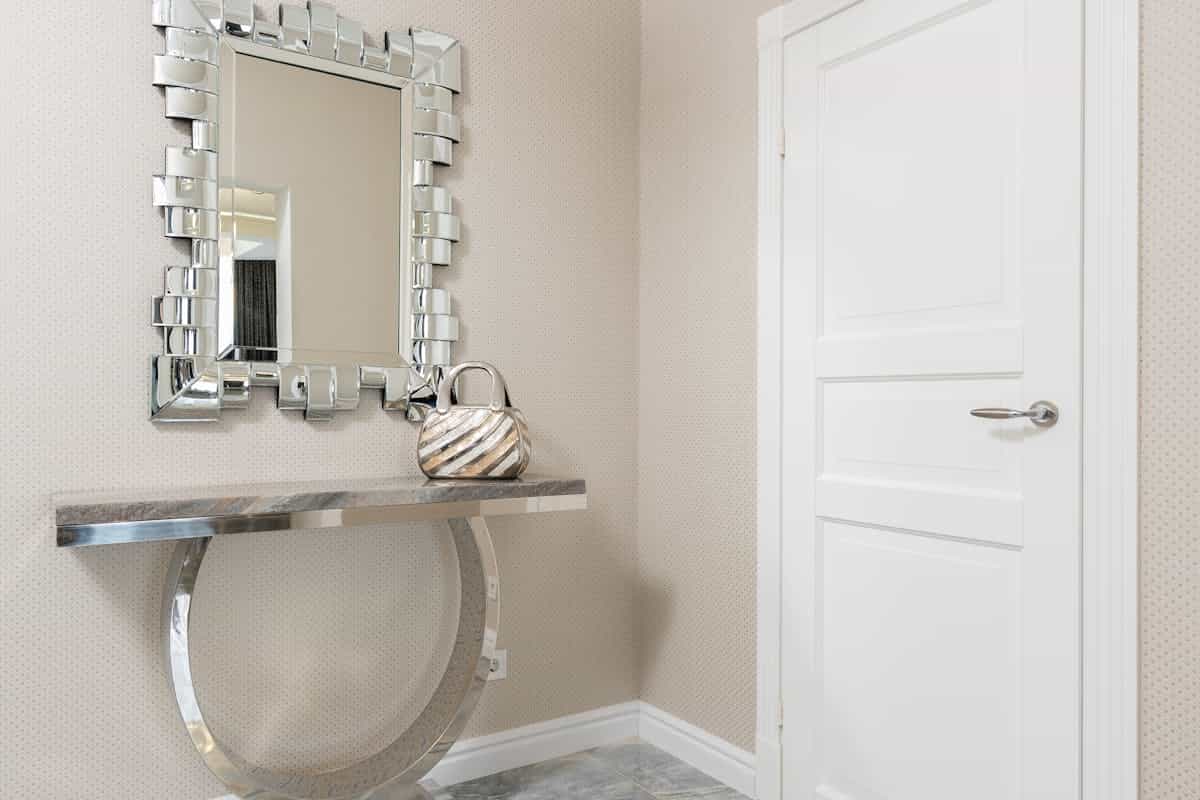
A mirror is the one piece of decor every entryway should have — and not just because it looks good. It throws light into a space that usually has no window, gives you a last look before you walk out the door, and makes a cramped hall feel twice its size. The question is which mirror, what size, and where. Here is the short answer, then the detail.
The most reliable entryway mirror is round or arched, hung above a console table with its centre at eye level (about 57 to 65 inches from the floor) and a 6 to 8-inch gap above the table — or a large leaning mirror in a wider space. Size it to two-thirds the width of the console, point it at light rather than clutter, and avoid hanging it directly facing the front door.
Most entryway mirror ideas posts are galleries of pretty halls. The pretty halls all solved the same three problems — style, size, and placement. Here is how.
Why Every Entryway Needs a Mirror
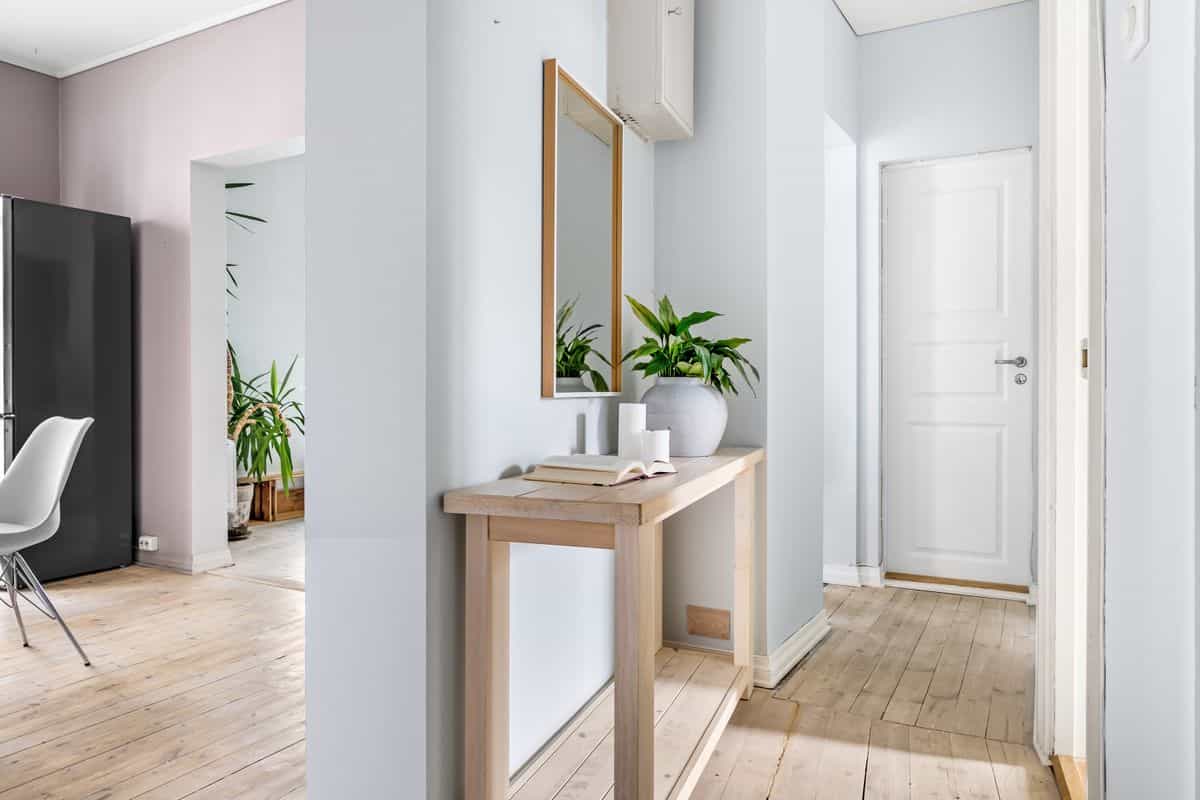
The entryway is the strongest case in the house for a mirror, because it does three jobs no other object can.
It bounces light into a dark space. Most entryways and hallways have no window of their own — they borrow light from the rooms around them. A mirror reflecting whatever daylight or lamplight reaches the hall roughly doubles it, which is why a mirror for entryway walls is the standard fix for a gloomy entrance. This is not decorating folklore; it is how reflection behaves.
It makes a tight space feel larger. A mirror reflecting the opposite wall adds apparent depth, so a narrow hall reads as wider and a small entry as more open.
It gives you the last look. The entryway is the final place you pass before leaving — the natural spot to check your collar, your hair, the whole outfit. A mirrored entryway turns a dead transition space into a functional one.
There is a reason this feels almost universal. For most of human history a clear, full reflection of your own face was a luxury — affordable, accurate mirrors only reached ordinary homes in the 19th century. The instinct to catch yourself in the glass on the way out the door is, historically, a very recent habit, and the entryway is where it lives.
Entryway Mirror Styles and Shapes
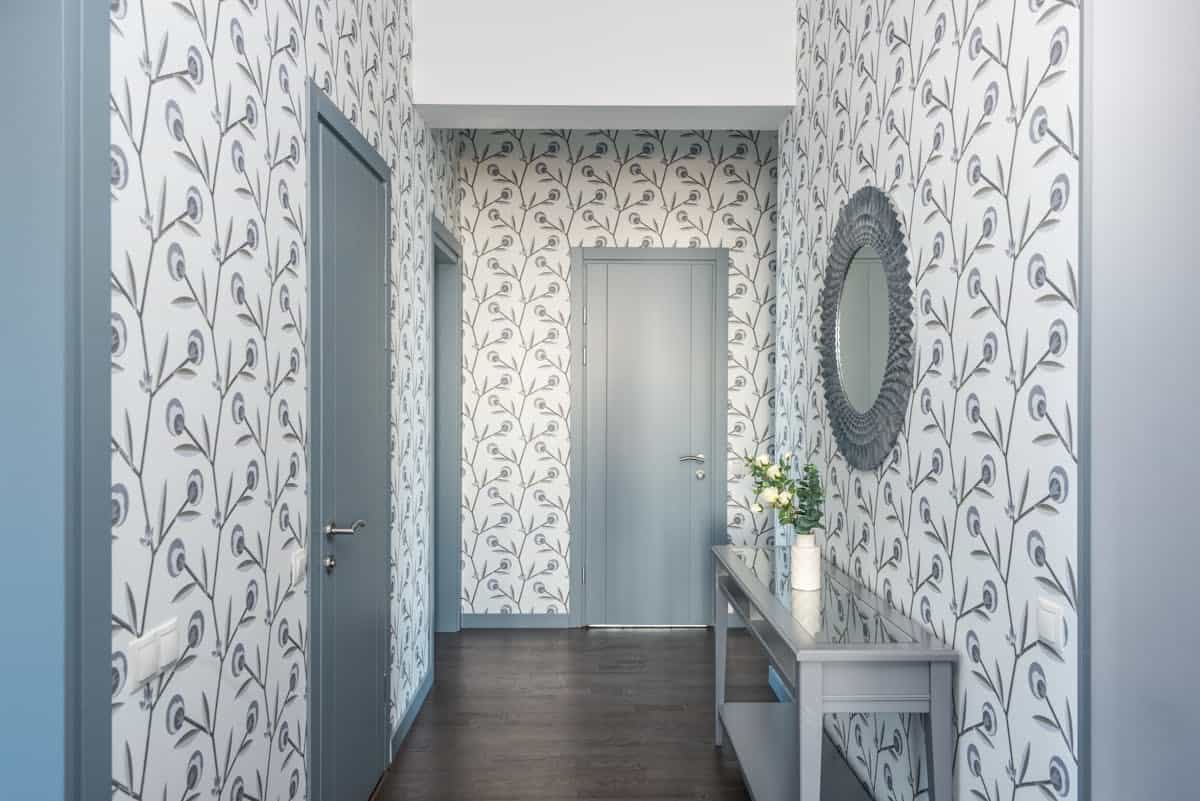
Shape does more work than frame here, because the entryway is small and the mirror is the focal point. Match the shape to the problem you are solving:
- Round or oval — the most forgiving choice. It softens the hard lines of the door, console, and walls, and feels welcoming. Best for small or narrow entries, and the classic partner to a console table.
- Arched — adds gentle height and a touch of architecture; draws the eye up, which makes a low ceiling feel taller.
- Tall rectangular — clean and structural, and the strongest at making a cramped hall feel taller and narrower-in-a-good-way. Suits modern and traditional schemes equally.
- Sunburst or starburst — a single decorative statement for an otherwise plain wall. Best solo, not in a pair.
- Frameless or thin-framed — disappears into a minimalist entry and maximises reflective surface.
- Ornate or vintage — a gilded or carved frame turns the mirror into the entry's one piece of character.
On frames, the rule is simple: the entryway wall mirror should share a finish with one other thing nearby — the door hardware, a light fixture, the console legs — so it looks chosen rather than leftover. A round mirror with a brass rim above a console with brass pulls reads as designed; the same mirror with no echo anywhere reads as random.
What Size Mirror for an Entryway?
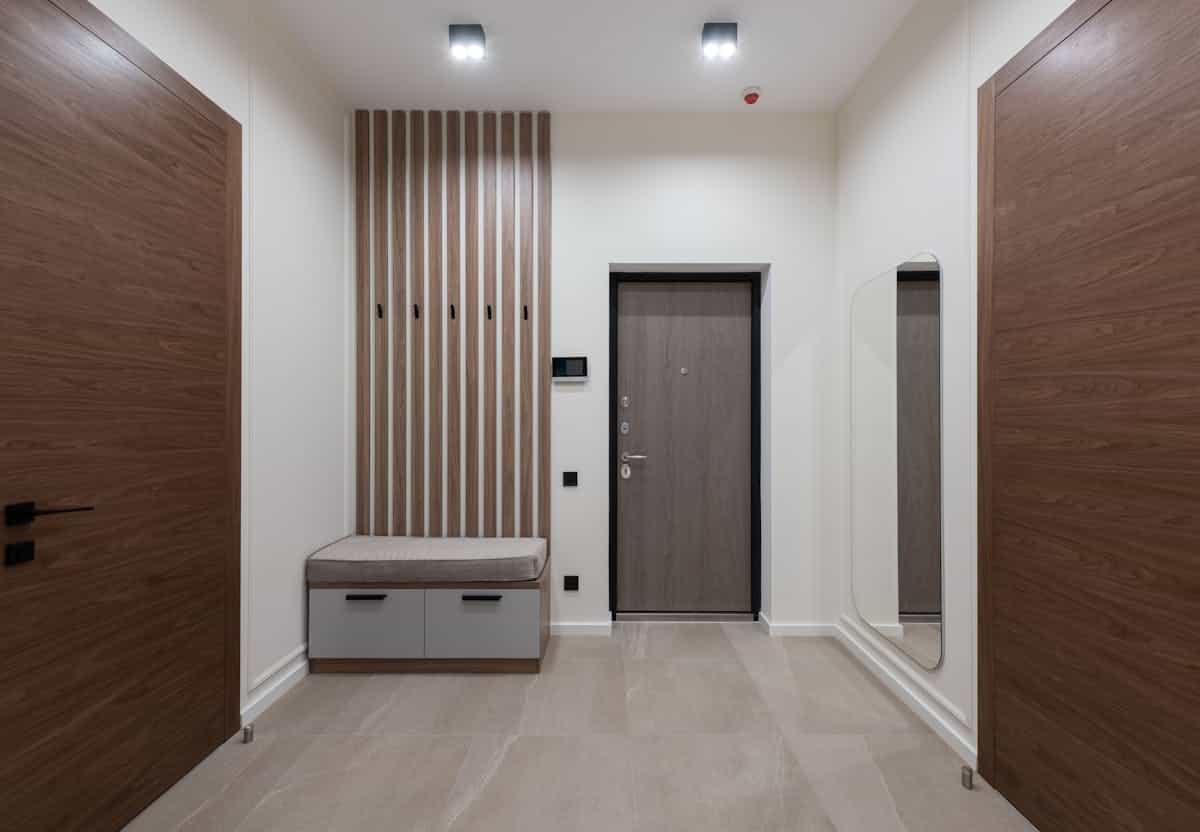
Size depends on what the mirror hangs above or near:
- Above a console table: about two-thirds to three-quarters the width of the console, and never wider than the table. For a 40-to-48-inch console, that is a mirror roughly 28 to 36 inches wide. Height is flexible — go tall to add the impression of ceiling height — but keep the width tied to the furniture.
- On a bare wall: fill roughly two-thirds of the usable wall, leaving breathing room on either side so the mirror does not look wedged in.
- As a leaning floor mirror: go big. A full-length leaning mirror works best at 60 inches tall or more, because its job is a head-to-toe reflection and a strong vertical line.
The honest trade-off worth naming: in a small entryway, an oversized mirror is usually the better choice, not the riskier one. A large mirror reflects more light and more space, which is exactly what a small entry needs — the instinct to "go small in a small room" works against you here.
Where to Place an Entryway Mirror
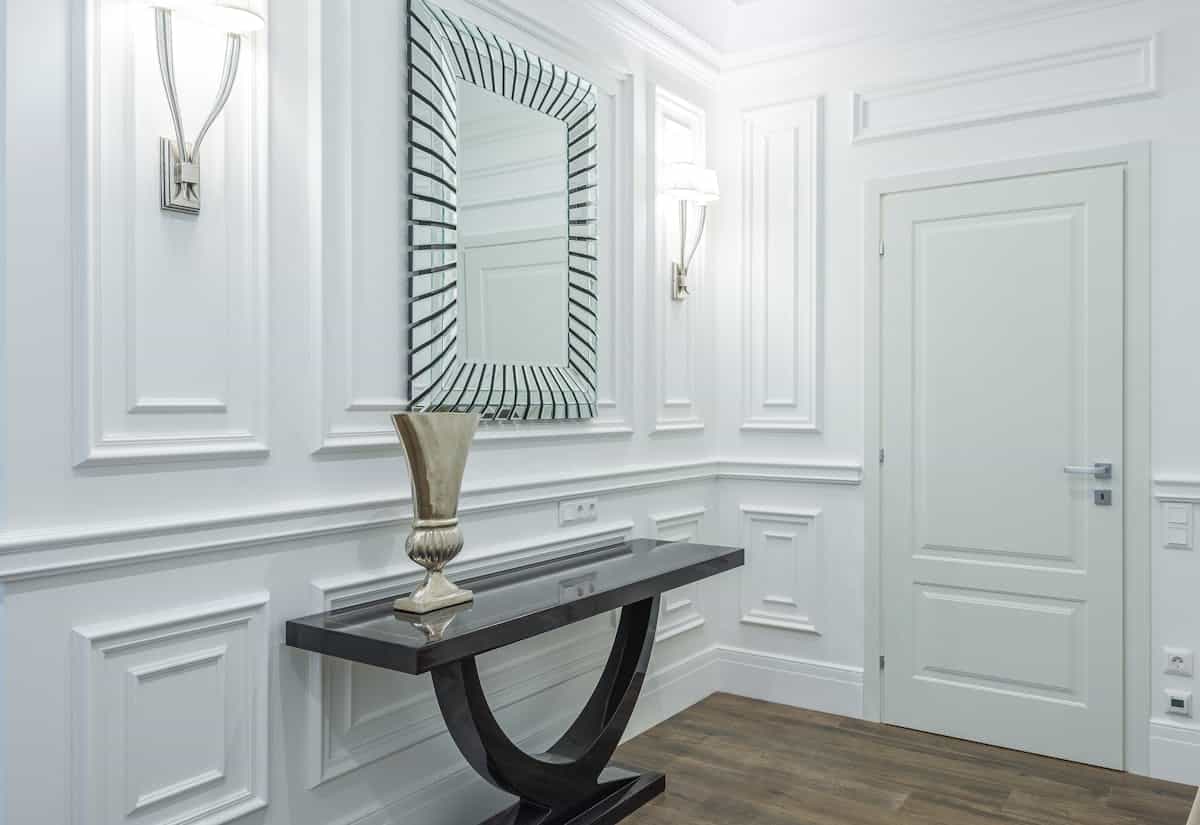
Placement is mostly about height and position. The numbers first:
Height: hang the mirror so its centre sits at eye level — about 57 to 65 inches from the floor, with 60 inches a safe standard. Above a console, leave a 6 to 8-inch gap between the table top and the bottom of the mirror so the two read as one unit. The same eye-level logic applies everywhere, covered in detail in the guide on how high to hang a mirror.
Position — three placements that consistently work:
- Above a console or bench. The timeless pairing: mirror for the last look, surface for keys and post. A round mirror over a rectangular console is the most balanced version.
- On a side wall of a narrow hall. This is the trick most people miss. A mirror at the end of a corridor lengthens it, but a mirror on a side wall reflects light across the space at 90 degrees and breaks the tunnel feeling — often the better fix for a claustrophobic hallway.
- Leaning against the wall. A large leaning mirror gives a full-length reflection and a relaxed, modern look with no mounting — just anchor it so it cannot tip.
A gallery cluster of several small mirrors is the one alternative to a single mirror: it catches light from multiple angles and adds personality, though it loses the clean expansive effect of one large piece.
The Front-Door Rule: What Feng Shui Says
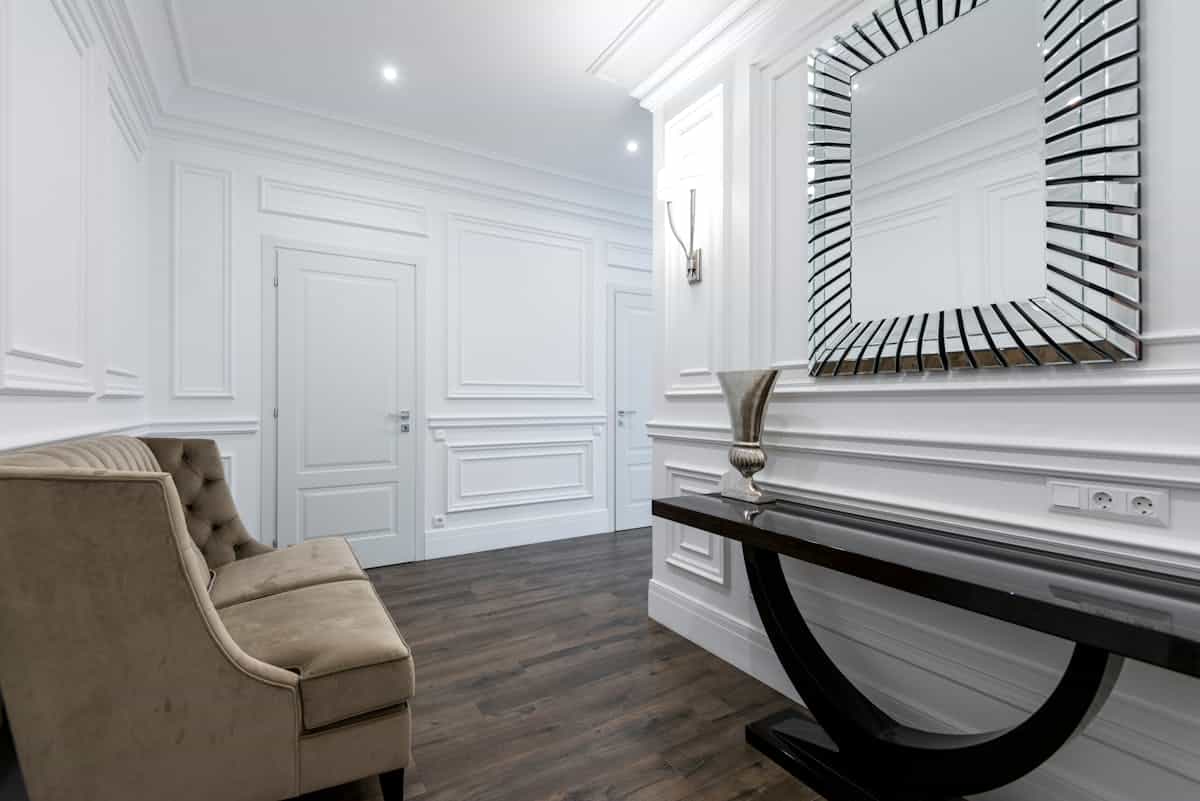
This comes up in almost every entryway discussion, so it is worth getting right rather than repeating vaguely.
In feng shui, the entryway is the "mouth of Chi" — where energy enters the home — and a mirror directly facing the front door is discouraged, because it is thought to bounce that incoming energy straight back out before it can circulate. A mirror on a side wall, by contrast, is considered welcoming: it expands a narrow entrance and draws energy inward. That is a cosmological belief, not a measured effect, and worth treating as exactly that — the full reasoning is in the room-by-room feng shui mirror placement guide.
But notice the practical point sitting underneath the belief. A mirror square-on to the door reflects you the moment you walk in, and a face coming at you as you enter reads as a visual stop rather than a welcome. The side-wall placement that feng shui prefers is also the one that simply feels better to walk into. When a centuries-old rule and plain spatial sense agree, the rule is usually worth following — whatever you make of the energy.
What an Entryway Mirror Should Reflect
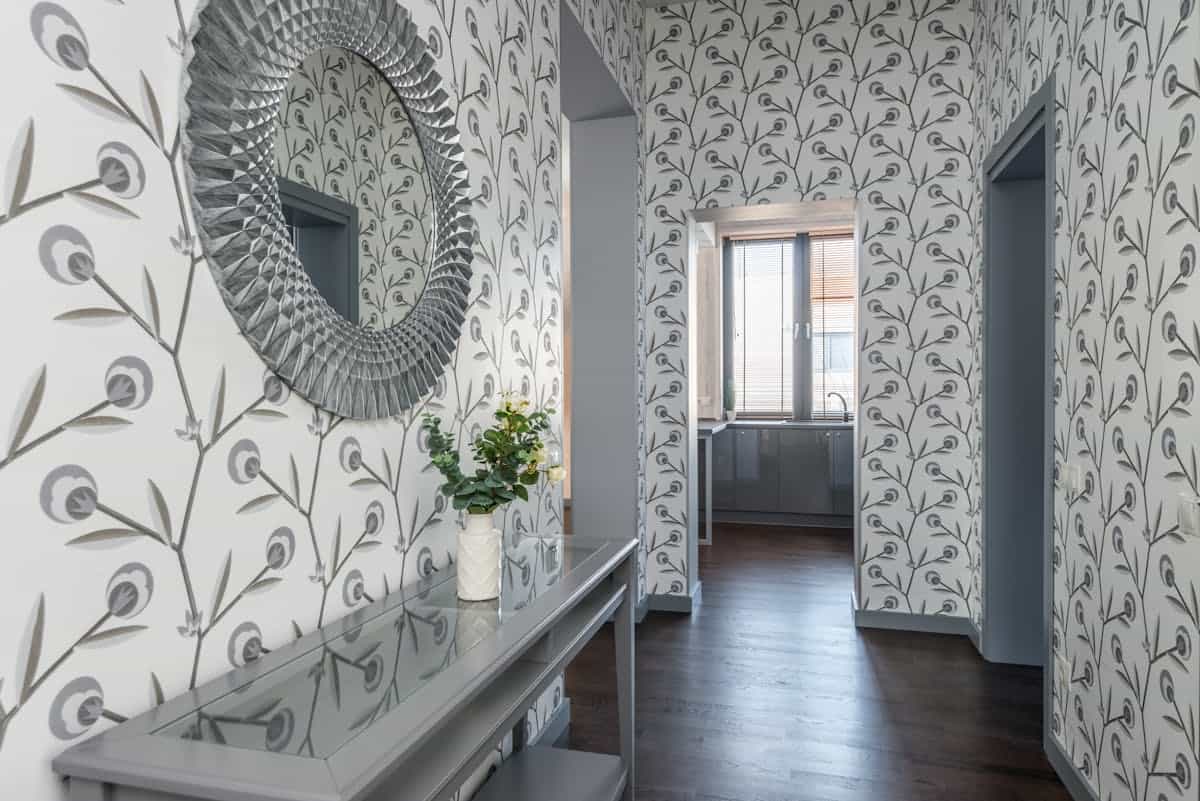
A mirror doubles whatever it points at, so the last decision is the most overlooked: what will it show?
Aim it at light and a pleasant view — a window down the hall, a lamp, a vase of flowers on the console, a glimpse of a nicer room beyond. Avoid pointing it at clutter (the shoe pile, the coat hooks at their worst), a blank wall (doubling emptiness is not an improvement), or straight back at the front door. The mirror you walk past every day should hand you light and a calm view, not a reminder of the mess by the door.
This is the same principle that governs mirrors anywhere in the home — reflect what you want more of — and it is covered across rooms in the guide to styling mirrors for a dining room too. In an entryway it just matters more, because this is the first and last thing you see each day.
A Few More Entryway Mirror Ideas Worth Stealing
Beyond the classics, a handful of less obvious moves solve specific entryway problems:
- A convex "butler's" mirror. The slightly domed glass pulls a wide, fish-eye view of the room into a small circle — historically used so a butler could see the whole hall at a glance. It reads as a piece of art more than a functional mirror, ideal where you want character without a full-length reflection.
- A backlit LED mirror. In an entry with no natural light at all, a mirror with an integrated warm LED edge doubles as a soft light source — the closest thing to adding a window. Choose a warm colour temperature so the glow flatters rather than chills.
- A mirror flanked by two sconces. Borrowed from the bathroom vanity, a mirror with a wall light on each side gives even, shadow-free light for that last look — far better than a single overhead fixture that throws shadows down the face.
- A half-round mirror over a low bench. The flat bottom edge sits neatly above a bench or low console, and the curved top softens the wall. A tidy, space-aware shape for a tight entry.
- A small gallery of mismatched vintage mirrors. Several different frames clustered together catch light from many angles and build personality over time — lay the arrangement on the floor first, then transfer it to the wall.
The throughline across all of them is the same: in an entry, a mirror is allowed to be both useful and the single most decorative thing on the wall. Pick the one that fixes your room's actual problem — too dark, too narrow, too plain — rather than the one that looked best in someone else's hall.
Recommended Products
These are the categories worth getting right for entryway mirror ideas — the priority is the right shape and size, plus a secure hang or anti-tip strap. (Links go to Amazon search results so you can compare current options.)
- Round entryway wall mirror (28–36 in) — the most versatile shape above a console.
- Arched wall mirror — adds height to a low or narrow entry.
- Oversized leaning floor mirror — full-length reflection and a modern statement.
- Narrow console / entryway table — the classic partner for a wall mirror.
- Anti-tip strap for a leaning mirror — essential for any floor mirror.
- Heavy-duty mirror hanging kit — D-rings and anchors for a secure, level hang.
The One Thing to Remember
An entryway mirror is not really decoration — it is a light source, a space-expander, and your last look before the world, all in one frame. Size it to the console, hang its centre at eye level, keep it off the wall that faces the door, and point it at something worth seeing twice.
Get that right and the smallest, darkest part of your home becomes the part that greets you with light. The mirror has no opinion about your hallway. It just gives back whatever you point it at — so point it at the good stuff.
Mirror FAQ
Where should you put a mirror in an entryway?
The two best spots are above a console table or bench, and on a side wall of a narrow hall. Above a console is the classic pairing — it gives you a last-look mirror and a place to drop keys. On a side wall, a mirror reflects light at 90 degrees and breaks up the tunnel feeling of a corridor better than one at the far end. Wherever it goes, position it to reflect light or a pleasant view rather than clutter, and many traditions advise against hanging it directly facing the front door.
How high should an entryway mirror be hung?
Hang it so its centre sits at eye level — about 57 to 65 inches from the floor, with around 60 inches being the standard. Above a console table, leave roughly 6 to 8 inches between the top of the table and the bottom of the mirror so the two read as one piece. A full-length leaning mirror is the exception: it rests on the floor, tilted slightly back, and should be strapped to the wall so it cannot tip.
What size mirror should go above an entryway console table?
Choose a mirror about two-thirds to three-quarters the width of the console, and never wider than the table itself. For a typical 40 to 48-inch console, that means a mirror roughly 28 to 36 inches wide. Height is flexible — a tall mirror adds the impression of ceiling height in a low entryway — but the width should stay tied to the furniture beneath it so the pairing looks balanced.
What shape mirror is best for an entryway?
Round and oval mirrors are the most forgiving — they soften the hard lines of a door, console, and walls, and suit small or narrow entries. Arched and tall rectangular mirrors draw the eye upward and make a low or cramped hall feel taller. Sunburst and irregular shapes work as a statement on an otherwise plain wall. Match the shape to the problem: round to soften, vertical to heighten, oversized to expand.
Is it bad to have a mirror facing the front door?
In feng shui, a mirror directly facing the front door is discouraged because it is thought to reflect incoming energy straight back out before it can circulate through the home. That is a cosmological belief rather than a measured effect. There is also a practical point underneath it: a mirror square-on to the door reflects you the instant you enter, which can feel like a visual stop rather than a welcome. A side-wall mirror avoids both concerns and is the placement most guides and traditions agree on.
Can a leaning mirror work in an entryway?
Yes — a large leaning floor mirror is one of the easiest, most contemporary entryway looks, and it gives a full-length reflection for a last outfit check. It needs floor space and a wall to rest against at a slight backward tilt, and it must be anchored with an anti-tip strap so it cannot fall forward. Leaning mirrors suit wider entryways; in a narrow hall, a wall-mounted mirror is safer and takes no floor space.