Extra Large Wall Mirrors for Living Room: Top Picks & Ideas
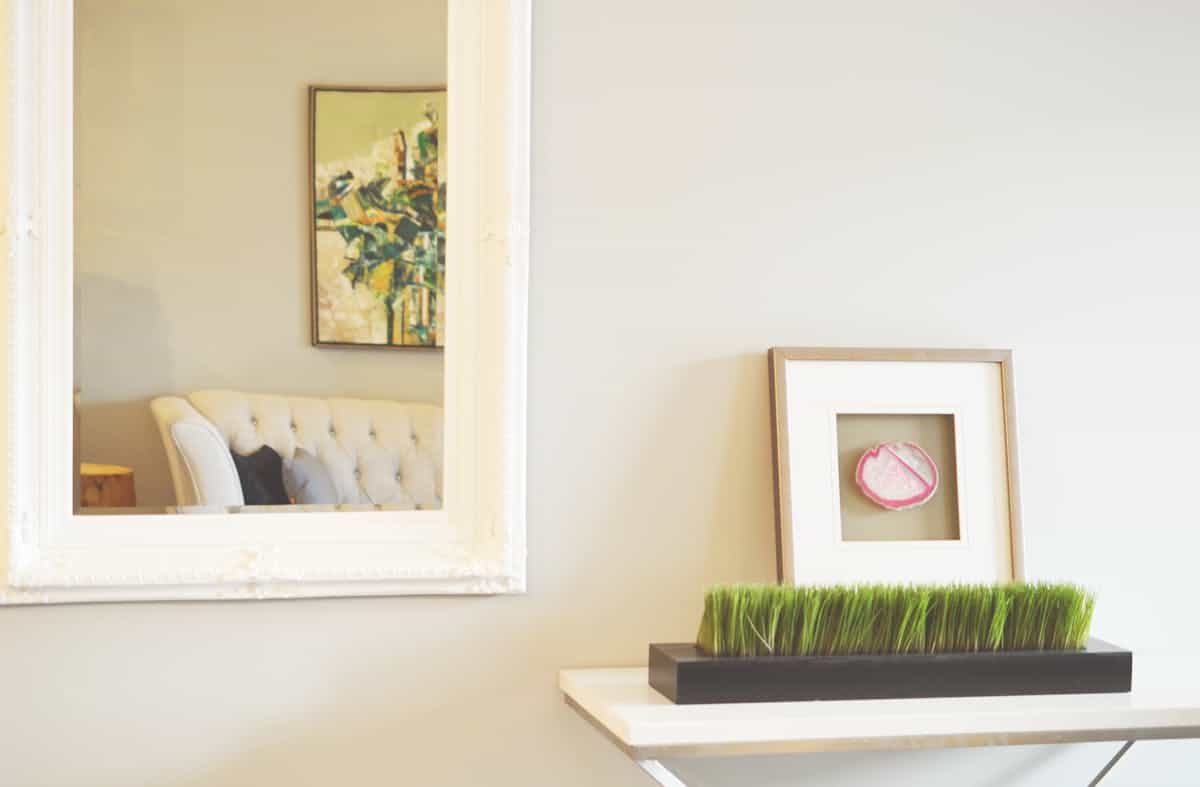
If a living room feels dark, boxy, or just a little flat, the highest-impact fix is also one of the simplest: hang an extra large mirror. It is the closest thing to adding a window without knocking down a wall. Here is the short version first.
An extra large wall mirror — roughly 40 inches and up, often 60-plus — makes a living room brighter and bigger by bouncing light and adding visual depth. Pick a type (a leaning floor mirror, an arched statement, or a contemporary mirror wall), place it to reflect a window or light rather than the TV, and anchor it securely because it will be heavy. That is the whole playbook.
A quick bit of context for why these are everywhere right now: the global wall mirrors market was worth about $14.8 billion in 2024, and oversized statement mirrors are a big part of that growth — designers reach for them because they do more for a room, per dollar, than almost any other single piece. Now, how to choose and use one well.
Why Go Extra Large in a Living Room
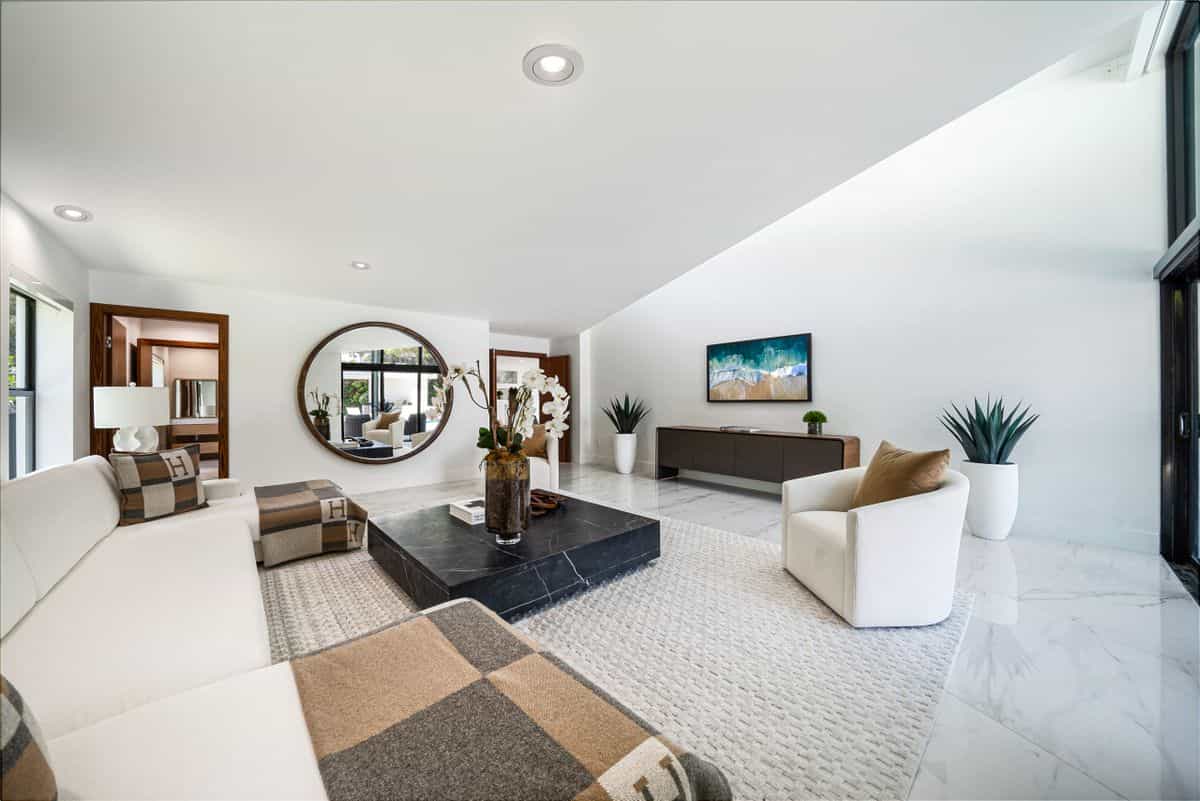
Size is not just a style choice with a mirror — it changes how much work the mirror does. A bigger mirror reflects more light and more of the room, so the effect scales with the glass.
Two things happen at once. First, light: a good silvered mirror returns 95 to 99 percent of the light that hits it through specular reflection, so an extra large mirror facing a window genuinely behaves like a second window, throwing daylight deep into the room. Second, depth: the eye reads the reflected space as a continuation of the real room, so a big mirror makes a living room feel measurably larger and more open. This is also where I will give you the one strong opinion of this guide — one extra large mirror beats a cluster of small ones every time. A wall of little mirrors fragments the reflection; a single large one opens the whole room. If you are choosing between sizes, go bigger.
What Counts as "Extra Large" — and How to Size It
There is no official threshold, but in practice "extra large" starts around 40 inches in the longest dimension and often runs 60 inches and up — big enough to be the focal point of a wall rather than decorate it. Oversized leaning floor mirrors commonly stand 65 to 76 inches tall.
The sizing rule is the same one that governs all wall decor, just scaled up: the mirror should fill about two-thirds to three-quarters of its wall, or of the furniture below it. Over a standard 84-inch sofa, that is a mirror around 56 to 63 inches wide. On a tall empty wall, it means going genuinely large rather than hanging something cautious and leaving acres of blank plaster around it. The most common and most expensive-looking mistake is buying a mirror that is technically "big" but still too small for its wall.
Type 1: The Oversized Leaning Floor Mirror
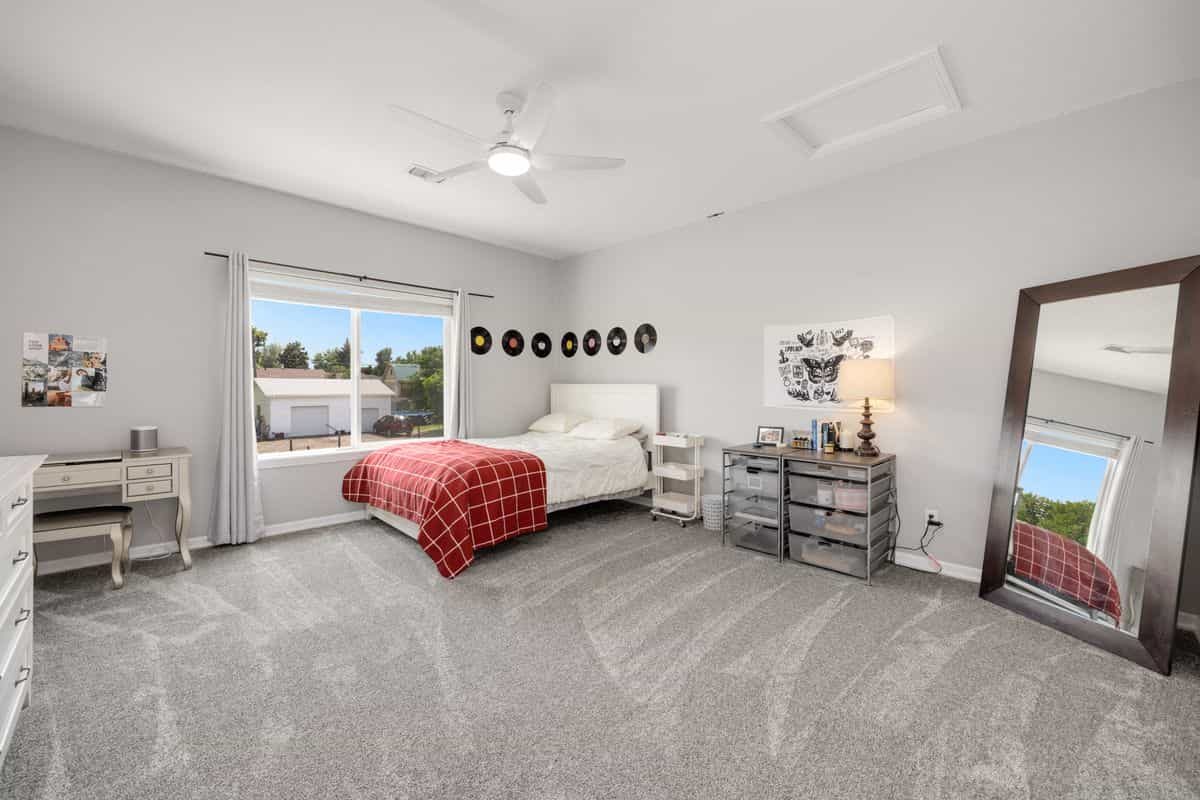
The easiest extra large option to live with is one you do not hang at all. A leaning floor mirror — tall, often arched or rectangular — rests against the wall and brings instant drama, depth, and light to a corner or a stretch of wall behind the sofa.
It is the most forgiving choice: no studs to find for the main weight, no precise height to measure, and you can re-angle it to catch the best light. It is also the most renter-friendly extra large mirror there is. The one rule that is non-negotiable here is safety — a 70-inch mirror leaning at an angle must be strapped or bracketed to the wall so it cannot slide or tip, which matters even more in a home with children or pets.
Type 2: The Arched or Statement Mirror
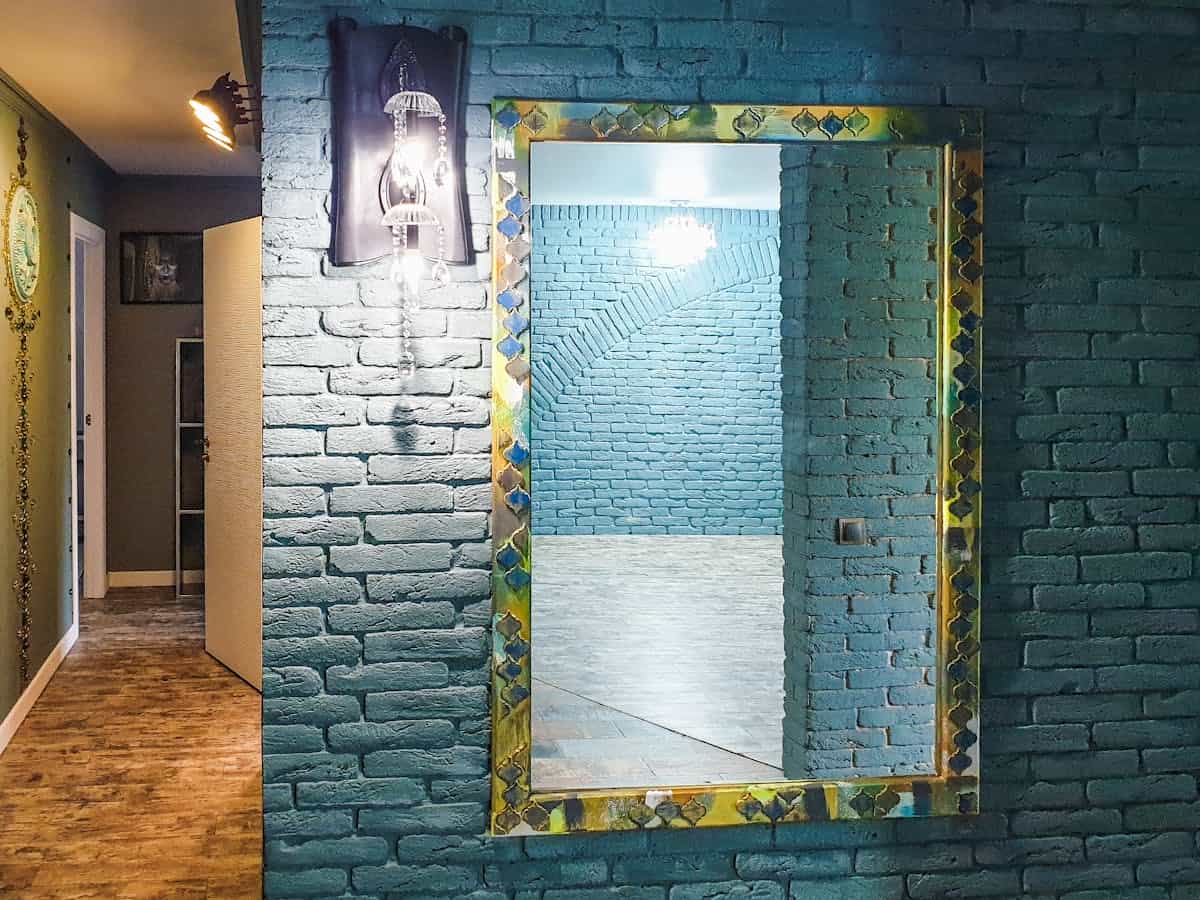
When you want the mirror to be the art, the shape carries it. Arched mirrors — especially tall ones with a slim black frame and a window-pane (Crittall-style) grid — are the current favourite, because the arch reads as architecture and mimics a real window, doubling the light effect both literally and visually.
Beyond arches, oversized round mirrors soften a room full of straight-edged furniture, and large organic or irregular shapes work as sculpture. The point of a statement extra large mirror is that it does two jobs at once: it functions like a window and it reads like a major piece of art, which is rare value for one wall.
Type 3: Contemporary Mirrored Walls and Panels
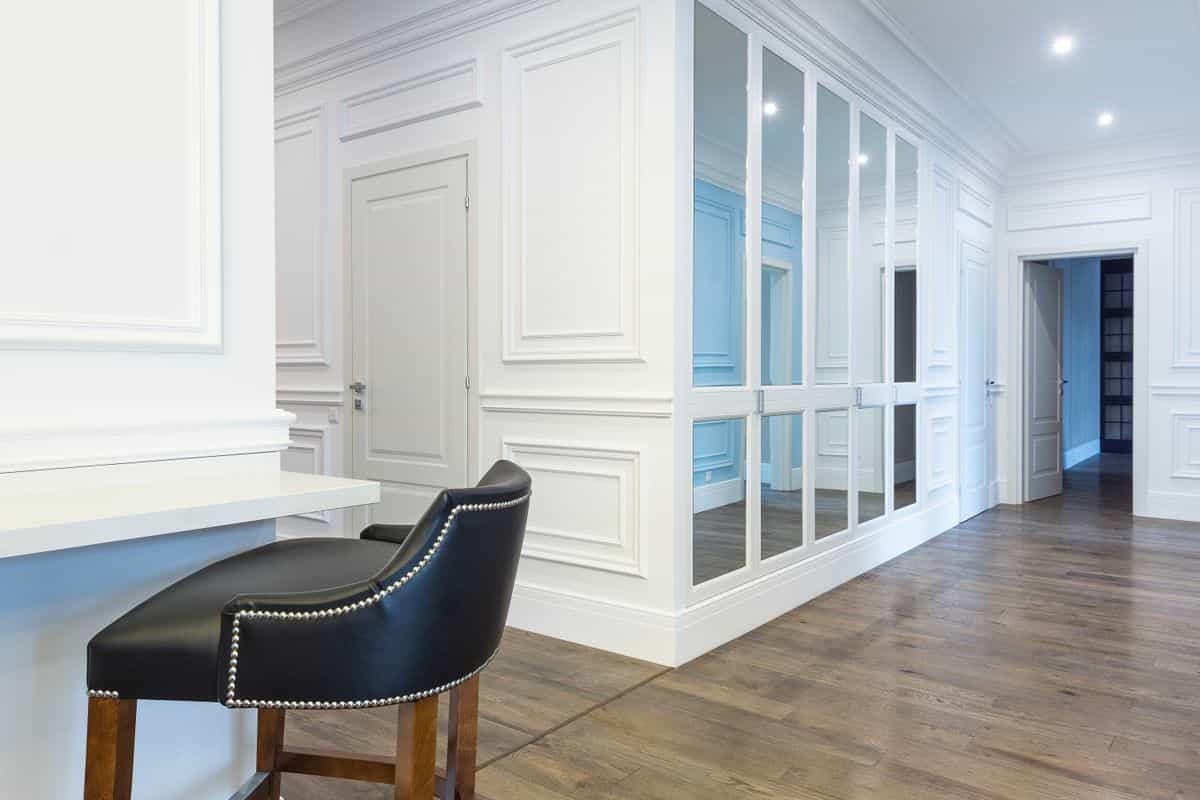
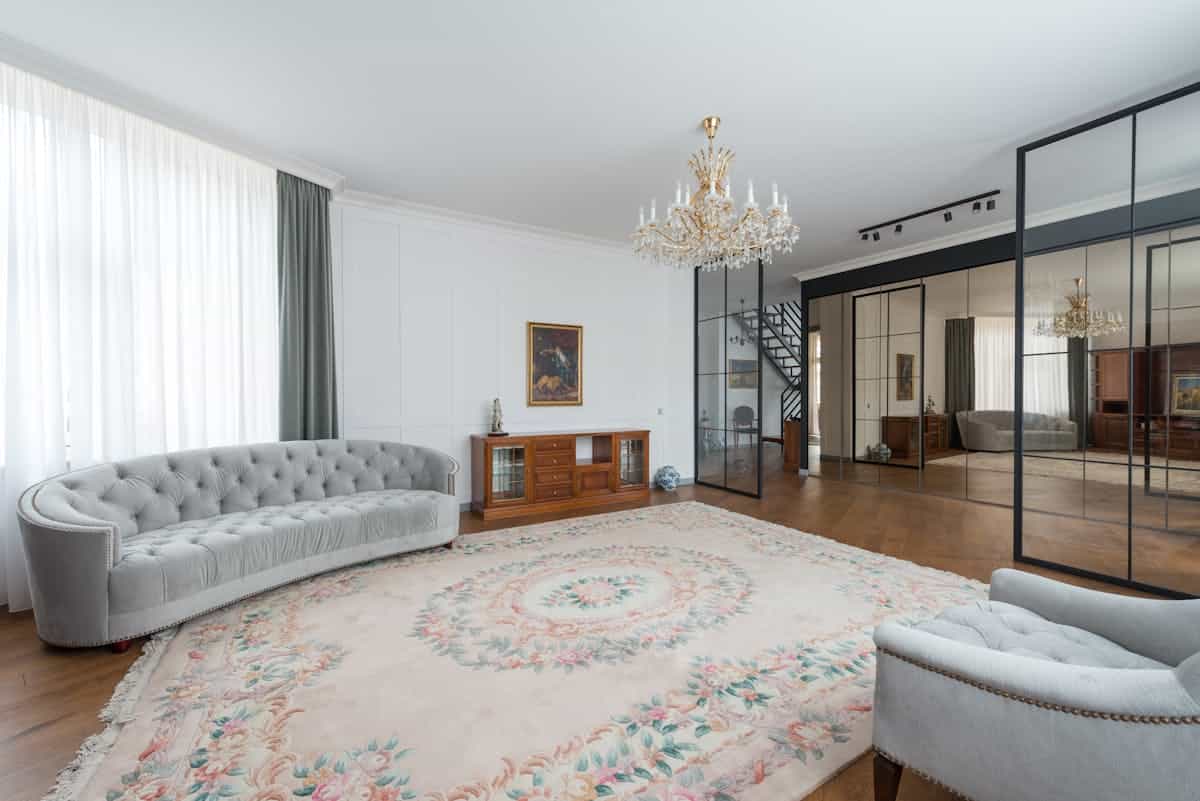
For the boldest light-and-space play, the mirror becomes the wall. Contemporary mirrored walls have shed the dated, floor-to-ceiling plain-glass look of decades past in favour of something more designed: framed mirror panels, antiqued or smoked glass, or a grid of large mirror tiles that turn an entire wall into a feature.
This is the move that makes a small living room read dramatically larger — a true living room mirror wall. The discipline is what keeps it elegant: do it on one wall only, keep that wall (and what it reflects) clean and uncluttered, and choose paneled or antiqued glass over a single sheet for a more intentional, less gym-like effect. It overlaps with the broader living room accent wall ideas, where a mirrored wall is the most light-multiplying accent of all.
Choosing the Frame and Shape
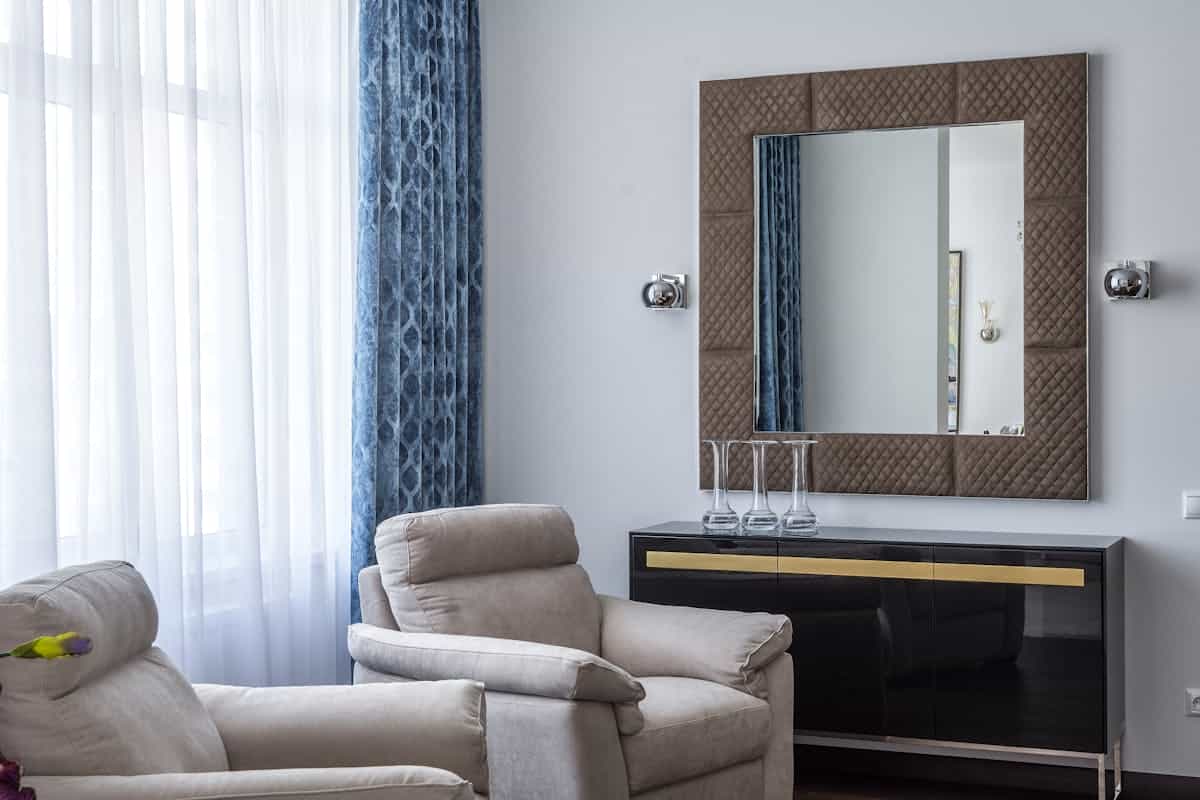
At extra large scale, the frame is a major piece of the room — treat the choice like buying a key piece of furniture, not an accessory.
- Slim black or warm-metal frames read contemporary and architectural, and pair with matching hardware.
- Ornate gold or carved frames bring traditional grandeur and glamour — striking at large scale, but let them be the star.
- Natural wood frames add warmth and suit rustic, coastal, and Scandinavian rooms.
- Frameless or thin-edge mirrors disappear into minimalist spaces and maximise the reflective surface.
Match the finish to the metals and woods already in the room so the mirror reads as part of the scheme. And remember the shape guidance: tall rectangles and arches suit most living rooms; a big round mirror softens boxy furniture.
Where to Place an Extra Large Mirror
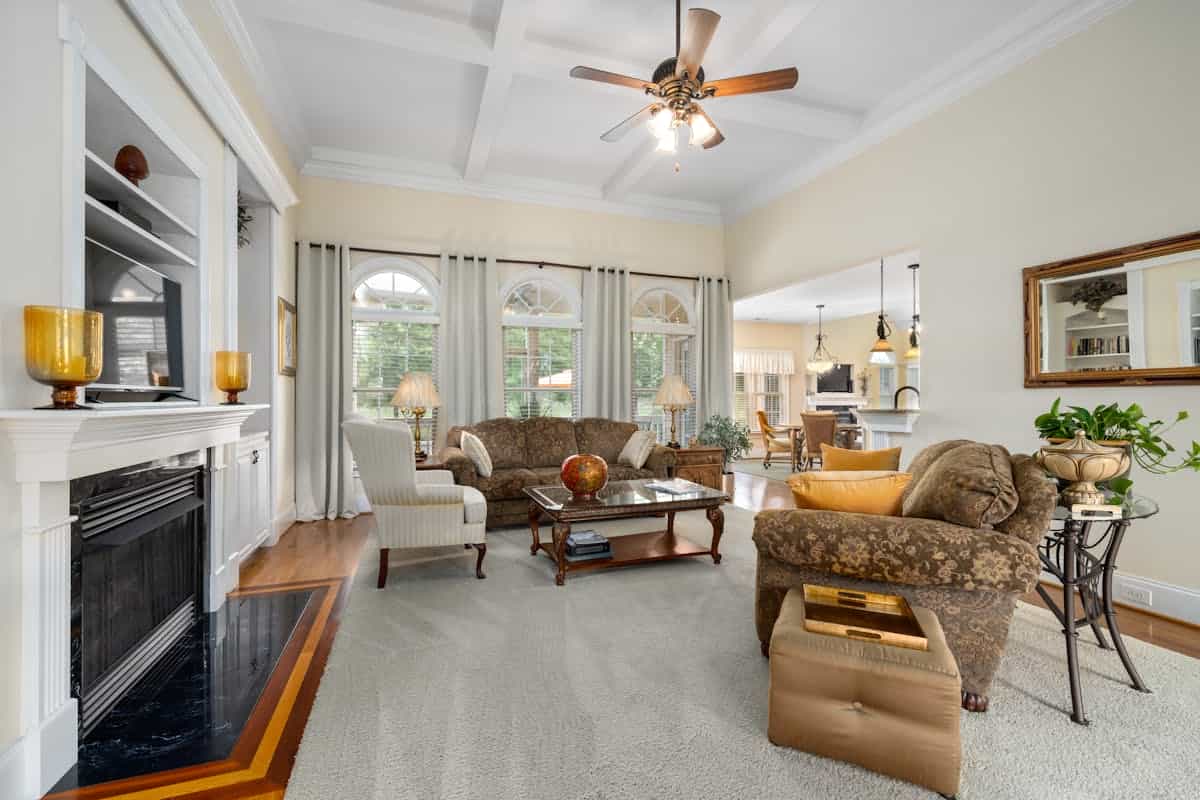
With a mirror this big, placement is everything — because it will faithfully double whatever faces it. The best positions:
- Opposite or beside a window — the highest-impact spot, turning daylight into double daylight.
- Above or behind the sofa — the classic focal point; for the exact sizing and height, see the mirror over sofa rules.
- Above a console or fireplace mantel — anchors the room's natural focal wall.
- Leaning in a corner — pulls a dead corner together and bounces light from two directions.
And the rule that overrides all of them: stand where you usually sit and check the reflection. An extra large mirror pointed at a window, a plant, or a chandelier transforms the room; one pointed at the television or a messy shelf just gives you twice the clutter. For the deeper version of where mirrors help and hurt, the feng shui mirror placement rules are worth a read.
How to Hang a Big, Heavy Mirror Safely
This is the section nobody enjoys and everybody needs. An extra large mirror can weigh 40 to 80 pounds or more, and that weight hangs on your wall — often above where people sit.
The rules are non-negotiable at this size: find the studs and anchor into them, not just drywall; use hardware rated comfortably above the mirror's weight, never right at the limit; use two fixing points for balance, or a French cleat for the heaviest pieces, which spreads the load along a rail; and get a second person to help lift and position it. For a leaning mirror, add the anti-tip strap. It is worth saying plainly: a falling mirror is heavy, sharp, and dangerous, so this is the one decorating job where you genuinely over-build the mounting and check it twice.
The One Thing to Carry Away
An extra large mirror is the rare decorating decision that is also a lighting and architecture decision. Get the size right — genuinely large, two-thirds of the wall, sized up when unsure — point it at light rather than the TV, and bolt it on properly, and a single sheet of silvered glass does the work of a window, a piece of art, and a room extension all at once.
That is why designers keep reaching for the biggest mirror the wall will take. Almost nothing else changes a living room this much for the money — provided you remember that the mirror is only ever as good as what you aim it at.
Recommended Products
These are the categories worth browsing for extra large wall mirrors for a living room, plus the hardware to hang one safely. (Links go to Amazon search results so you can compare current options.)
- Oversized leaning floor mirror — drama and light with no heavy hanging.
- Extra large arched wall mirror — the window-like statement piece.
- Large round wall mirror — to soften boxy furniture.
- Mirror wall panels / tiles — for a contemporary mirrored wall.
- Large gold or black framed mirror — a framed focal point.
- Heavy-duty mirror mounting kit (French cleat / anchors) — to anchor a heavy mirror safely.
Mirror FAQ
What size is an extra large wall mirror?
There is no official cutoff, but in practice an extra large wall mirror is roughly 40 inches or more in its longest dimension, and often 60 inches and up — large enough to be the focal point of a wall rather than an accent on it. Oversized leaning floor mirrors commonly run 65 to 76 inches tall. The right size is the one that fills about two-thirds to three-quarters of its wall or the furniture below it; in a living room, that usually lands you firmly in extra-large territory.
Where should I put an extra large mirror in a living room?
The best spots are opposite or beside a window (to bounce daylight through the room), behind or above the sofa, leaning in an empty corner, or above a console or fireplace. The rule that matters most: a mirror reflects whatever faces it, so position an oversized mirror to double something good — a window, a chandelier, greenery, a view — and never the back of the TV or a cluttered corner. With a mirror this big, what it reflects is half the decision.
Do large mirrors make a living room look bigger?
Yes, and more so than small ones. A large mirror adds visual depth — the eye reads the reflected space as a continuation of the room — and it bounces a lot of light, and a brighter room reads as a larger one. A good silvered mirror reflects 95 to 99 percent of the light that hits it, so an extra large mirror opposite a window works almost like a second window. One big mirror does this far better than several small ones scattered around the room.
How do you hang a heavy extra large mirror safely?
Find the wall studs and anchor into them with hardware rated well above the mirror's weight — an extra large mirror can weigh 40 to 80 pounds or more, which a single drywall hook will not hold. Use two fixing points for balance, a French cleat for the heaviest pieces, and a second person to lift it. For a leaning floor mirror, secure the top to the wall with an anti-tip strap or bracket so it cannot slide or topple. With a mirror this size and weight, over-engineer the mounting.
Are mirrored walls back in style?
Yes, but in a more refined form than the floor-to-ceiling mirrored walls of the past. Contemporary mirrored walls use framed panels, antiqued or smoked glass, or a grid of large mirror tiles for a designed, intentional look rather than a wall of plain reflective glass. Done this way, a mirror wall is a dramatic, light-multiplying feature — best on one wall in a room that has something worth reflecting, and kept clean and uncluttered so the effect stays elegant.
What shape and frame is best for a large living room mirror?
For shape, a tall rectangle or an arched mirror suits most living rooms; a large round mirror softens boxy furniture and works well over a sofa or console. For the frame, match it to your room and metals: slim black or warm-metal frames read contemporary, ornate gold reads traditional and glam, natural wood reads warm and rustic, and frameless suits minimalist spaces. With an extra large mirror the frame is a major visual element, so treat it like choosing a key piece of furniture.