Living Room Accent Wall with Mirror: Design Ideas
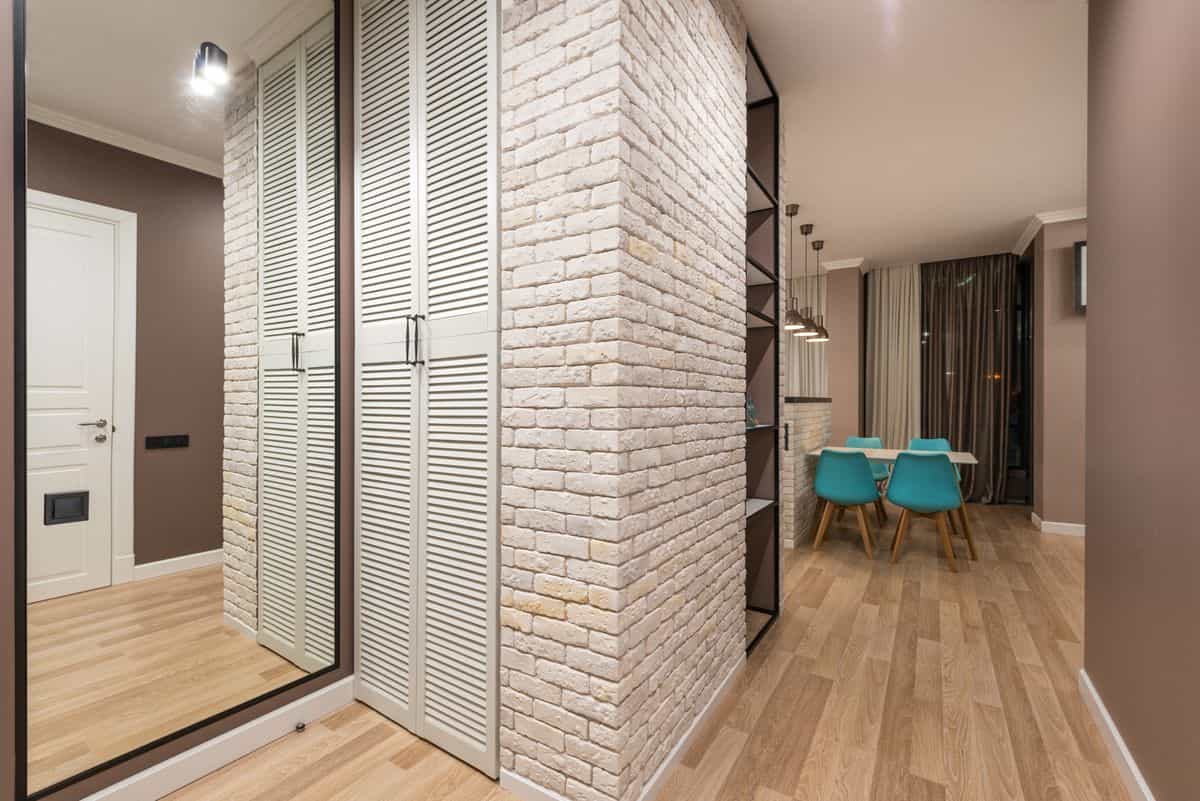
If you have a living room wall that feels flat, dark, or just begging for something, a mirrored accent wall is the boldest answer on the table — and a designer-approved one. As interior designer Taylor Simon put it, a mirrored wall may be the only kind of accent wall genuinely worth doing. Here is the short version first.
A living room accent wall with a mirror makes the space feel bigger and brighter by bouncing light and doubling the view — but it only looks elegant if you break up the glass (beveled panels, antiqued tint, or a framed grid), do it on one wall, and point it at something worth reflecting. A single bare sheet of mirror is what makes a room feel like a gym; everything below is how to avoid that.
There is real physics under the appeal, worth one number. A good silvered mirror returns 95 to 99 percent of the light that hits it, so a whole wall of it genuinely behaves like a wall of windows — which is exactly why a mirrored accent wall transforms a dim room. The trick is doing it with style rather than glare.
Why a Mirrored Accent Wall Works
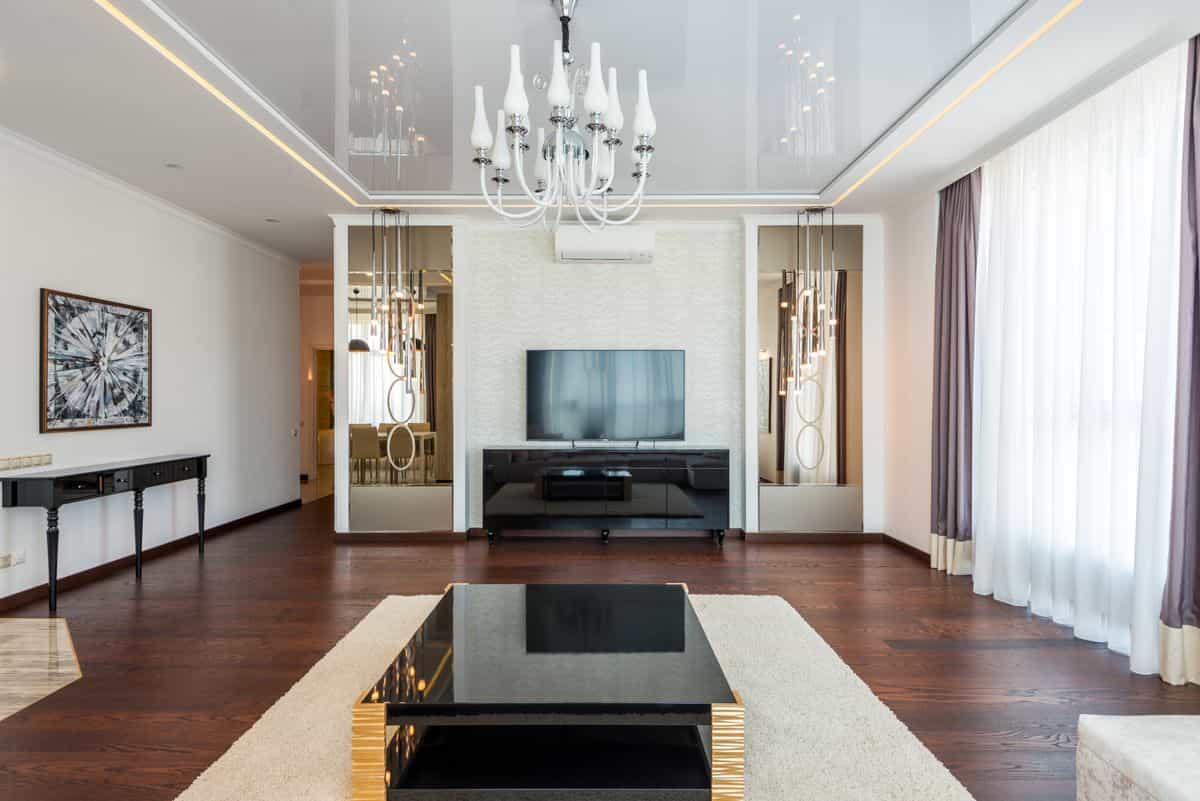
A mirrored accent wall does two things no painted or papered accent wall can. It doubles the apparent size of the room — the eye reads the reflected space as more room — and it floods the space with light by bouncing whatever brightness it faces back into the room. For a small, dark, or narrow living room, nothing else delivers both at once.
That is why it earns its place where ordinary living room mirror ideas fall short: a single hung mirror brightens a spot, but a whole wall of reflective panels changes the proportions of the room. The catch — and the reason this guide spends most of its time on how rather than whether — is that the same reflectivity that makes it powerful makes it easy to overdo. A bare mirror wall is stark; a well-designed one is glamorous. The rest is execution.
Beveled, Diamond, and Art-Deco Panels
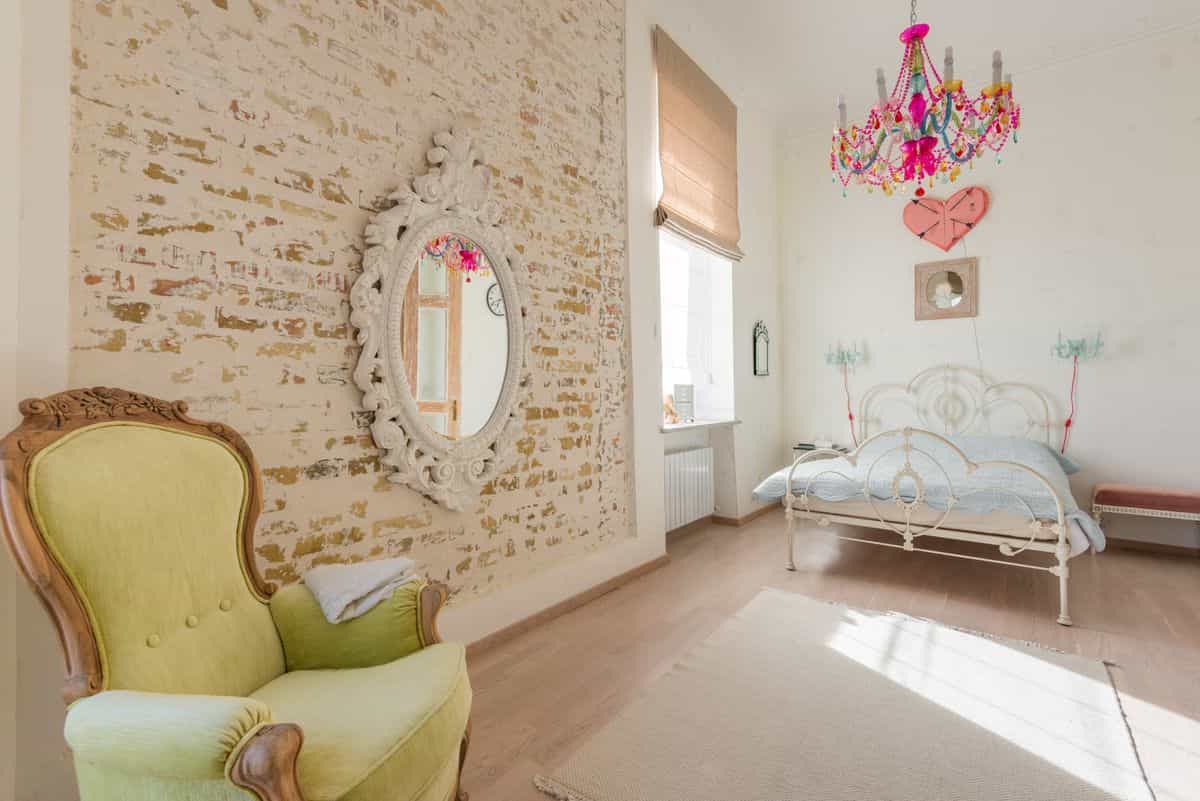
The most popular way to make a mirror wall look designed is to break it into panels with bevelled edges. Beveled mirror wall panels — often laid in a diamond or grid pattern — catch and split the light at their angled edges, throwing subtle prismatic glints instead of one flat reflection.
This is unapologetically glamorous, and it has real heritage: the diamond-mirrored wall is a signature of Art Deco, the 1920s–30s style built on geometry and luxury. Pair a diamond-bevelled wall with a statement light fixture and it reads as a regal, hotel-lobby feature rather than a plain mirror. The bevel lines also do something practical — they interrupt the reflection just enough to soften the "endless glass" effect that makes plain mirror walls feel cold.
Antiqued, Smoked, and Bronze Mirror
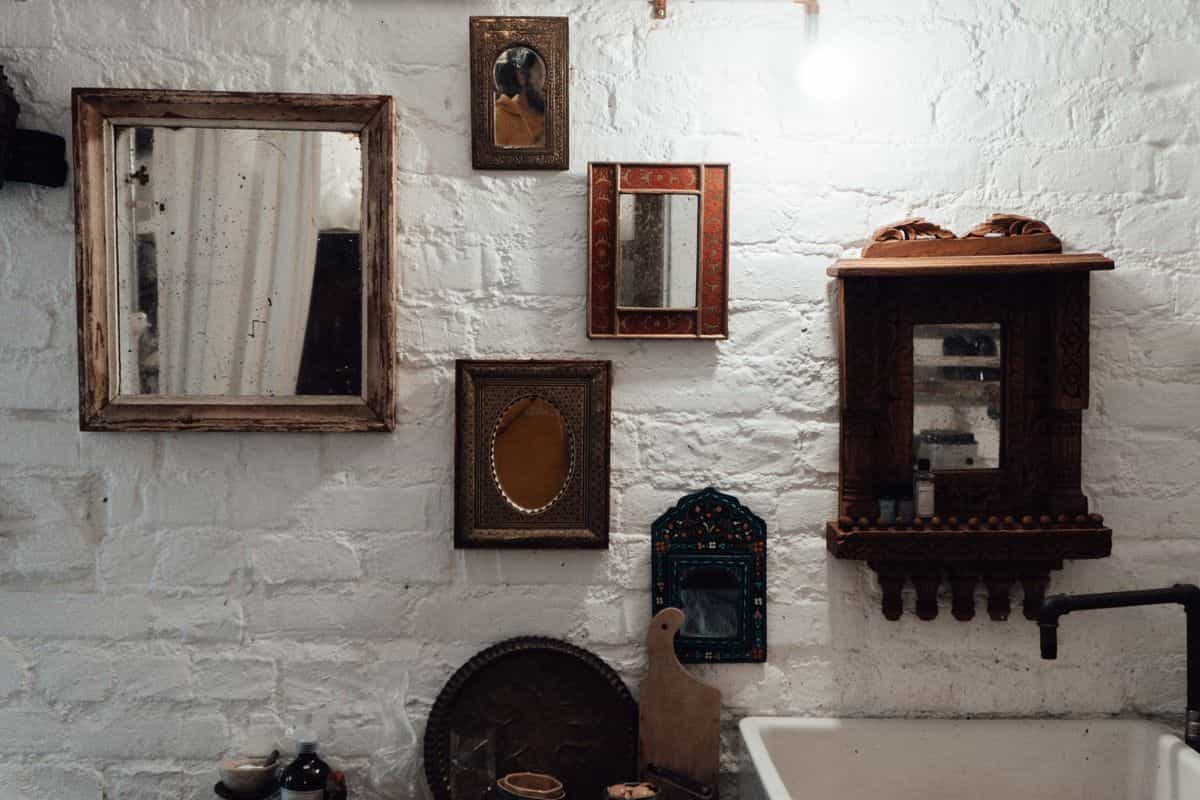
If beveled panels are the glamorous route, antiqued mirror is the warm one — and the easiest way to keep a mirror wall from feeling clinical. Antiqued (or "foxed"), smoked, and bronze-tinted glass reflects a softer, dimmer, more atmospheric image rather than a sharp one.
The advantages stack up. Antiqued glass adds warmth and age instantly, suiting traditional, vintage, and transitional rooms; it hides fingerprints, smudges, and small imperfections that show mercilessly on clear mirror; and it gives depth without the harsh clarity that makes a clear wall feel like a fitting room. Bronze-tinted mirror strips are a lighter-touch version — narrow reflective accents framing a TV unit or fireplace that add depth without committing the whole wall. If you want one rule for a living room: when in doubt, antiqued over clear.
A Framed-Mirror Grid: The Softer Route
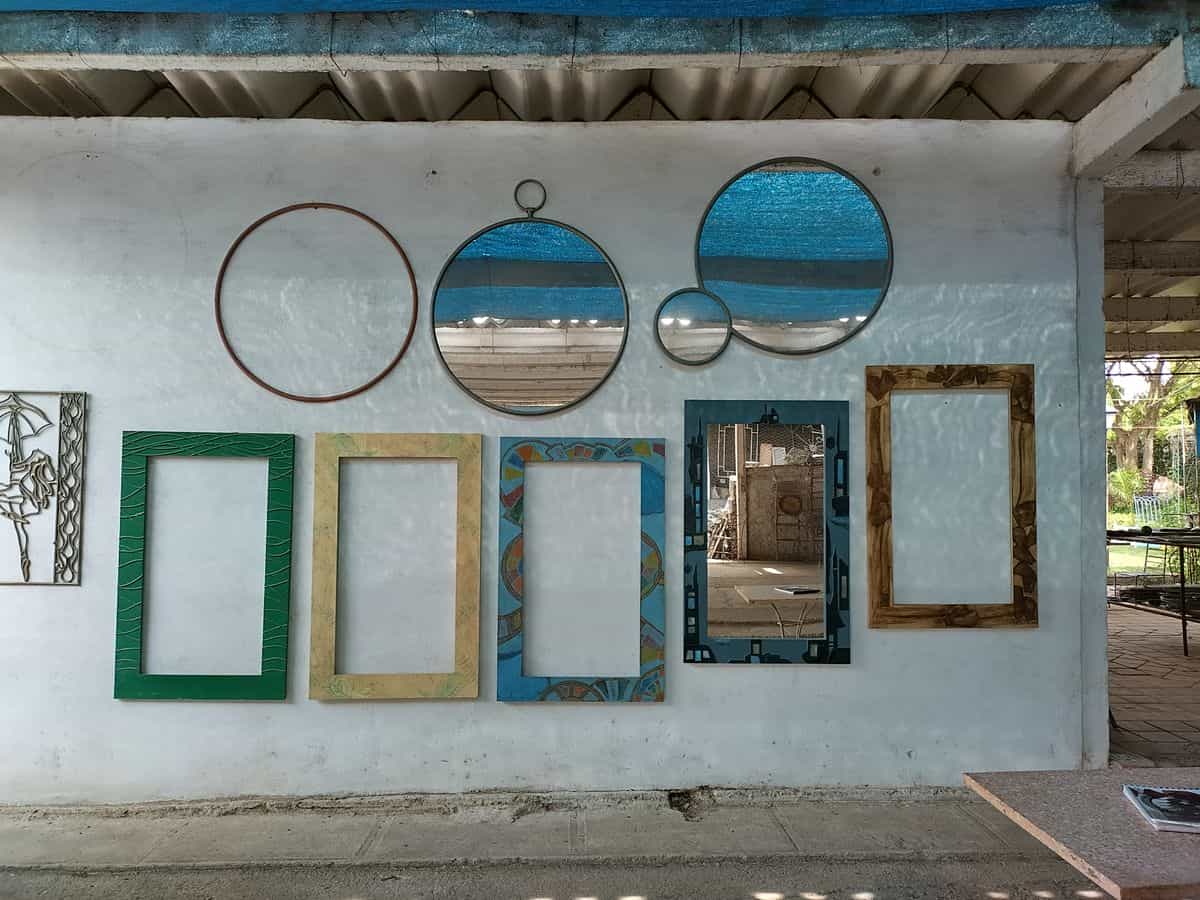
You do not need a single sheet of glass to make a mirror feature wall. A grid or cluster of framed mirrors gives much of the light-and-space payoff with far less of the stark, reflective-box effect — and it is the most renter-friendly, lowest-commitment version.
Hang a tidy grid of identical framed mirrors for a graphic, modern look, or a curated cluster of mixed shapes and frames for a collected, gallery feel. Because the frames break up the reflection and add texture, this reads warmer and more "decor" than a plain mirror wall, while still bouncing light from every panel. The discipline is the same as any gallery arrangement: lay it out on the floor first, keep consistent gaps, and limit the frame styles. It sits neatly between a single statement mirror and a full mirrored wall panels treatment — and it overlaps with the broader living room accent wall ideas if you are still deciding between mirror, paint, wood, or wallpaper.
Where to Put a Mirrored Accent Wall
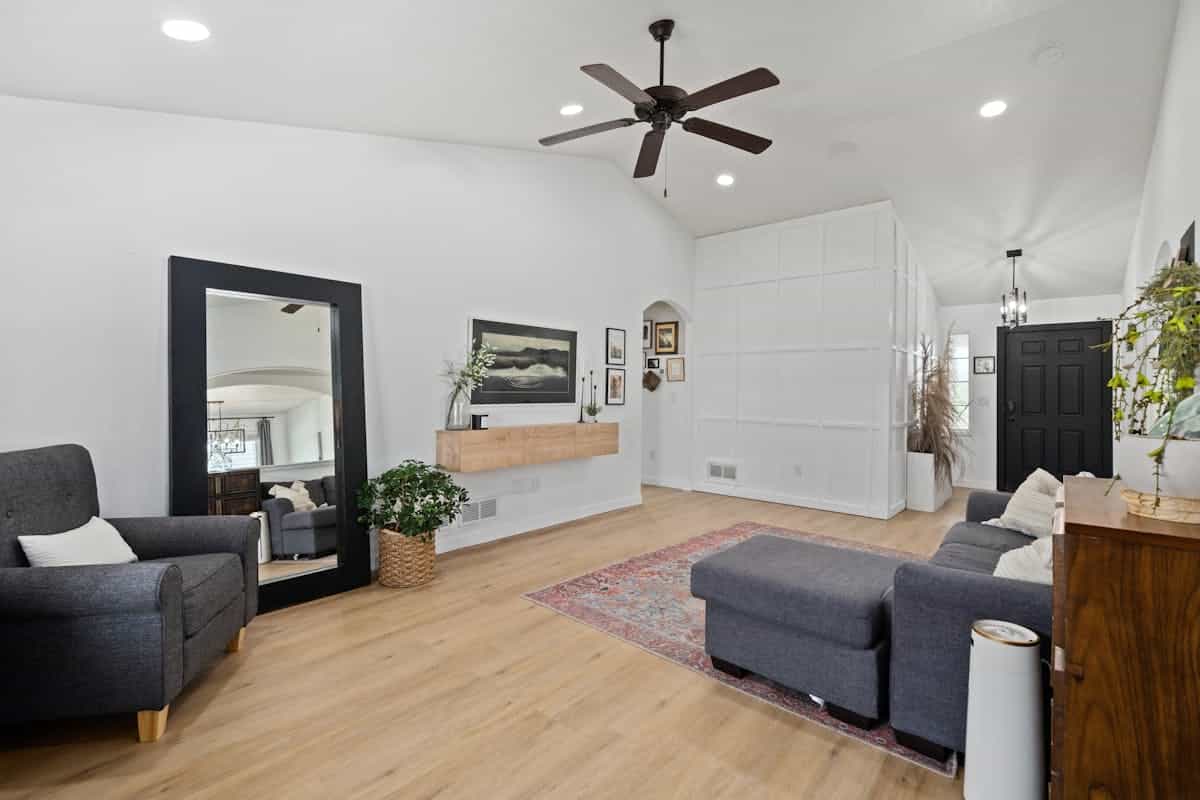
With a feature this strong, the wall you choose matters as much as the mirror. The best candidates:
- Behind the sofa — the classic focal wall, where the mirror visually deepens the seating area.
- Around or above the fireplace — doubles the room's existing focal point and bounces firelight.
- A dim corner or narrow nook — exactly the awkward spot designers say a full mirror suits better than art.
- The wall opposite a window — turns one window's daylight into two.
And the rule that overrides all of them, the one from every mirror article worth reading: a mirror reflects whatever faces it. Stand where you sit and check the reflection — aim a mirrored wall at a window, a chandelier, or greenery, never at the back of the TV, a cluttered shelf, or straight out the main door. The wall should also be mostly solid; a mirrored treatment needs continuous surface, so a wall chopped up by doors and windows is a poor pick. For the deeper version of what mirrors should and should not face, the feng shui mirror placement rules are worth a read.
How to Keep It Elegant, Not Gym-Like
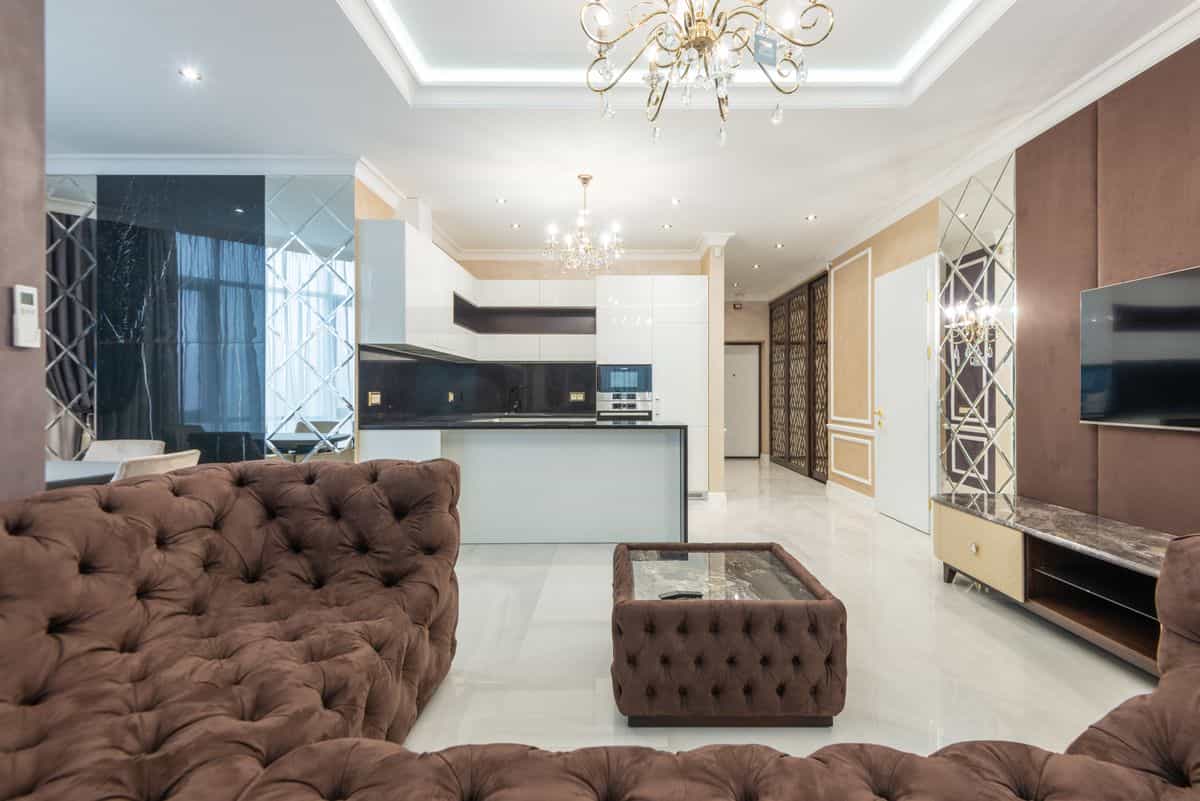
This is the section that separates a stunning mirror wall from a regrettable one, so here is the honest opinion of the whole guide: the difference between glamorous and gym-like is almost entirely about breaking up and softening the glass. Three moves do it:
- Don't use one bare frameless sheet. Bevelled panels, a framed grid, or distinct tiles all read as decor; a single seamless mirror reads as a fitting room.
- Tint or antique it. Antiqued, smoked, or bronze glass softens the reflection and adds warmth — the single biggest upgrade from "stark" to "sophisticated."
- Layer in front of it. A console table, a sofa, sculptural lamps, or a tall plant placed against the mirror breaks the reflection and gives it a styled scene to double, rather than an empty, echoing room.
A practical and safety note for full walls: large mirror panels are heavy and best installed by a professional with proper adhesive and backing, both so they stay put and so they sit flush without the wavy, funhouse distortion that cheap, poorly mounted panels produce. This is one feature where the install quality is the difference between luxurious and dreadful.
The One Thing to Carry Away
A mirrored accent wall is the highest-risk, highest-reward wall treatment there is. Get it wrong — a bare sheet of clear glass reflecting your TV — and the room feels like a changing room. Get it right — antiqued or bevelled panels on one well-chosen wall, reflecting light and a styled scene — and you have doubled the size and brightness of the room with a single, glamorous gesture.
The whole difference is restraint and texture: one wall, broken-up or softened glass, pointed at something worth seeing twice. Decide that, and the mirror does the rest — turning the flattest wall in the room into the one people cannot stop looking at.
Recommended Products
These are the categories worth browsing for a living room accent wall with a mirror, from full panels to the softer framed route. (Links go to Amazon search results so you can compare current options.)
- Beveled mirror wall panels / tiles — for an Art-Deco, glamorous feature.
- Antiqued / smoked mirror tiles — warmth and a softer reflection.
- Peel-and-stick mirror tiles — a renter-friendly mirror wall.
- Set of framed wall mirrors — to build a framed-mirror grid.
- Bronze-tinted mirror panels — for strips and accents around a TV or fireplace.
- Heavy-duty mirror mounting adhesive — to install panels securely and flush.
Mirror FAQ
Is a mirrored accent wall a good idea for a living room?
Yes, if you treat it as a deliberate design feature rather than a wall of plain glass. A mirrored accent wall makes a living room feel dramatically larger and brighter — it bounces light and visually doubles the space — which is why designers favour it for small or dark rooms and awkward nooks. The keys are doing it on one wall only, choosing the right glass (beveled, antiqued, or framed rather than a single stark sheet), and pointing it at something worth reflecting. Done thoughtfully it is elegant; done as a bare floor-to-ceiling mirror it can feel like a gym.
How do you do a mirror accent wall the right way?
Pick one focal wall — usually behind the sofa, around the fireplace, or in a nook — and cover it with mirror panels chosen for character: beveled or diamond tiles for Art-Deco glamour, antiqued or bronze-tinted glass for warmth, or a grid of framed mirrors for a softer, collected look. Keep the rest of the room calm, make sure the wall reflects light or a view rather than clutter, and layer furniture or a plant in front to break up the reflection. Anchor heavy panels securely and consider professional installation for full walls.
Are mirrored walls outdated, or back in style?
They are back, but in a more refined form. The dated version was a single sheet of plain, frameless mirror covering a whole wall — the 1980s gym look. Contemporary mirrored walls use beveled or diamond panels, antiqued and smoked glass, bronze-tinted strips, or framed grids that read as designed and intentional. The principle never went out of style — a wall that adds light and depth is always useful — but the execution has shifted from "plain glass wall" to "mirror as a crafted feature."
How do you stop a mirror wall from looking like a gym?
Three moves do most of the work. First, avoid a single frameless sheet — break the surface into beveled panels, a framed grid, or antiqued glass so it reads as decor, not a fitting-room. Second, choose antiqued, smoked, or tinted mirror, which softens the reflection and adds warmth instead of harsh clarity. Third, layer in front of it — a console, a sofa, lamps, or a tall plant — so the mirror frames a styled scene rather than an empty, echoing room.
Where should a mirrored accent wall go in a living room?
On the wall that is already the focal point or that needs light most: behind the sofa, around or above the fireplace, in a dim corner or narrow nook, or on the wall opposite a window so it doubles the daylight. Avoid a wall that would reflect the television, a cluttered shelf, or straight back out of the main door. The wall should also be mostly solid — a mirrored treatment needs continuous surface, so a wall broken up by doors and windows is a poor candidate.
Should a mirror accent wall be clear or antiqued?
Clear mirror maximises light and the sense of space and suits modern, minimalist rooms — but it is the most likely to feel stark or gym-like across a whole wall. Antiqued or smoked mirror reflects a softer, dimmer, more atmospheric image, hides fingerprints and imperfections, and adds instant warmth and character, which is why it is the safer choice for a full accent wall in a living space. If you want maximum brightness go clear; if you want elegance and forgiveness, go antiqued.