Living Room Mirror Ideas: 15 Stunning Ways to Decorate
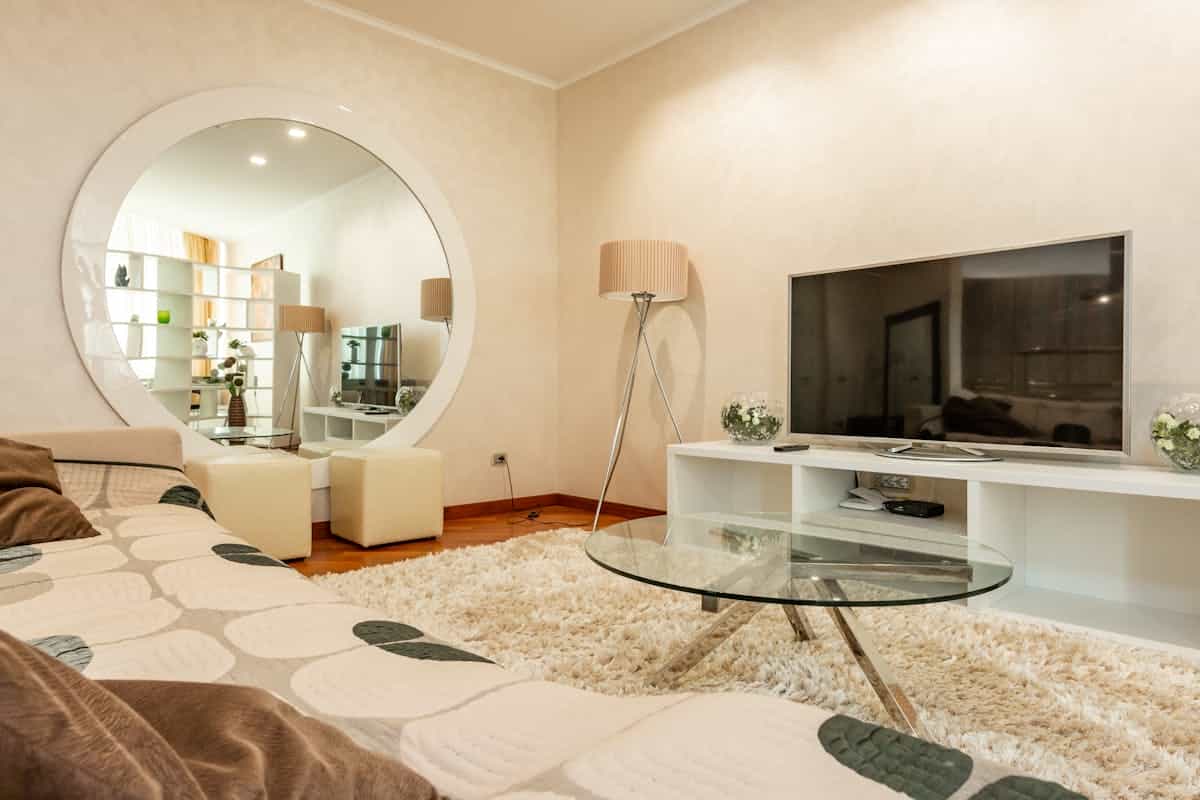
Living room mirror ideas all come back to one rule: a mirror reflects whatever faces it, so point it at something worth doubling — a window, a lamp, a plant, a view — never at clutter, a TV, or a blank wall. Get that right and any of the 15 ideas here will shine. Get it wrong and an expensive mirror just doubles the mess.
If you want one change that makes a living room brighter, bigger, and more finished at once, a mirror is it — there is a reason interior designers reach for them in almost every room. The placement rule above is the thing most lists skip, and it matters more than any single idea below.
There is a real, physical reason mirrors do so much for a room — and it is worth one specific number. A good silvered mirror reflects 95 to 99 percent of the light that lands on it, almost all of it sent back into the room by specular reflection. That is why a mirror opposite a window works nearly as hard as a second window. Now, the ideas.
Why These Living Room Mirror Ideas Work
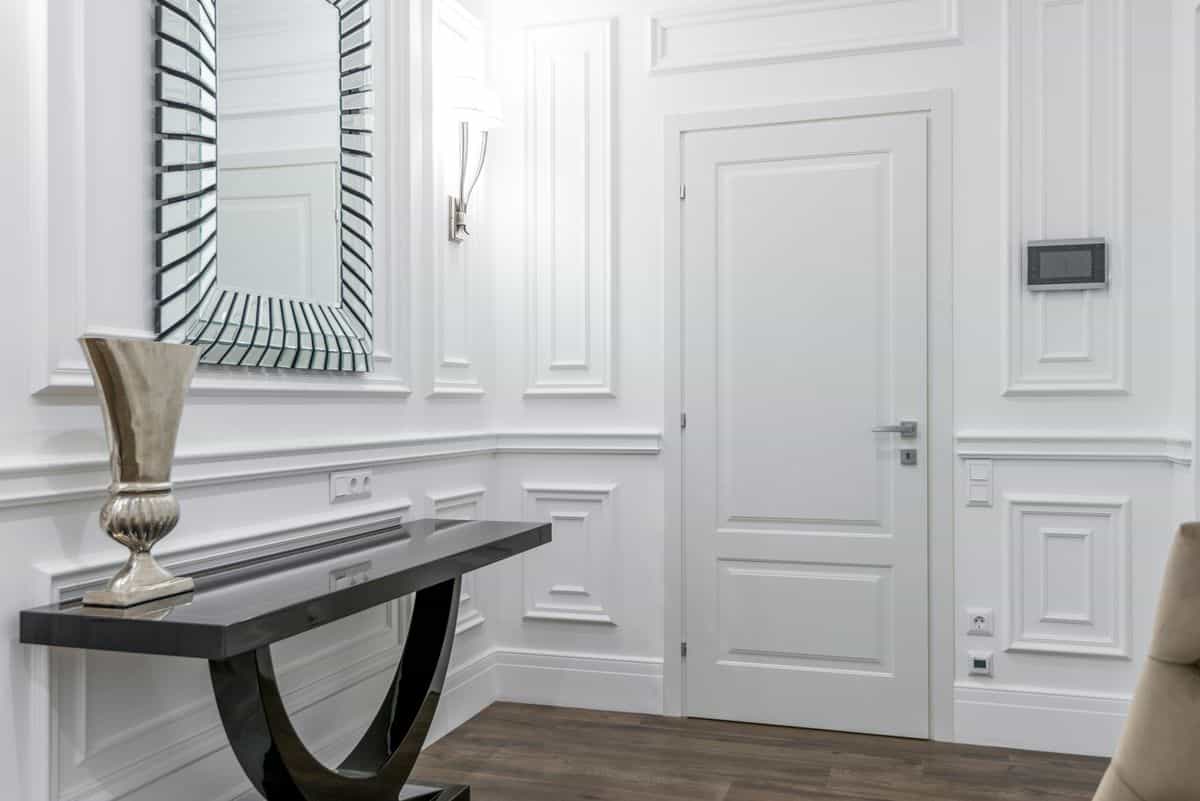
Three things make a mirror in living room decor the most useful single piece. It adds light, bouncing daylight or lamplight deep into the room. It adds the illusion of space, because the eye reads the reflected room as a continuation of the real one. And it adds a focal point, since a framed mirror reads as art that happens to also be functional.
Most "living room mirror ideas" are really variations on placing that one effect well. It is also why the best mirrors for living room use are chosen for their position first and their looks second — a stunning frame in the wrong spot still reflects the wrong thing. So before the specific ideas, hold on to the single test that runs through all of them: stand where you actually sit, and check what the mirror will show you. A mirror that doubles a sunny window or a leafy plant transforms a room; one that doubles the back of your television does the opposite. The idea is never just "hang a mirror" — it is "hang a mirror facing the right thing."
The Big Statement: Oversized Mirrors and Mirrors Over the Sofa
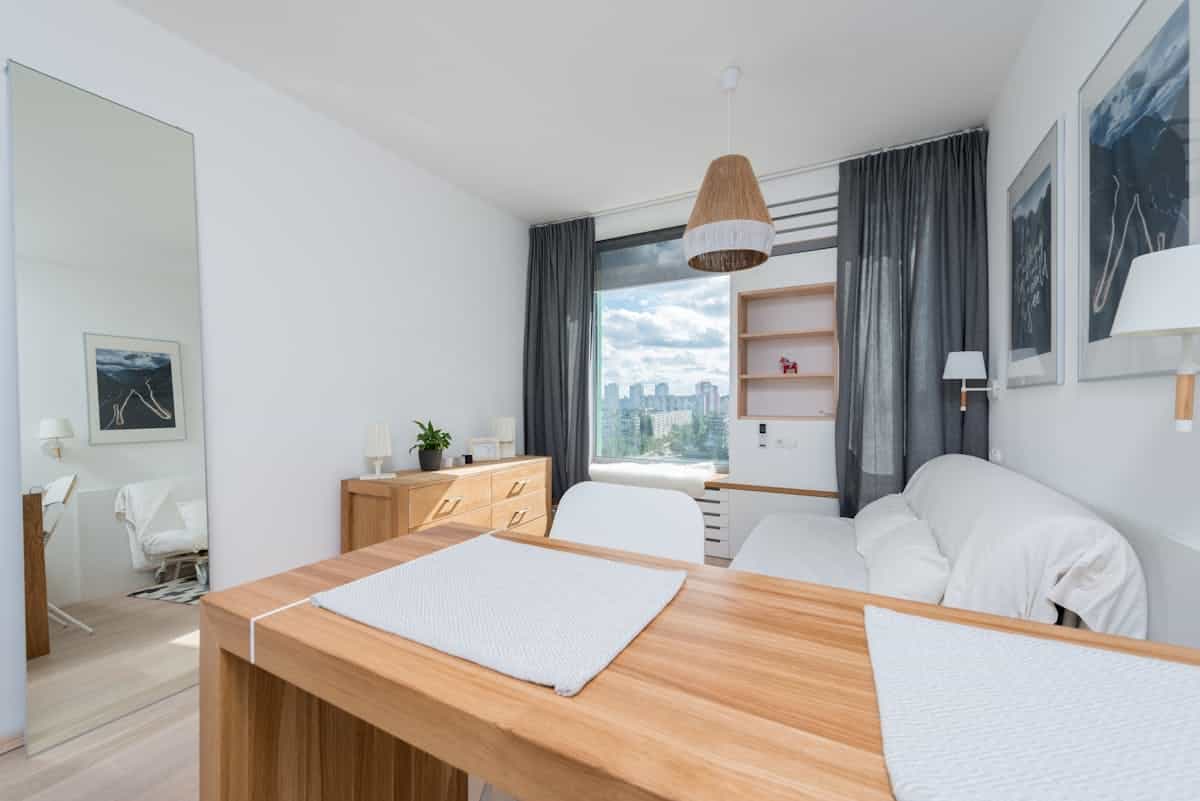
The highest-impact move is to go big. A single oversized mirror does more for light and the sense of space than a handful of small ones ever will.
- Idea 1 — One oversized statement mirror. A large mirror on the main wall, ideally opposite or beside a window, instantly brightens and deepens the room. For sizing, types, and how to hang a heavy one safely, see the dedicated extra-large wall mirrors for the living room guide.
- Idea 2 — A mirror over the sofa. The classic spot — size it to about two-thirds the width of the sofa, hang the bottom edge 6–10 inches above the back, and angle the room so it reflects the window across from it. The full sizing, height, and styling rules are in the mirror over the sofa guide.
- Idea 3 — A long horizontal mirror. In a narrow or compact living room, a wide landscape-format mirror visually stretches the wall and makes the whole space feel broader.
The honest opinion here, after looking at a lot of rooms: undersized is the number-one mirror mistake. A small mirror on a big wall looks like a porthole. When you are between two sizes, choose the larger.
Mirror Over the Mantel or Fireplace
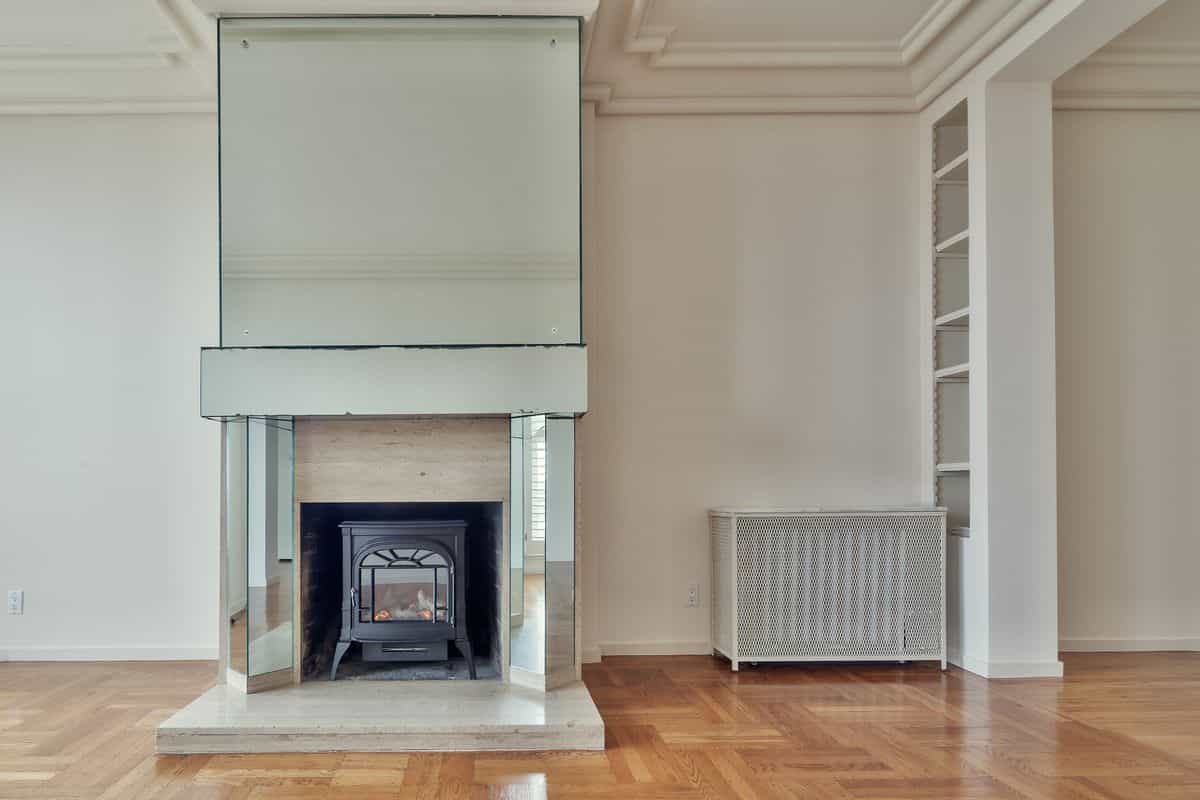
The mantel is the oldest mirror spot in the book, and still one of the best, because the fireplace is already the room's natural focal point.
- Idea 4 — A framed mirror above the mantel. Centered over the fireplace, it draws the eye up and reflects the room's light back across the space. Keep it a touch narrower than the mantel itself.
- Idea 5 — A leaning mantel mirror. Instead of hanging, rest a large mirror on the mantel and let it lean against the wall for a relaxed, layered look — and pair it with the "three-plus-one" trick: a few objects of staggered height to one side, balanced by the mirror.
Play With Shape: Round, Arched, and Organic
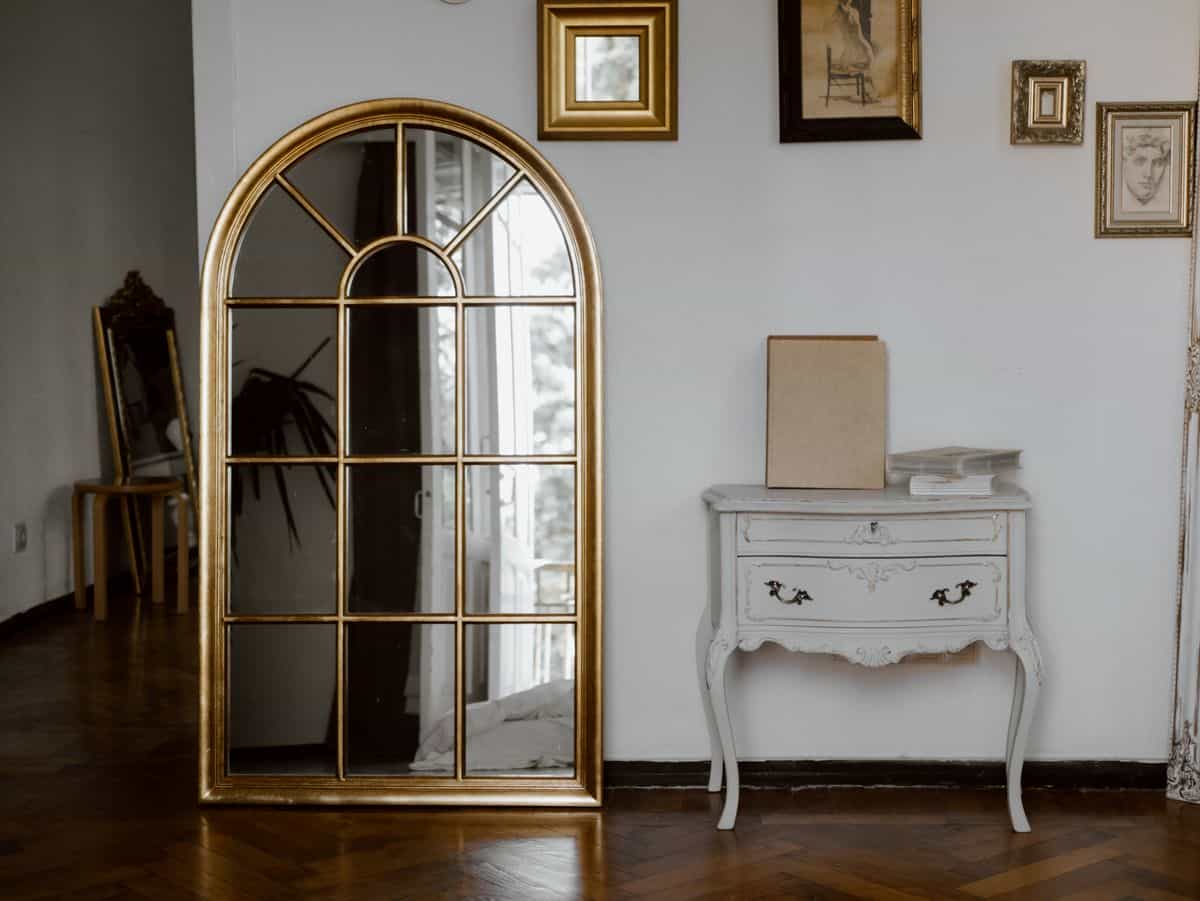
A rectangular mirror is the default; the shape is where you add personality. Curves, in particular, soften a room full of straight lines — sofas, shelves, screens.
- Idea 6 — A large round mirror. The easiest way to break up boxy furniture and add a soft, modern focal point.
- Idea 7 — An arched mirror. Arches read as architectural — like a window or doorway — and bring a calm, elevated feel above a console or sofa.
- Idea 8 — An organic or asymmetric shape. A wavy or irregular contemporary mirror works as sculpture and art at once for a more design-forward room.
Lean a Floor Mirror
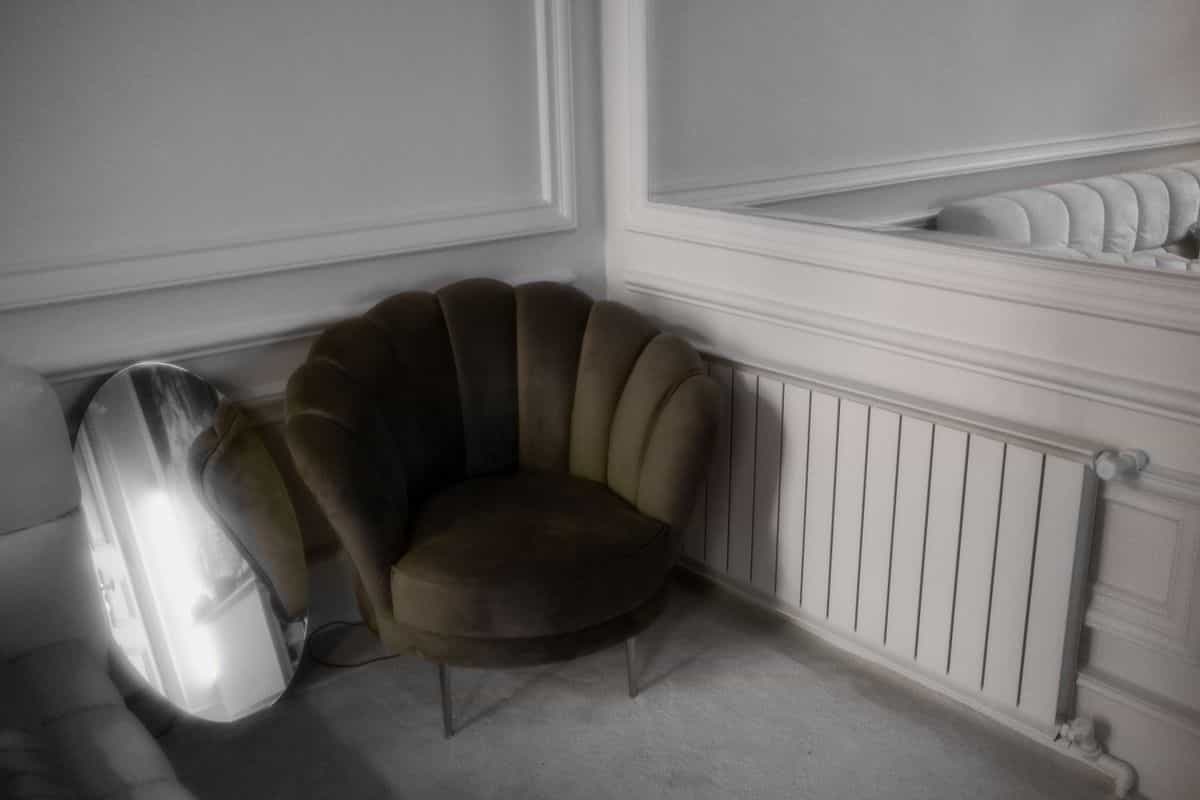
An oversized leaning mirror is the most forgiving idea on this list — no measuring, no holes, just lean and adjust.
- Idea 9 — A floor mirror in an empty corner. It pulls a dead corner together and amplifies light into the bargain.
- Idea 10 — A floor mirror leaning behind the sofa. A designer trick: a tall mirror peeking up behind the couch adds a layered, gallery-like depth and reflects the ceiling light around.
A practical note: a large leaning mirror is heavy and is best anchored to the wall with a strap or bracket so it cannot tip — especially with kids or pets about.
Choose the Right Frame and Finish
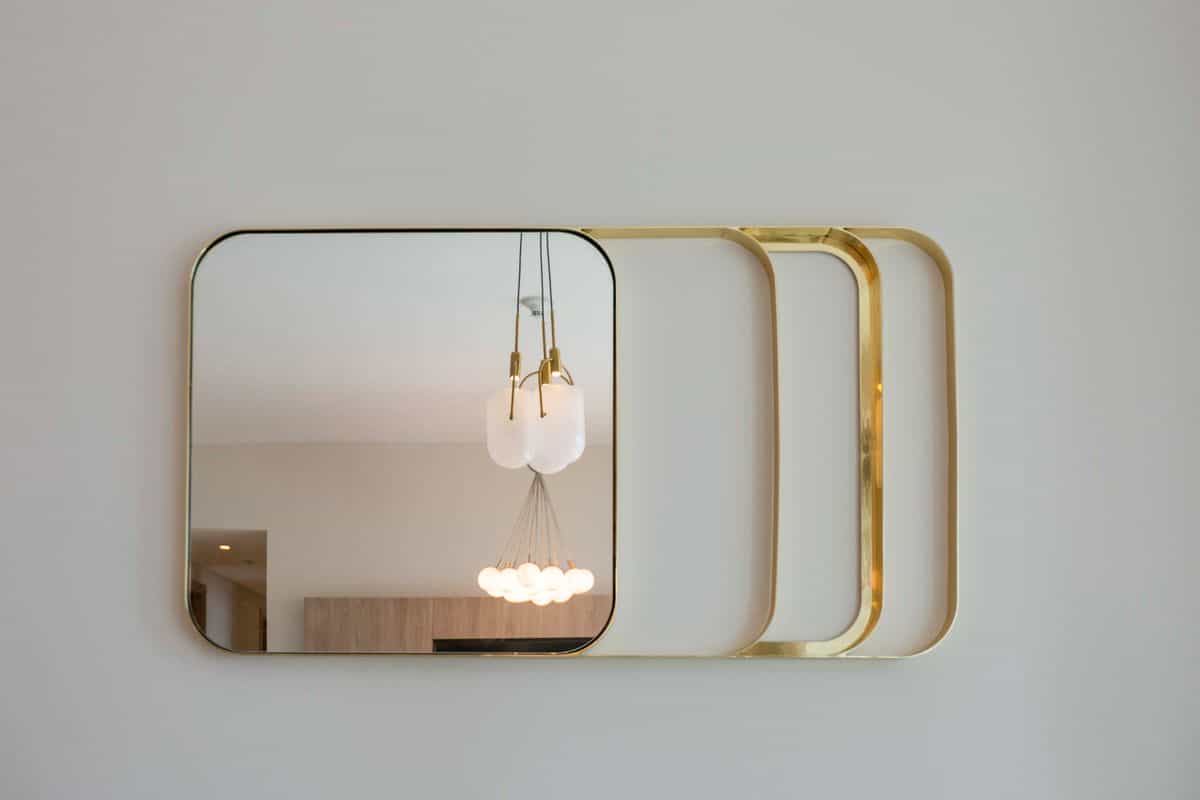
The glass is the same; the frame tells the era and the style. This is where you tie the mirror to the rest of the room.
- Idea 11 — A warm metal or gold frame for a touch of glamour — pair it with brass or gold accents already in the room so it looks intentional.
- Idea 12 — A wood-framed mirror for warmth and a natural, rustic or Scandinavian feel that softens hard surfaces.
- Idea 13 — An antique or tarnished mirror. Aged, foxed glass and an ornate or distressed frame add depth, patina, and history that a brand-new mirror cannot fake — one of the few cases where "imperfect" is the point.
Match the frame's finish to your existing hardware and lighting, and the mirror reads as part of the room rather than a visitor.
Multiply the Effect: Clusters, Gallery Walls, and Mirror Panels
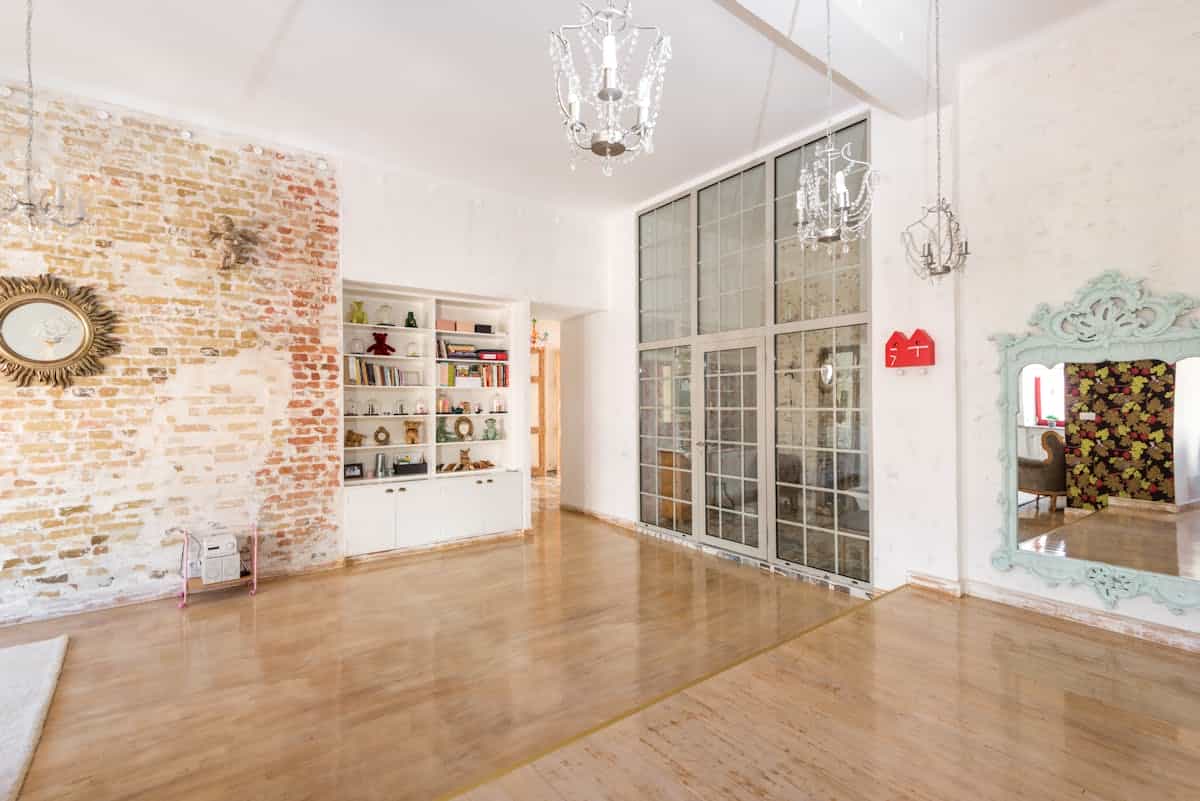
One mirror is a focal point; several become a feature in their own right — handled with a little discipline.
- Idea 14 — A mirror gallery wall or cluster. Group several mirrors of varied shapes and sizes — a curated set, or a collected mix unified by one frame color — for a striking, light-catching wall.
- Idea 15 — A mirrored accent wall or panels. Mirror panels across a wall make a small living room read dramatically larger and brighter, a contemporary take on the "mirror as wall." It overlaps with the broader living room accent wall ideas, and it is the boldest light-and-space play of all.
The discipline that keeps a cluster from looking chaotic is the same as any gallery wall: lay it out on the floor first, keep consistent gaps, and limit the frame styles to two or three.
A Bonus: Mirrored Furniture and Curated Reflections
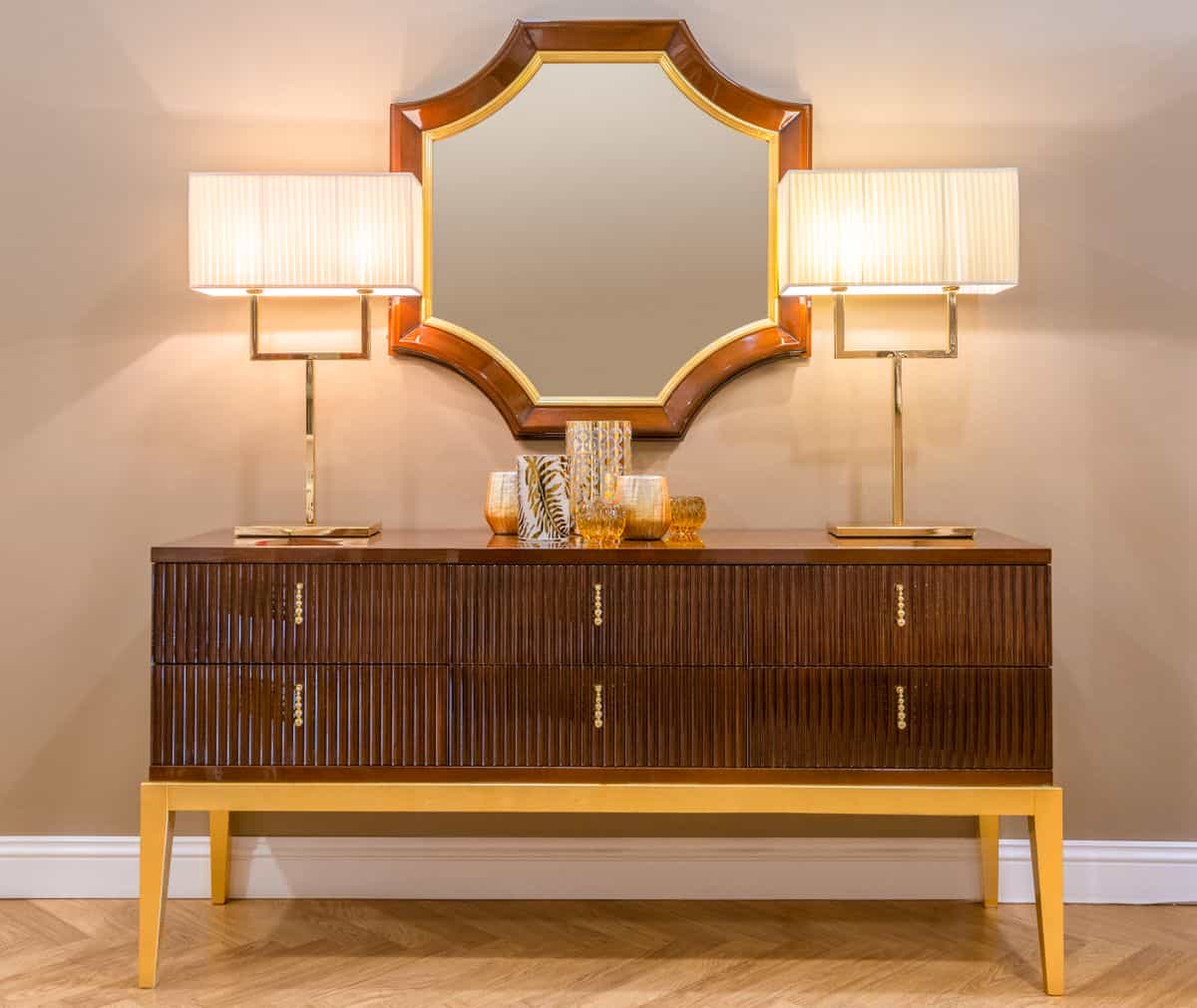
Two final moves round out the toolkit. Mirrored furniture — a console, coffee table, or cabinet with reflective surfaces — scatters light low in the room and adds a quiet glamour without hanging anything. And the most advanced idea is not about the mirror at all but about its job: curate the reflection. Position a mirror so that, from the sofa, it deliberately frames your best window, a favourite plant, or a piece of art — turning the mirror into a second, living picture of the room's best feature.
This is also where a quick word on placement earns its keep. A mirror that faces the main door is discouraged in feng shui, which holds that it bounces arriving energy straight back out — and even setting belief aside, a mirror reflecting a doorway or a TV rarely flatters a room. The deeper logic, and where mirrors help and hurt, is covered in the feng shui mirror placement rules.
A Quick Placement Checklist
Whichever idea you pick, run a living room wall mirror through these five checks before you commit — they take a minute and save a misfire:
- What does it reflect? From your usual seat, it should frame a window, light, a plant, or art — not the TV, clutter, or a doorway.
- Is it big enough? Two-thirds the width of the furniture below it, minimum. Err larger.
- Is it near light? Opposite or beside a window or lamp, so it has light to bounce.
- Is the height right? Center near eye level; over furniture, leave a 6–10 inch gap above.
- Is it safe? Anchor heavy or leaning pieces to the wall.
That checklist is really the whole article in five lines — a wall mirror for living room use lives or dies on the answers, not on the price tag.
The One Thing to Carry Away
Every idea here comes back to a single sentence: a mirror is only as good as what it reflects. The shape, the frame, the size, and the spot all matter — but they are downstream of that one decision. Point the glass at light and beauty, and a mirror does the work of a window, a piece of art, and a room-expander all at once.
So before you commit, do the thirty-second test that almost no one does: hang the mirror in your mind, sit down where you always sit, and ask what you would actually see. Get that answer right, and there is no cheaper way to make a living room feel twice as bright and twice as big.
Recommended Products
These are the categories worth browsing for living room mirror ideas, whatever style you land on. (Links go to Amazon search results so you can compare current options.)
- Large round wall mirror — the soft, modern focal point.
- Oversized arched floor mirror — lean-and-go drama and light.
- Gold or brass framed mirror — warmth and a touch of glamour.
- Wood-framed wall mirror — natural warmth for a softer room.
- Antique / distressed mirror — depth, patina, and character.
- Mirror anti-tip wall strap — to safely anchor a heavy leaning mirror.
Mirror FAQ
Where should you put a mirror in a living room?
The best spots are across from or beside a window (to bounce daylight into the room), above the sofa, above the fireplace mantel, or leaning in an empty corner. The guiding rule matters more than the spot: a mirror reflects whatever faces it, so position it to double something good — a window, greenery, a chandelier, a nice view — and never to reflect clutter, a blank ceiling, or a doorway you would rather not amplify. Place it well and a mirror makes the room brighter and bigger; place it carelessly and it just doubles the mess.
Do mirrors actually make a living room look bigger?
Yes, for two real reasons. A large mirror adds visual depth — the eye reads the reflected space as a continuation of the room — and it bounces light around, and a brighter room reads as a larger one. A good silvered mirror reflects 95 to 99 percent of the light that hits it, so it is genuinely close to a second window in how much light it returns. The effect is strongest with one large mirror placed opposite or beside a window, rather than several small ones scattered around.
What size mirror should go above a sofa?
Aim for a mirror (or a balanced grouping) about two-thirds to three-quarters the width of the sofa, centered on the sofa rather than the wall. Hang it with the bottom edge roughly 6 to 10 inches above the sofa back so the two read as one group, and keep the center near eye level. A too-small mirror stranded above a wide sofa is the most common mistake — when in doubt, size up.
Where should you not hang a mirror in a living room?
Avoid hanging a mirror where it reflects clutter, a television, a blank wall, or straight back out of the room's main door — it will simply double whatever is unflattering or, in feng shui terms, bounce arriving energy straight back out. Also avoid placing one in harsh direct sun all day, which can heat and damage nearby furnishings. The fix is always the same: before you hang it, stand where you usually sit and check what the mirror will actually show you.
Are mirrors still in style for living rooms?
Yes — mirrors are a perennial rather than a trend, because their main jobs (light and the illusion of space) never go out of fashion. What changes is the framing: right now organic and arched shapes, oversized leaning floor mirrors, slim black or warm-metal frames, and antique or tarnished glass are especially popular, while heavy ornate gold has cooled somewhat. The mirror itself is timeless; the frame is where you read the era.
What should a living room mirror reflect?
Something you want more of. The best reflections are a window or the view outside, a source of light like a lamp or chandelier, plants and greenery, or a piece of art you love — anything that adds light, life, or beauty when doubled. Position the mirror so that, from your usual seat, it frames one of those rather than the back of the TV, a cluttered shelf, or an empty corner. A mirror is only as good as what it points at.