Mirror Over Sofa: Sizing, Placement & Styling Rules
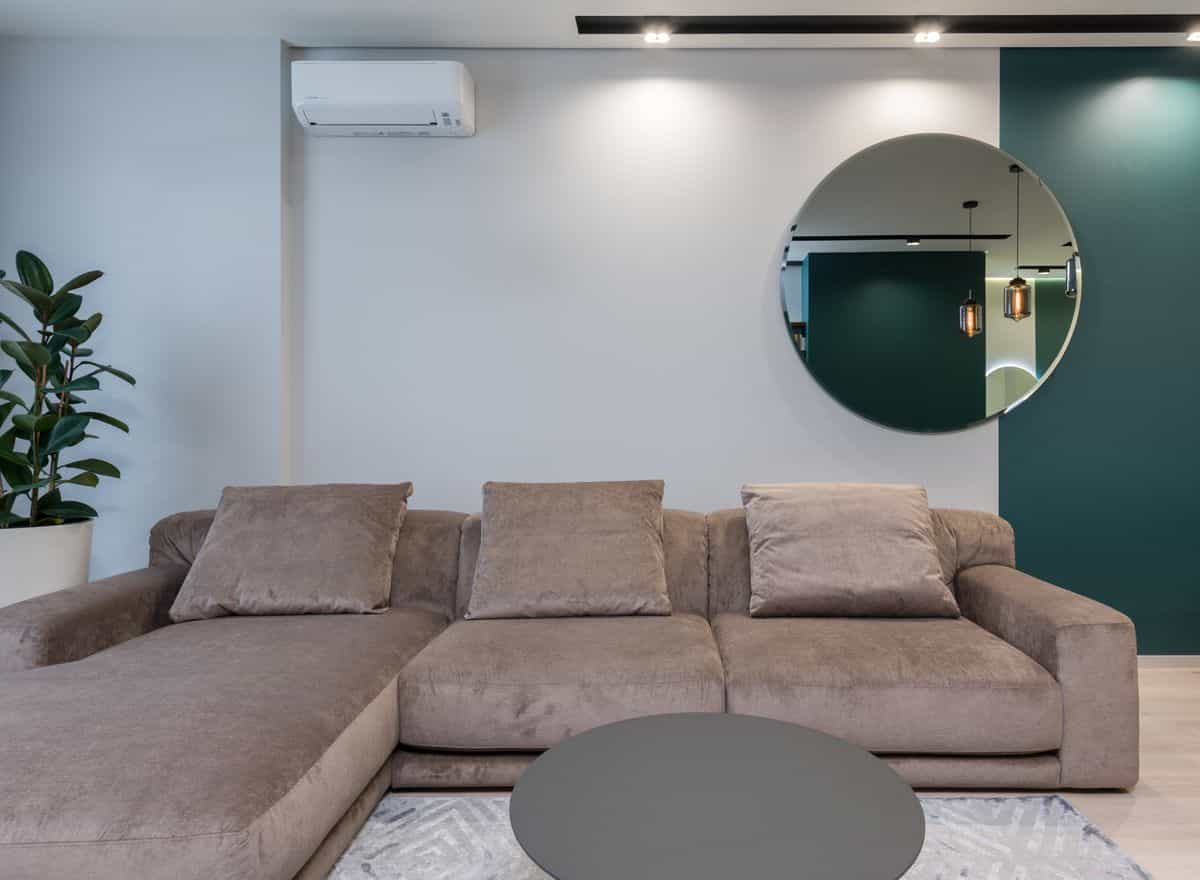
A mirror over the sofa is one of those finishing touches that makes a living room look pulled-together — and one of the easiest to get slightly wrong. The good news is that it comes down to a few specific numbers. Here is the short version first.
Hang a mirror that is about two-thirds the width of the sofa, leave 8 to 10 inches between the sofa back and the bottom of the mirror, center it near eye level, and angle the room so it reflects a window or light rather than the TV. Get those four things right and almost any mirror looks intentional.
One honest opinion before the rules, because it is the single most common mistake: people hang mirrors that are too small. A modest mirror marooned above a wide three-seater looks like an afterthought. When you are torn between two sizes over a sofa, the bigger one is almost always right.
Rule 1: Get the Size Right
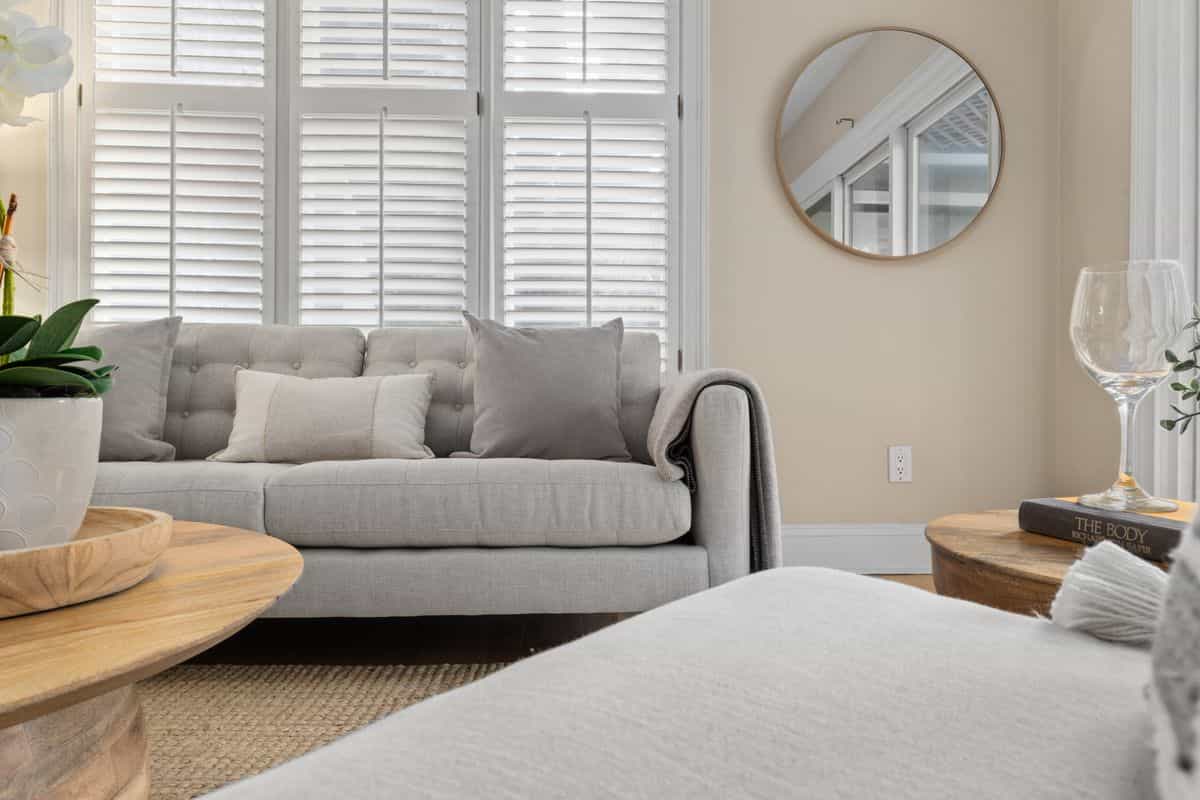
Size is the rule that decides whether the whole thing works. Aim for a mirror — or a grouping — about two-thirds to three-quarters the width of the sofa, and never wider than the couch itself.
A little arithmetic makes it concrete. A standard three-seat sofa is around 84 inches wide, so you want a mirror roughly 56 to 63 inches across. A loveseat at 60 inches wants something around 40 to 45 inches. The mirror should feel anchored to the sofa, like the two were bought together — which is exactly what the right proportion achieves and what an undersized mirror destroys. If a single mirror that wide is more than you want, a grouping that spans two-thirds of the sofa does the same job.
Rule 2: Hang It at the Right Height
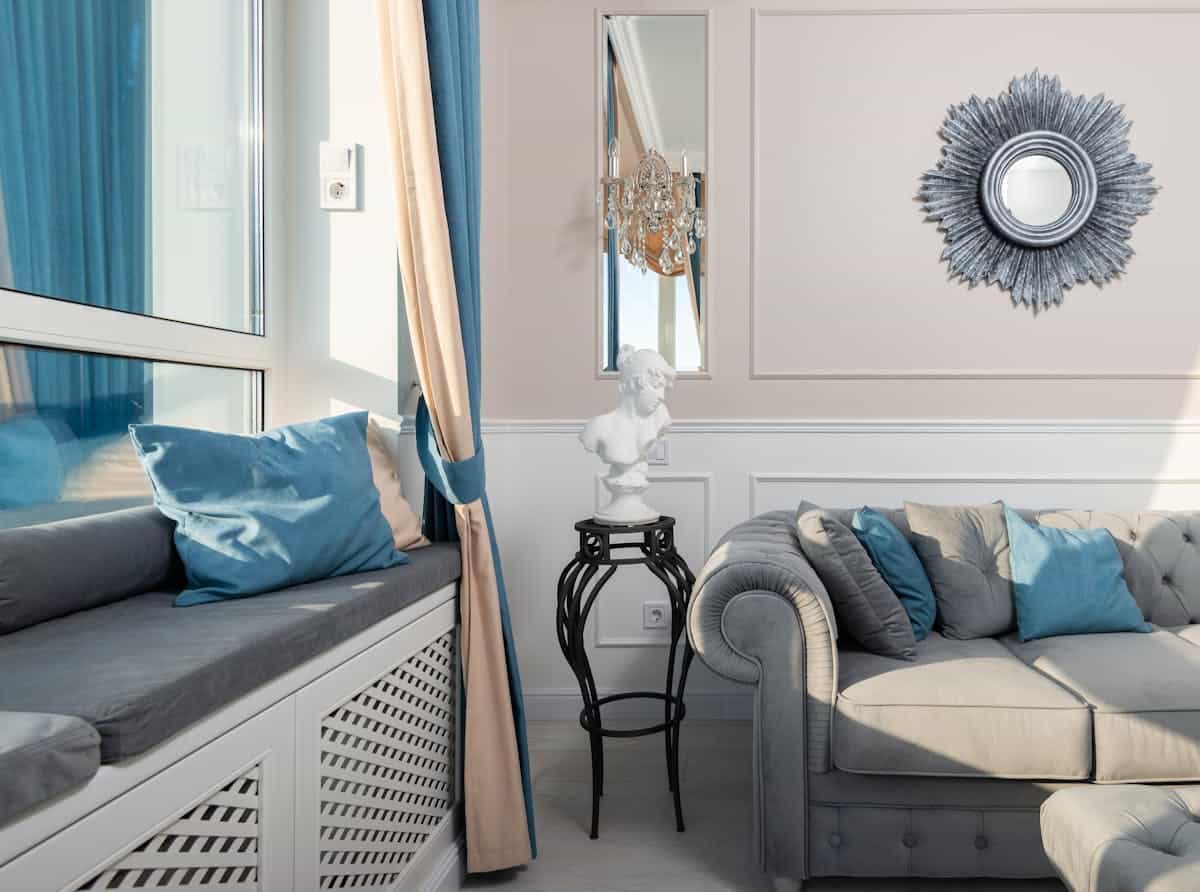
Height is where a good mirror goes wrong most often — usually by being hung too high, floating alone near the ceiling. Two numbers keep it grounded:
- The gap: leave about 8 to 10 inches between the top of the sofa back and the bottom of the mirror. This is what makes the mirror and sofa read as one group instead of two unrelated objects.
- The center: aim for the middle of the mirror to land near eye level — roughly 57 to 60 inches from the floor, the standard gallery height.
When those two guides conflict (a high-backed sofa, say), favour the 8–10 inch gap, so the mirror stays connected to the couch rather than drifting up the wall. The same eye-level logic runs through the how-high-to-hang-a-mirror guide if you want the full reasoning. And a practical tip the pros use: cut a paper template to the mirror's size and tape it to the wall first, or have someone hold the mirror while you step back and judge.
Rule 3: Mind What It Reflects
This is the rule most people never think about, and it matters more than the frame. A mirror reflects whatever faces it, so the view across the room is half of the decision.
Point the mirror so that, from the opposite side, it doubles something good — a window (the classic move, since it bounces daylight back and works almost like a second window), a lamp or chandelier, a plant, or a piece of art. A good silvered mirror returns 95 to 99 percent of the light that hits it through specular reflection, which is why a mirror facing a window genuinely brightens the whole room. Just as importantly, avoid pointing it at the television, a cluttered console, a ceiling fan, or a bare ceiling — it will faithfully double all of them. The thirty-second test: sit where guests sit, look at the wall, and picture what the mirror will show. This is also where the feng shui mirror placement rules and plain good taste happen to agree.
Rule 4: Match the Shape and Frame to the Room
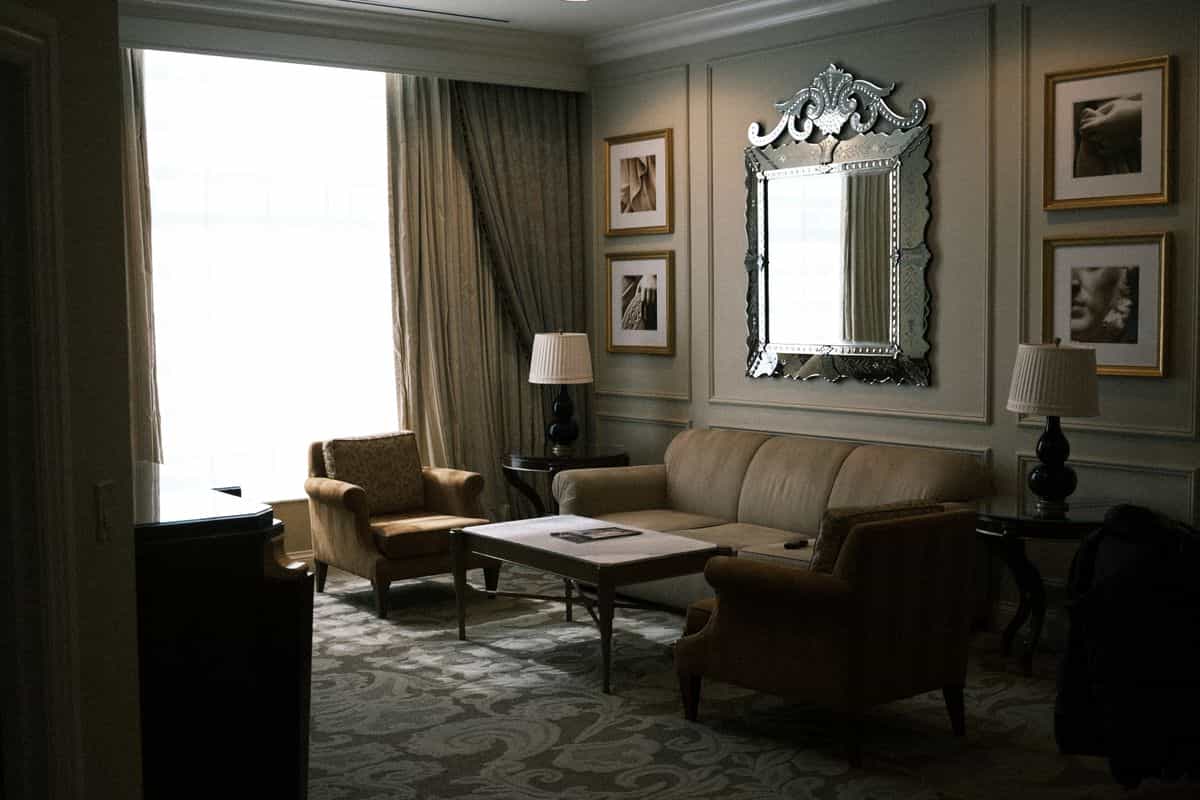
With size and placement settled, the shape and frame are where you tie the mirror to the room's style.
- Shape: a horizontal (landscape) mirror echoes the long line of the sofa and is the safe default. A round or arched mirror softens the boxy lines of the couch and reads modern and calm. Avoid a tall portrait mirror over a wide sofa — it leaves awkward bare wall on each side.
- Frame: match it to the room and to nearby metals. Sleek, thin, or frameless for modern spaces; ornate gold or carved wood for traditional ones; black or warm metal for a contemporary edge; antique or distressed glass for character. The frame is where the era and personality live — the glass is the same either way.
A round mirror in a brass frame above a mid-century sofa, or a wide arched mirror over a low modern one, are the kinds of pairings that look effortless precisely because the shape relates to the couch beneath it.
Rule 5: One Statement Mirror, or a Grouping
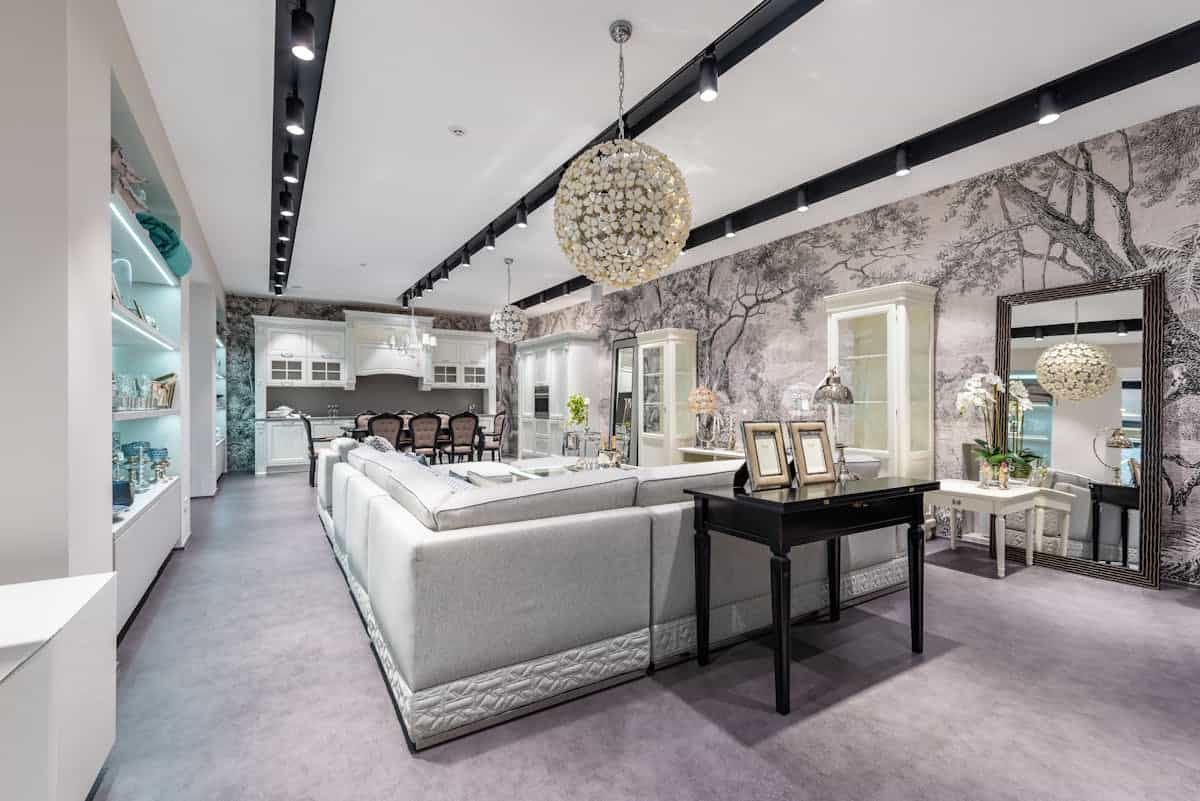
You have two good options above a sofa, and both work as long as they obey the size rule.
A single statement mirror is the simplest and most impactful — one large piece, centered, doing all the work. A grouping — several smaller mirrors in a grid or a curated cluster — adds rhythm and a more collected, personal feel. The discipline for a grouping is the same as any gallery wall: lay it out on the floor first, keep consistent 2–3 inch gaps, treat the whole arrangement as one block spanning two-thirds of the sofa, and limit yourself to two or three frame styles so it reads curated rather than chaotic. For more arrangements, the broader living room mirror ideas guide covers clusters and statement walls in depth.
The Alternative: A Mirror Behind the Sofa
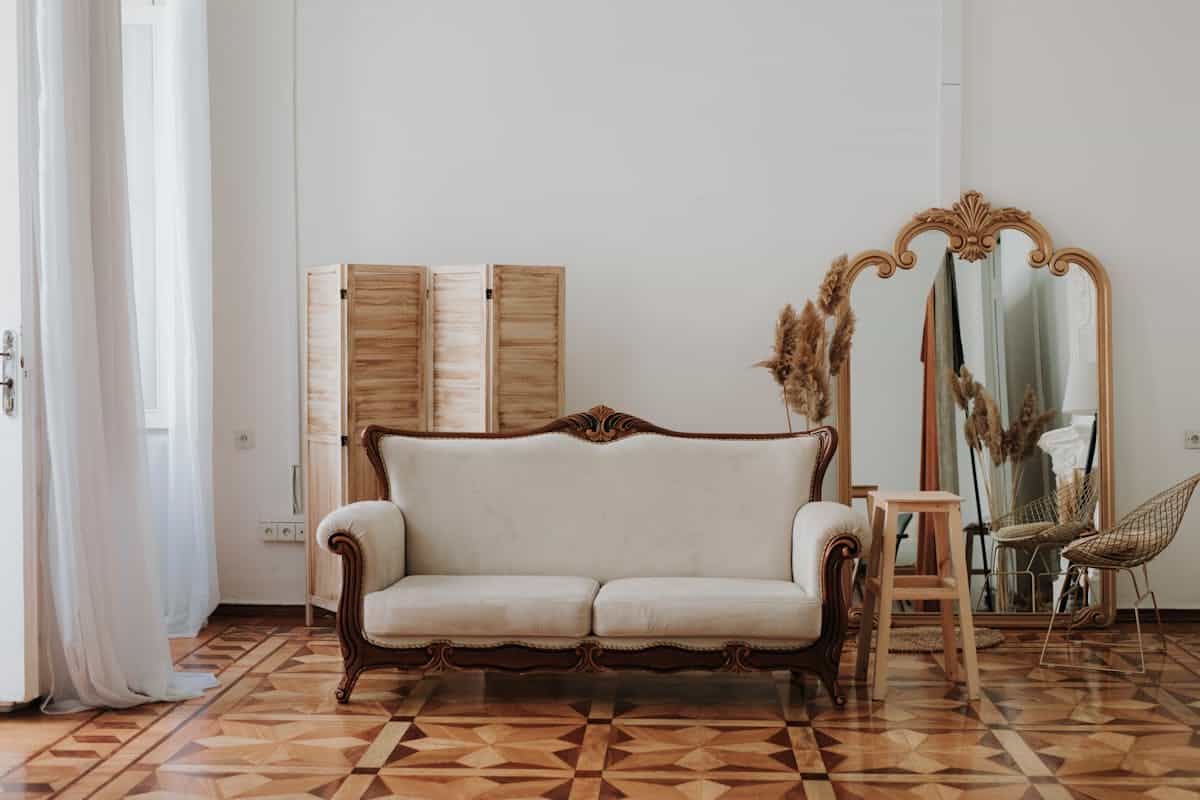
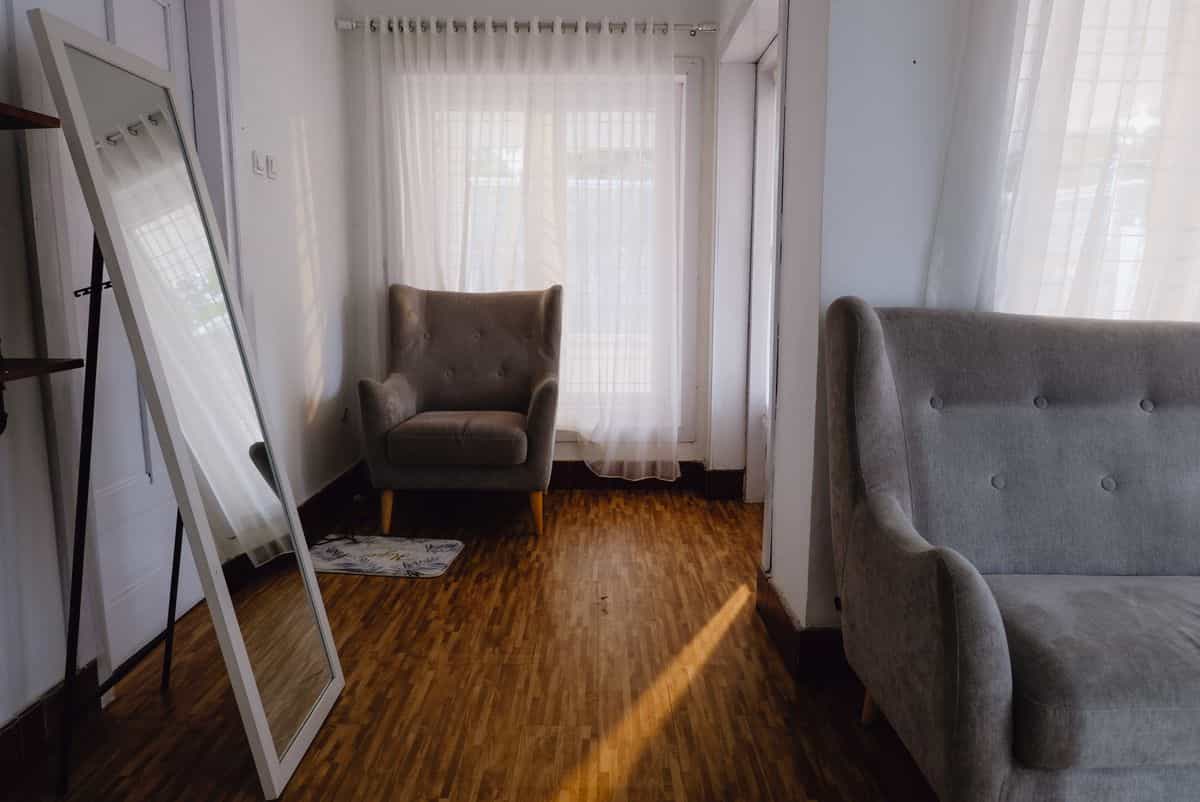
If you would rather not hang anything — or you rent — there is a designer-favourite alternative: a mirror behind the sofa, leaning on the floor and rising up over the back. A tall floor mirror peeking above the couch adds layered depth and bounces light around without a single hole in the wall.
The same reflection rule applies — angle it to catch a window or lamp, not the TV — and the size logic flips slightly: a floor mirror should be tall enough that a meaningful slice rises above the sofa back to actually be seen. One safety note that matters here: anchor a leaning floor mirror to the wall with a strap or bracket so it cannot tip, especially behind a sofa where it sits at an angle. It is the easiest way to get the mirror-and-sofa look in a rental, and it doubles as the "mirror in living room" trick for an awkward empty wall.
Hang It Safely
A mirror over a sofa hangs directly above where people sit, so the hardware is not the place to cut corners. Anchor heavier mirrors into a wall stud, or use wall anchors and hooks rated comfortably above the mirror's weight — not right at the limit. Check the fixings now and then, choose a piece with a solid frame and backing, and never trust a single small picture hook to hold a large, heavy mirror on bare drywall. A mirror is the one bit of wall decor where a failure lands on someone's head, so over-engineer it a little.
The One Thing to Carry Away
Almost everything here reduces to two decisions: make the mirror big enough (two-thirds the sofa, and size up when unsure), and point it at something worth reflecting (light and beauty, never the TV). The height gap and the frame are real, but they are refinements on those two calls.
Get the size and the reflection right, and a mirror over the sofa does three jobs at once — it finishes the wall, it brightens the room, and it makes the whole space feel a little larger than it is. Few pieces of decor earn their wall that efficiently.
Recommended Products
These are the categories worth browsing for a mirror over sofa, plus the bits to hang it safely. (Links go to Amazon search results so you can compare current options.)
- Large horizontal wall mirror — the landscape default that echoes the sofa.
- Round wall mirror — to soften the boxy lines of the couch.
- Arched wall mirror — calm, architectural, and on-trend.
- Set of small mirrors for a grouping — to build a cluster above the sofa.
- Leaning floor mirror — for the mirror-behind-the-sofa look.
- Heavy-duty mirror hanging hardware — studs, anchors, and anti-tip straps.
Mirror FAQ
What size mirror should go over a sofa?
Aim for a mirror — or a balanced grouping — about two-thirds to three-quarters the width of the sofa, and always narrower than the couch itself so it does not overhang the arms. For a standard 84-inch three-seater, that means a mirror roughly 56 to 63 inches wide. The most common mistake by far is going too small: a little mirror stranded above a wide sofa looks lost. When you are between two sizes, choose the larger one.
How high should a mirror be hung above a sofa?
Leave about 8 to 10 inches between the top of the sofa back and the bottom of the mirror, so the two read as one connected group rather than a mirror floating on its own. Within that, aim for the center of the mirror to sit near eye level — roughly 57 to 60 inches from the floor. If your sofa back is high, prioritise the 8–10 inch gap over the floor measurement so the mirror does not creep too high up the wall.
What should a mirror over a sofa reflect?
Something worth doubling — ideally a window, a light source, greenery, or a piece of art on the opposite wall. Because a mirror reflects whatever faces it, the view from across the room matters as much as the mirror itself. Avoid positioning it to reflect a television, a cluttered shelf, a ceiling fan, or a blank stretch of ceiling. Before you commit, sit on the sofa across the room and check what the mirror will actually show.
Can you put a mirror behind a sofa instead of above it?
Yes. A large mirror leaning on the floor behind the sofa, peeking up over the back, is a designer favourite — it adds layered depth and bounces light without anything hung on the wall, and it is ideal for renters. Lean a tall floor mirror so its top rises above the sofa back, and anchor it to the wall with a strap so it cannot tip. This is a different look from a framed mirror hung above the sofa, but it solves the same wall.
Is it OK to hang a heavy mirror above where people sit?
Only if it is anchored properly. A mirror over a sofa hangs directly above where people sit, so security matters more than for most wall decor. Hang heavier mirrors from a wall stud, or use wall anchors and hooks rated comfortably above the mirror's weight, and check the hanging hardware periodically. For extra peace of mind, choose a mirror with a sturdy frame and backing, and avoid hanging a very large, heavy mirror on drywall with a single small hook.
Should a mirror over a sofa be horizontal or vertical?
Usually horizontal (landscape), because it echoes the long, low line of the sofa and fills the wall above it in proportion. A round or arched mirror also works beautifully and softens the boxy lines of the couch. A tall portrait mirror over a sofa tends to leave awkward empty wall on either side unless it is part of a pair or grouping — so reach for landscape, round, or arched first.