Vanity Mirror Guide: Sizes, Styles & Placement Tips
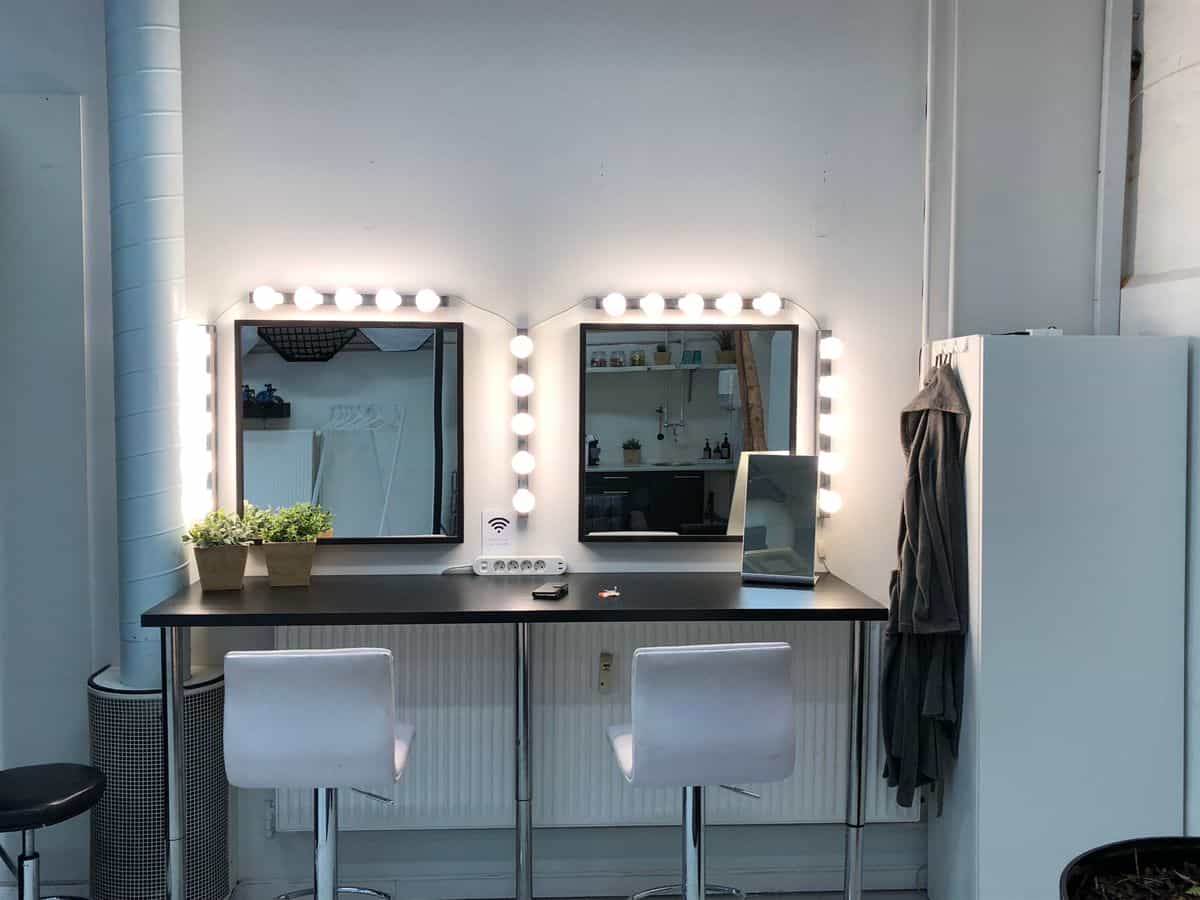
A vanity mirror is the mirror you look into most closely, every day, at the closest range of any mirror you own. That makes size, shape, height, and — above everything — lighting matter more here than anywhere else in the home. Here is the short version first.
Size a vanity mirror to about 70 to 100 percent of the vanity width (2 to 4 inches narrower per side), hang it with the center around 60 to 65 inches off the floor and 5 to 10 inches above the counter, choose a shape that suits the room, and light it from the sides at eye level rather than overhead. Get the lighting right and an ordinary mirror flatters; get it wrong and the best mirror in the world will not.
There is a useful distinction to make before anything else, because it changes every rule that follows: a bathroom vanity mirror hangs on the wall and is used standing, while a table dressing mirror sits on a dressing table and is used seated. This guide covers both. Let us start with the wall-mounted kind.
How to Size a Vanity Mirror
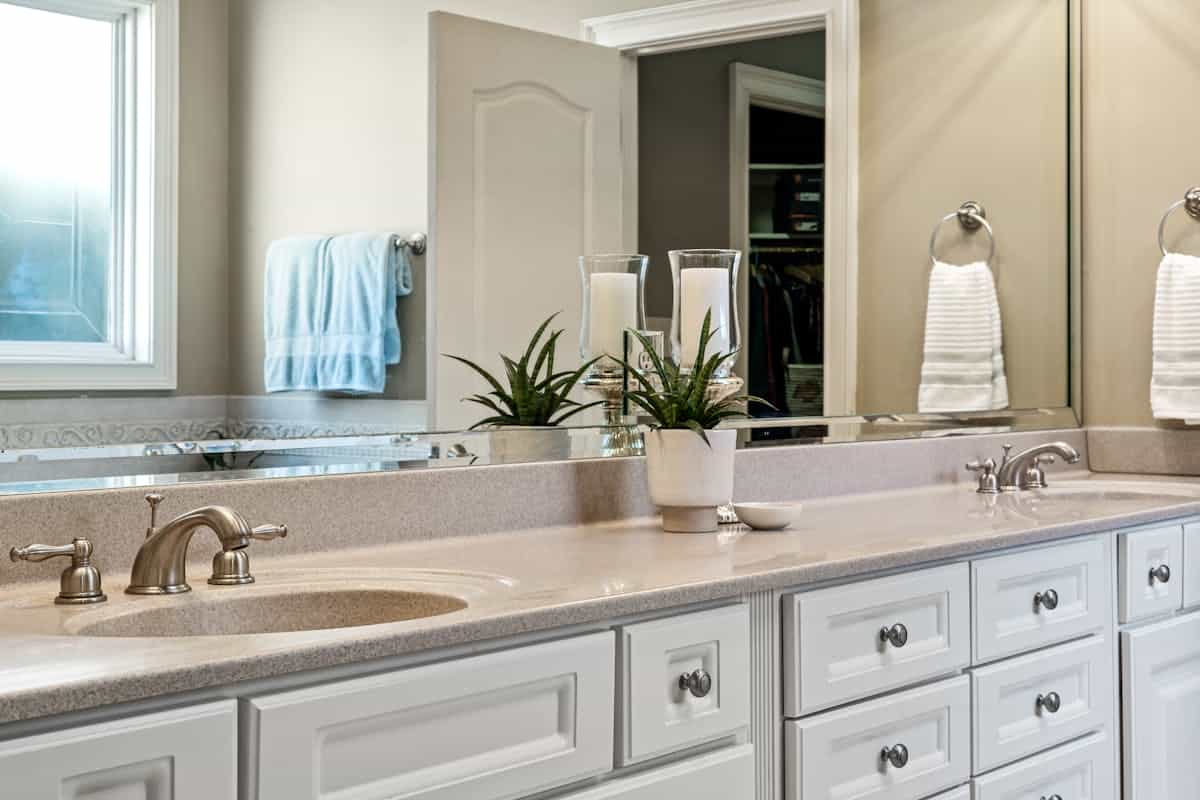
Sizing is where most vanity mirrors go wrong, and the rule is refreshingly simple: the mirror should be about 70 to 100 percent of the vanity width, and never wider than the vanity itself. In practice, aim for 2 to 4 inches narrower on each side.
That maps cleanly to the common vanity widths:
- A 24-inch vanity takes an 18 to 22 inch mirror.
- A 30-inch vanity takes a 24 to 28 inch mirror.
- A 36-inch vanity takes a 28 to 34 inch mirror.
- A 48-inch vanity takes a 40 to 44 inch mirror.
Height usually runs 30 to 40 inches, with at least 6 inches of clearance below the ceiling or light fixture. The most common mistake is a mirror that is technically "fine" but floats too small over a wide counter, leaving the vanity looking unbalanced.
How High to Hang It
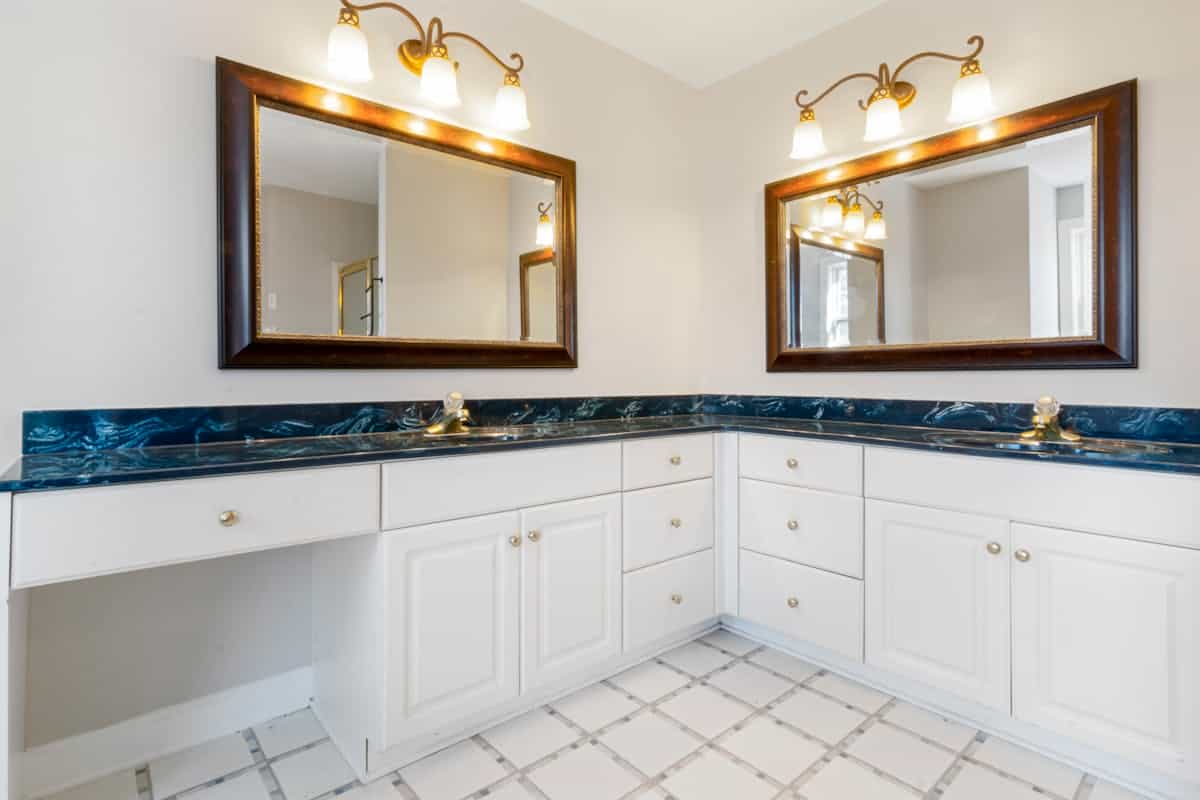
Placement is about eye level. Hang the mirror so its center sits about 60 to 65 inches off the floor — the natural sightline for most adults — and leave 5 to 10 inches between the bottom of the mirror and the countertop or backsplash.
If the people using it vary a lot in height, go taller rather than wider and center the mirror slightly higher so it works for everyone. The logic is the same one that governs how high to hang a mirror anywhere else in the home: the reflection has to meet the eye, not sit above or below it. For a seated dressing-table mirror, the rule flips — set it lower, so your face is centered while sitting down.
Single Mirror or Two? Sizing a Double Vanity
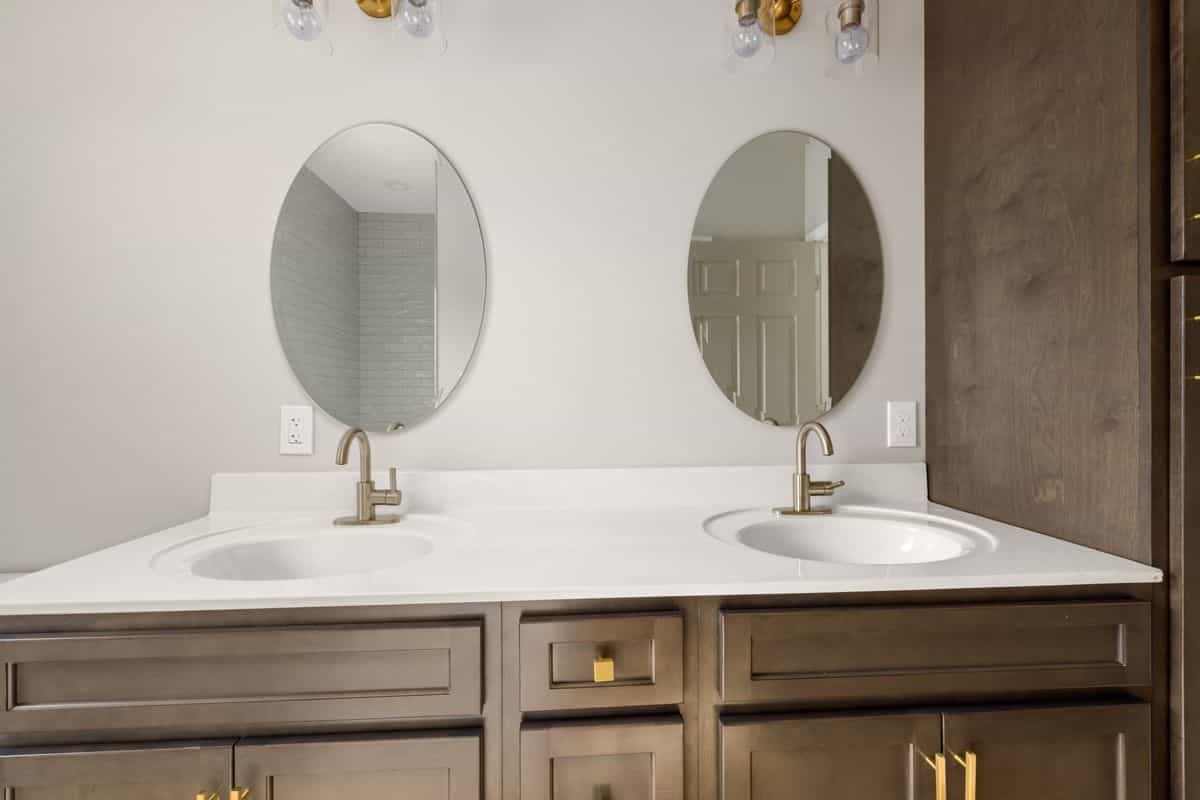
A double vanity gives you a choice, and it is genuinely a matter of look and lighting rather than right or wrong.
One large mirror spanning the whole counter creates a unified, seamless look, reflects the most light, and makes the room feel bigger — the better call in a smaller bathroom, and simpler if you have a single overhead fixture. Two separate mirrors, one centered over each sink, give clear his-and-hers zones, symmetry, and individual lighting, and suit wider, more contemporary double vanities. For a 60 to 72 inch double vanity, either run one near-full-width mirror or hang two 28 to 36 inch mirrors with a 4 to 8 inch gap between them. The pair reads more custom; the single reads more spacious.
Vanity Mirror Shapes and Styles
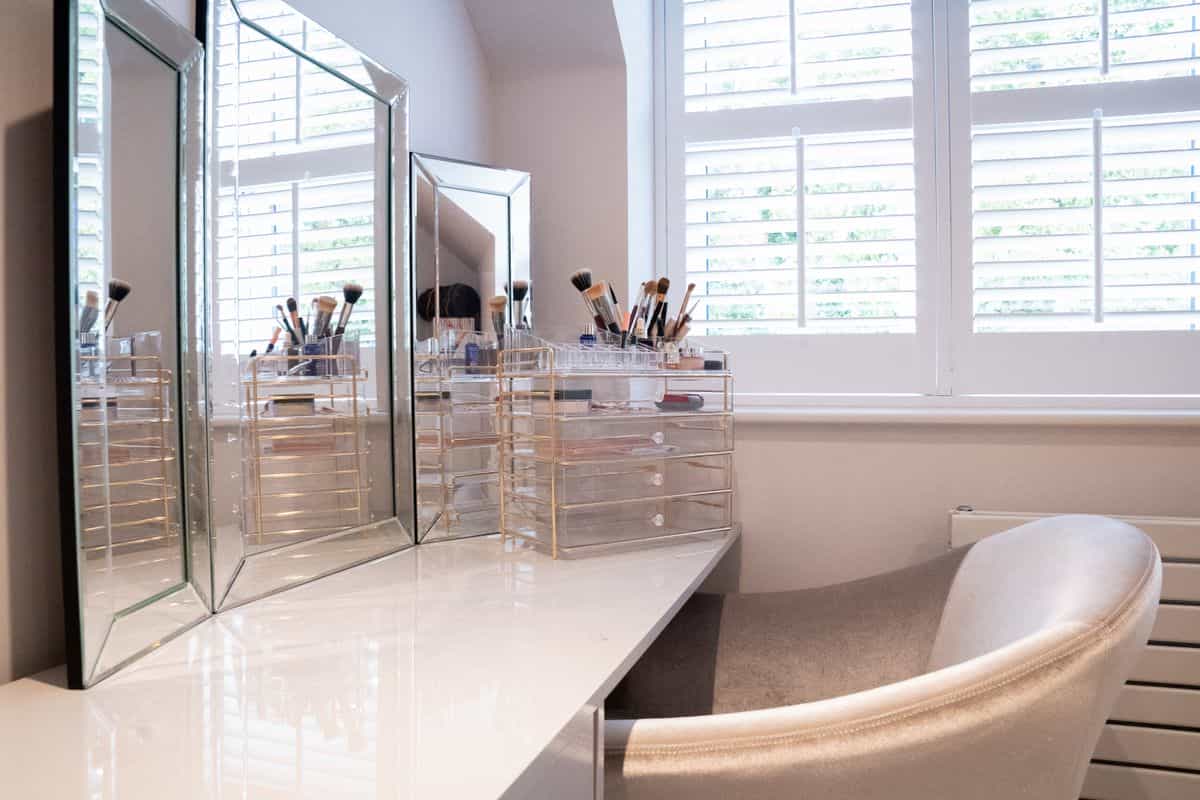
Shape is where a vanity mirror stops being purely functional and starts setting the style of the room.
- Rectangular — the classic, versatile choice, still the most common. Horizontal suits wide counters; vertical suits tall ceilings.
- Round — softens a bathroom full of hard tile and square cabinetry, and feels modern and intentional.
- Oval — an oval vanity mirror does the same softening with a vertical stretch, and the shape is genuinely flattering to the face. (For the wider sizing logic on circles and ovals, see the round mirror decor ideas.)
- Arched — adds height and a window-like elegance; the same appeal as a full arched mirror wall, scaled to the vanity.
Frameless mirrors suit minimalist rooms and make up a large share of the market; framed mirrors in slim black, brushed gold, or natural wood let you pick up the finish of your faucet and hardware. Match the frame to the metals already in the room and the mirror will read as part of the design.
The Part That Actually Matters: Lighting
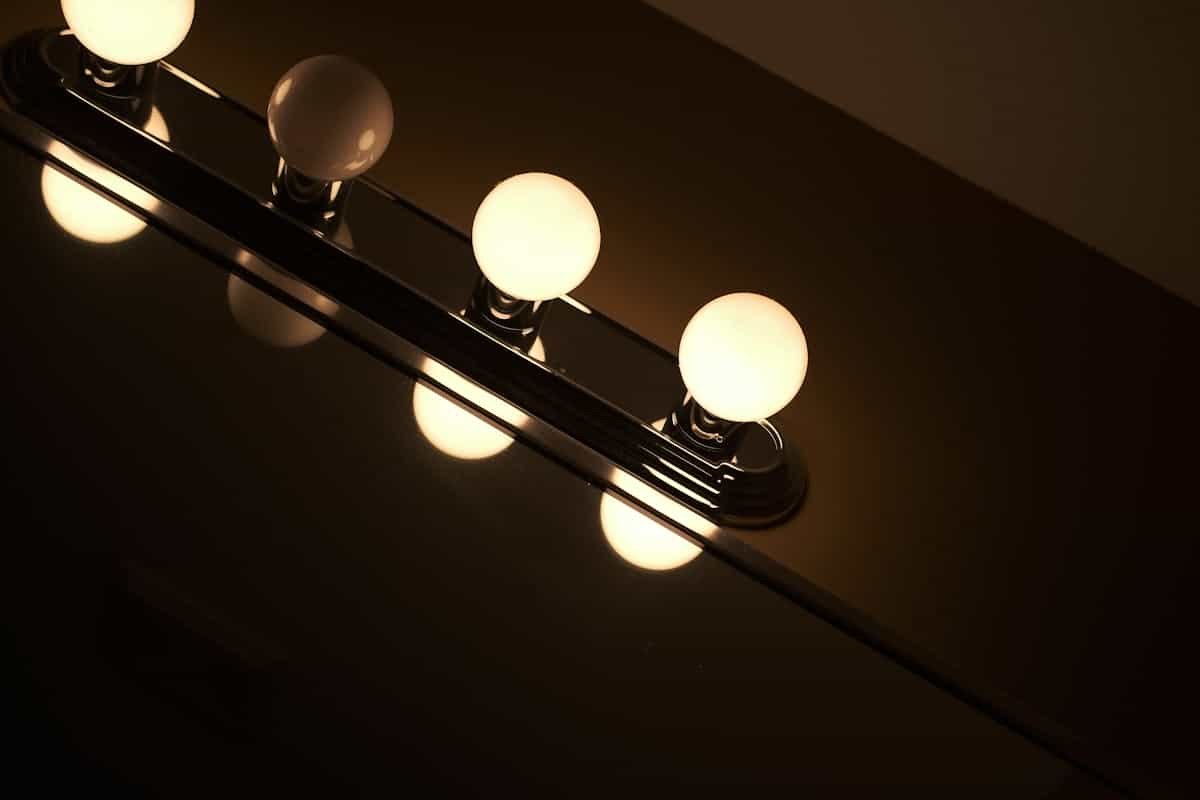
Here is the one strong opinion of this guide: with a vanity mirror, the lighting matters more than the mirror. You can buy a beautiful frame and still look washed-out, shadowed, or sallow in it if the light is wrong — and most bathrooms get this exactly backwards.
The problem is the single light directly overhead, which casts shadows straight down into your eye sockets and under your chin. The fix is even, front-facing light. Two sconces mounted on either side of the mirror at about eye level light the face evenly from both sides and cancel out shadows — which is precisely why theatre and "Hollywood" mirrors ring the entire glass with bulbs. Leave 2 to 6 inches between the mirror edge and each sconce.
The bulbs matter too, and this is where a little physics pays off. Choose lamps with a high color rendering index — CRI 90 or above — so colors read true rather than muddy, and a neutral color temperature of around 3000K to 4000K, which is close to soft daylight. Makeup applied under warm, low-CRI light is the classic reason your face looks different outside than it did at the mirror.
The Makeup and Dressing-Table Vanity Mirror
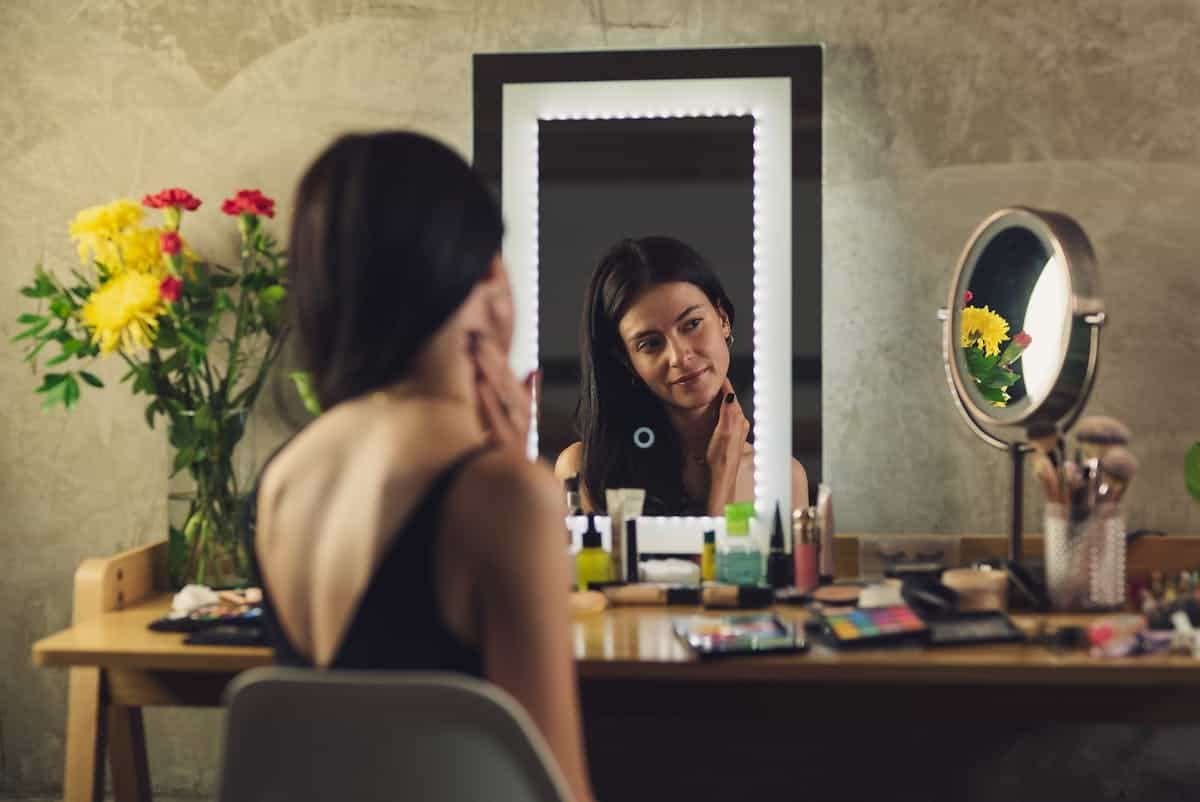
A makeup vanity is a different animal from a bathroom one. You use it seated and close, so the priorities shift to close-up clarity and flattering light over wall proportion.
A good table dressing mirror sits at a height where your face is centered while you are sitting, often with bulbs built around the frame and sometimes a small magnifying panel for detail work. The same lighting rules apply, only more so — even, front-facing, high-CRI light is the whole point of a dedicated makeup station. One honest note worth keeping in mind: research from 2024 found that prolonged, self-focused mirror gazing tends to reduce appearance satisfaction, even in people without any body-image concerns. A vanity mirror is a tool for a task, not a place to linger and scrutinise — set it up well, do what you came to do, and walk away.
Long and Full-Body Vanity Mirrors
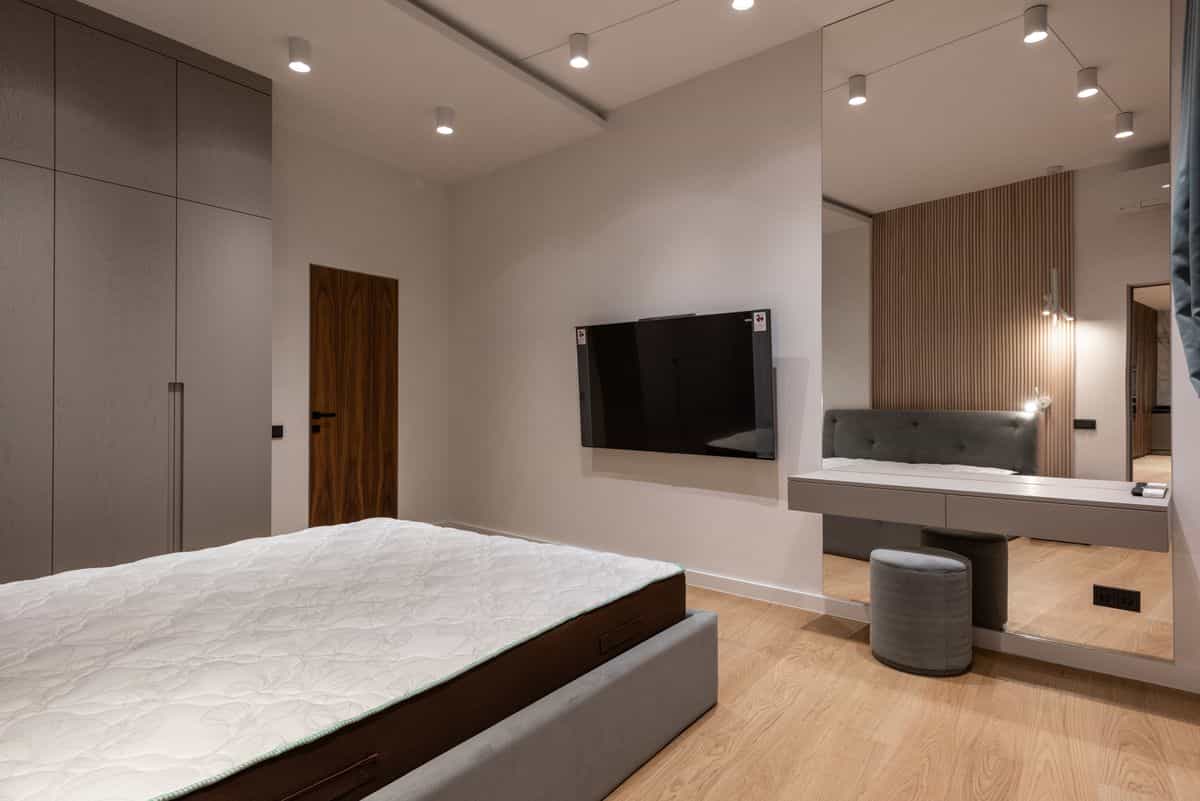
Some vanities want more than a face mirror. A vanity long mirror — a tall mirror paired with a dressing table — lets you check hair and outfit together, and a vanity full body mirror turns a dressing area into a complete getting-ready station, head to toe.
These overlap with the standing and leaning mirrors covered in the full length mirror guide, and the same safety rule applies — a tall mirror leaning by a dressing table must be strapped to the wall so it cannot tip. The combination of a seated makeup mirror for the face and a full-length mirror nearby for the whole look is the most functional dressing setup there is.
The One Thing to Carry Away
A vanity mirror is the rare piece where the frame is the least important decision. Size it to the vanity, hang it at eye level, pick a shape that suits the room — and then spend your real attention on the light. Two sconces at eye level with high-CRI, daylight-neutral bulbs will do more for how you look in the mirror than any frame ever could.
The mirror only shows what the light reveals. Light it well, and it tells you the truth in your favour.
Recommended Products
These are the categories worth browsing for a vanity mirror, for both the bathroom wall and the dressing table. (Links go to Amazon search results so you can compare current options.)
- Bathroom vanity mirror — wall-mounted, sized to your vanity.
- Oval vanity mirror — a flattering, softening shape.
- Lighted makeup vanity mirror — bulbs around the frame for even light.
- Vanity mirror with sconce lighting — to light the face from the sides.
- Table dressing mirror — for a seated makeup station.
- High-CRI daylight vanity bulbs — for colors that read true.
Mirror FAQ
What size mirror should I get for my vanity?
As a rule, a vanity mirror should be about 70 to 100 percent of the vanity width and never wider than the vanity itself — in practice, 2 to 4 inches narrower on each side. So a 30-inch vanity takes a roughly 24 to 28 inch mirror, a 36-inch vanity takes a 28 to 34 inch mirror, and a 48-inch vanity takes a 40 to 44 inch mirror. Height is usually 30 to 40 inches. The mirror should look centered and proportional over the sink, not float undersized above a wide counter.
How high should a vanity mirror be hung?
Hang the mirror so its center sits about 60 to 65 inches off the floor — roughly average eye level — and leave 5 to 10 inches of space between the bottom of the mirror and the countertop or backsplash. If household members vary a lot in height, favour a taller mirror centered slightly higher so everyone can use it. Over a makeup or dressing-table vanity, where you are seated, hang or stand the mirror lower so your face is centered in it while sitting.
Should a double vanity have one mirror or two?
Both work, and the choice is about look and lighting. One large mirror spanning the whole counter creates a unified, light-reflecting, space-expanding effect and pairs well with a single overhead fixture — the better choice in a smaller bathroom. Two separate mirrors, one centered over each sink, give clear his-and-hers zones, symmetry, and individual lighting, and suit wider, more modern double vanities. For a 60 to 72 inch double vanity, use either one near-full-width mirror or two 28 to 36 inch mirrors with a 4 to 8 inch gap.
What shape of vanity mirror is best?
Rectangular is the classic, versatile choice and still holds the largest market share — horizontal suits wide counters, vertical suits high ceilings. Round and oval mirrors soften a bathroom full of straight edges and feel more designed; an oval vanity mirror is especially flattering for faces. Arched mirrors add height and a window-like elegance. Match the shape to the room and the frame finish to your faucet and hardware — black, brushed gold, or natural wood are the common picks.
What is the best lighting for a vanity mirror?
The best vanity lighting is even and in front of you, not above. Two sconces mounted on either side of the mirror at about eye level light the face evenly and minimise shadows, which is why theatre and Hollywood mirrors ring the glass with bulbs. A single light directly overhead casts shadows under the eyes and chin. For color accuracy, choose bulbs with a high color rendering index (CRI 90+) and a neutral color temperature around 3000K to 4000K so your makeup reads true in daylight.
What is the difference between a bathroom vanity mirror and a makeup vanity mirror?
A bathroom vanity mirror is mounted on the wall above a sink, sized to the vanity, and used standing up. A makeup or dressing-table vanity mirror sits on a table and is used seated, usually closer to the face, often with built-in lights and sometimes a magnifying panel. The bathroom mirror is about proportion and wall placement; the dressing-table mirror is about close-up clarity and flattering light. Many homes have both, and they are chosen by completely different rules.