Round Mirror Decor Ideas: Styles, Sizes & Placement Tips
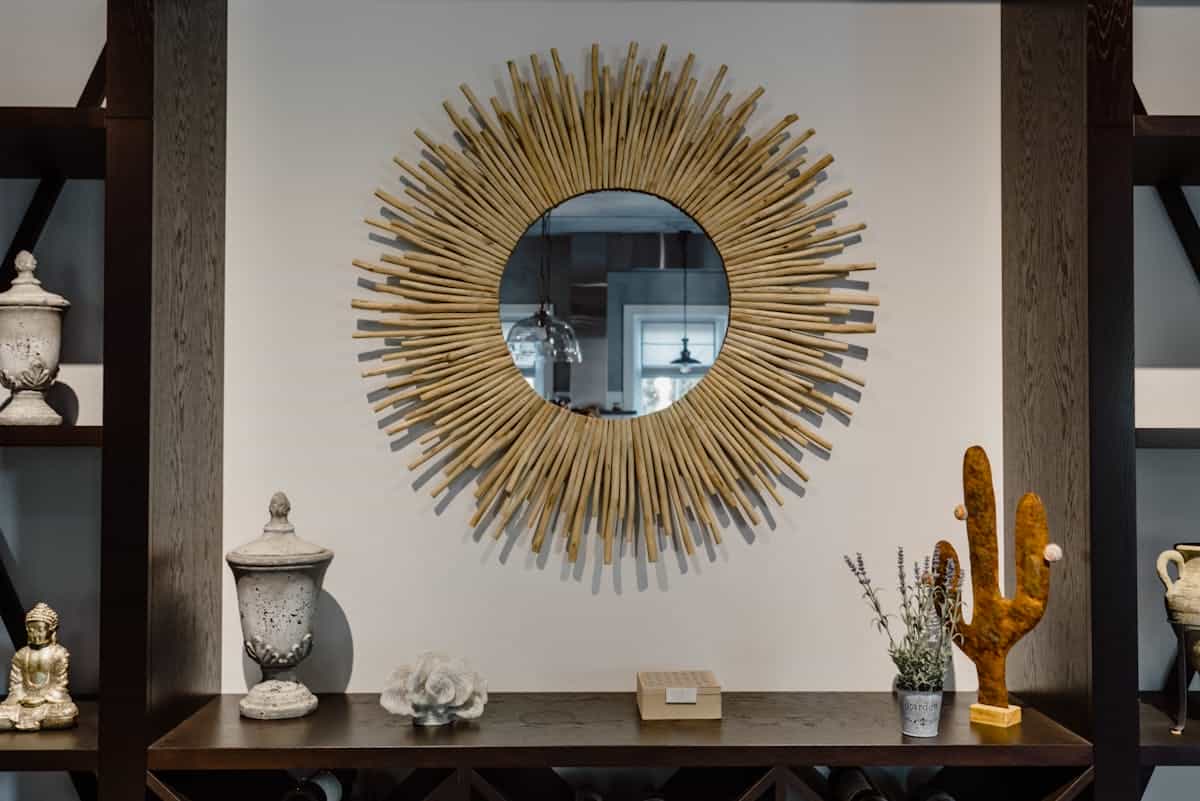
A round mirror is the easiest way to break up a room full of straight lines. Sofas, cabinets, doorways, picture frames — almost everything in a home is a rectangle, and a circle on the wall is the quickest way to soften all of it. Here is the short version first.
The best round mirror decor follows three rules: size it to about two-thirds the width of the furniture below it (24 to 28 inches over a narrow console, 36 inches over a standard one, 48 inches as a statement), choose a frame that echoes the metals or woods already in the room (gold, black, wood, or silver), and place it to reflect a window or light rather than clutter. Get those three right and a single round mirror can carry a wall.
A round mirror earns its place for the same reason any mirror does — it bounces light. A good silvered mirror returns 95 to 99 percent of the light that hits it, so a well-placed round mirror works almost like a small window. The round shape just changes how it draws the eye. Here is how to use that.
Why a Round Mirror Works So Well
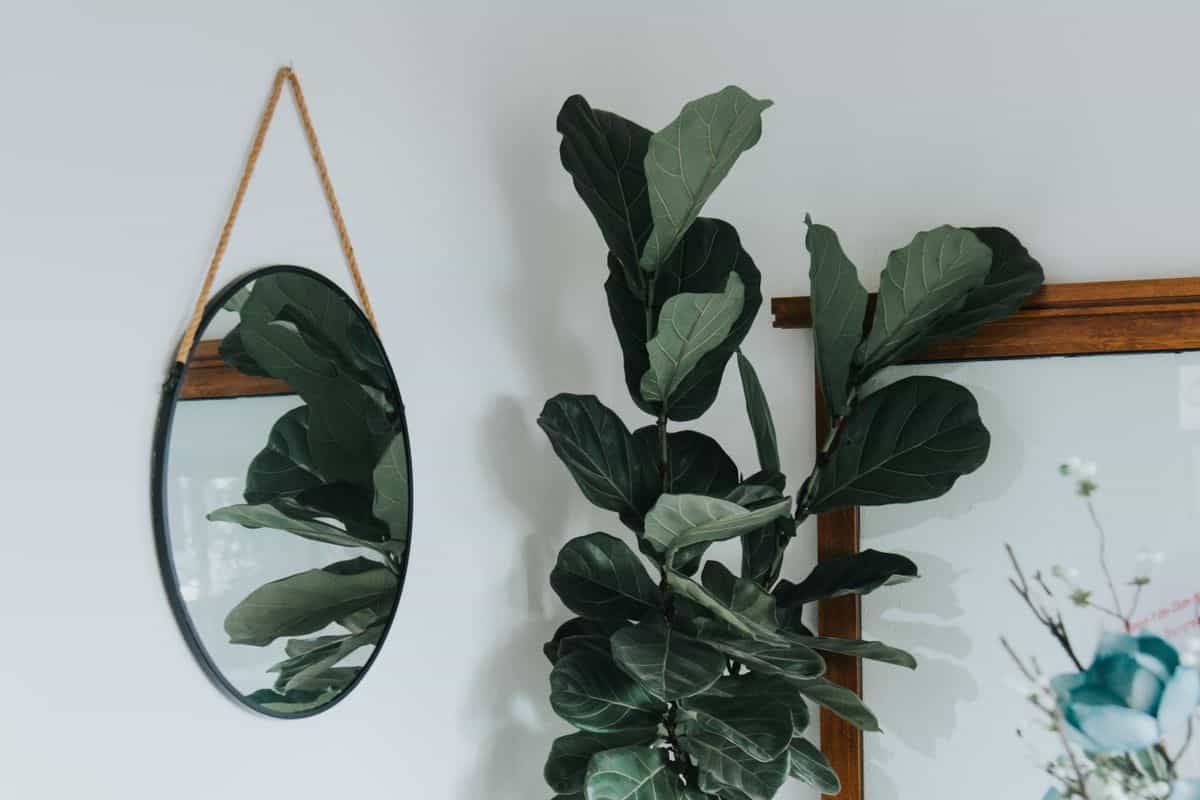
Most rooms are a grid. The walls are rectangles, the furniture is rectangles, the windows and doors and art are rectangles. Drop a circle into that grid and the eye goes straight to it, because it is the one shape that does not repeat.
That is the whole appeal of round mirror decor, and it is worth stating plainly: a round mirror is a relief from right angles. It softens a boxy console, rounds off a hard corner of a room, and reads as a single focal point rather than another framed rectangle competing with the rest. There is also a long history here — the round, outward-curving convex mirror was a prized decorative object for centuries, and one of the most famous appears in the Arnolfini Portrait, painted in 1434, where a single round mirror on the back wall reflects the entire room. The shape has been doing this job for a very long time.
What Size Round Mirror Should You Get?

Size is where most round mirror decor goes wrong — usually too small. The fix is one rule: the mirror should be about two-thirds the width of the furniture it hangs over.
In practice, that maps to the common round mirror sizes cleanly:
- A 24 inch round mirror suits a narrow console, a powder room, or beside a door — small, neat, accent-scale.
- A 28 inch round mirror is the in-between size for a slim sideboard or a single-sink vanity.
- A 36 inch round mirror fits a standard console, sideboard, or vanity, and is the most useful all-rounder.
- A 48 inch round mirror is statement-scale — large enough to anchor an empty wall, sit over a sofa, or be the focal point of a room rather than an accent on it.
When you are choosing between two sizes, go larger. The single most common and most expensive-looking mistake in round mirror decor is a circle that is technically "big" but still floats too small on its wall.
Round Mirror Frame Styles: Gold, Black, Wood, and Silver
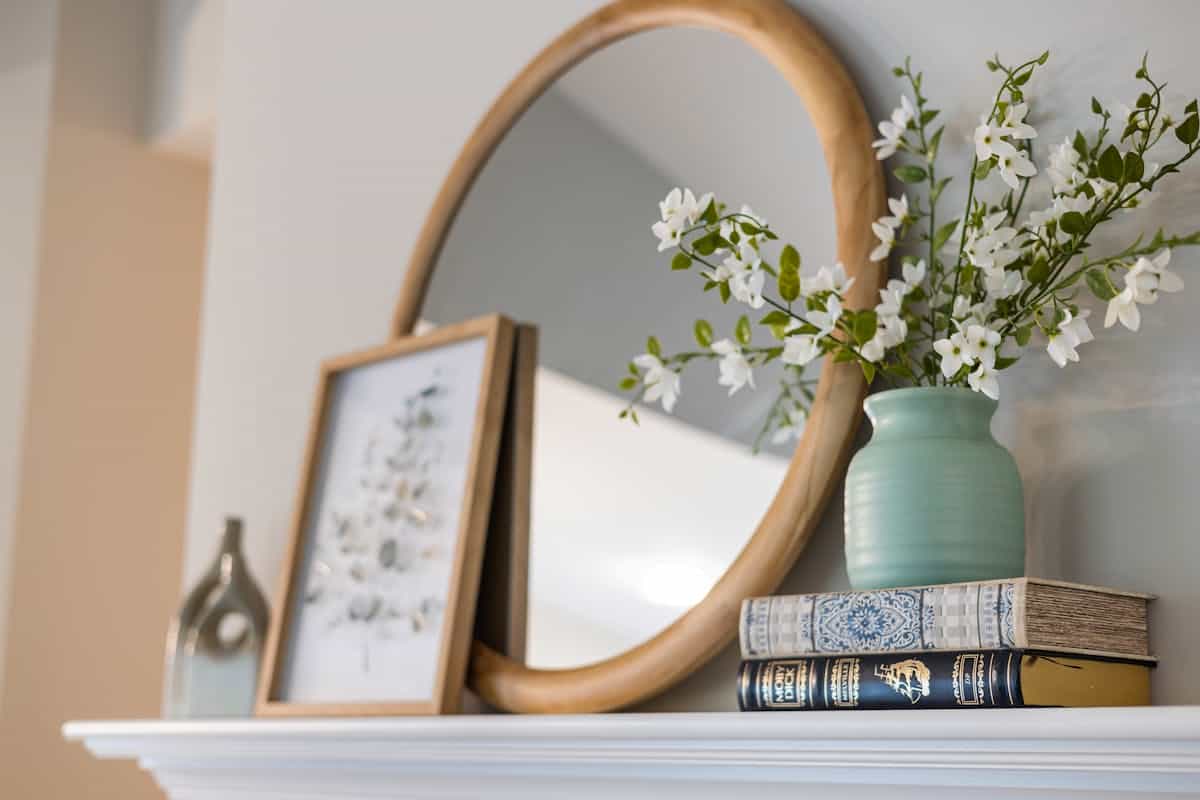
The frame is what gives a round mirror its personality. The rule is simple — match the finish to a metal or wood already in the room — but the four main looks each do something different.
- Gold circle mirror. Warm, glamorous, and slightly traditional. A gold circle mirror brings a glow to a neutral wall and pairs with brass hardware and warm-toned rooms.
- Black round mirror. Modern and graphic. A black round mirror reads like a drawn circle on the wall — crisp against a white or pale wall, and a natural match for black window frames and matte-black fixtures.
- Round wood mirror. Warm and organic. A round wood mirror — or a rattan or woven frame — softens a room twice over, once with the shape and once with the natural material. It is the go-to for boho, coastal, and Scandinavian spaces.
- Round silver mirror or frameless. Clean and quiet. A round silver mirror or a frameless circle disappears into minimalist and contemporary rooms and lets the reflection do all the work.
One honest note: the frame finish matters far more than the "type" of glass in a decorative mirror. A pretty frame around wavy, distorted glass is still a bad mirror. Buy flat, well-silvered glass first, then choose the frame.
Over a Sofa, Console, or Fireplace
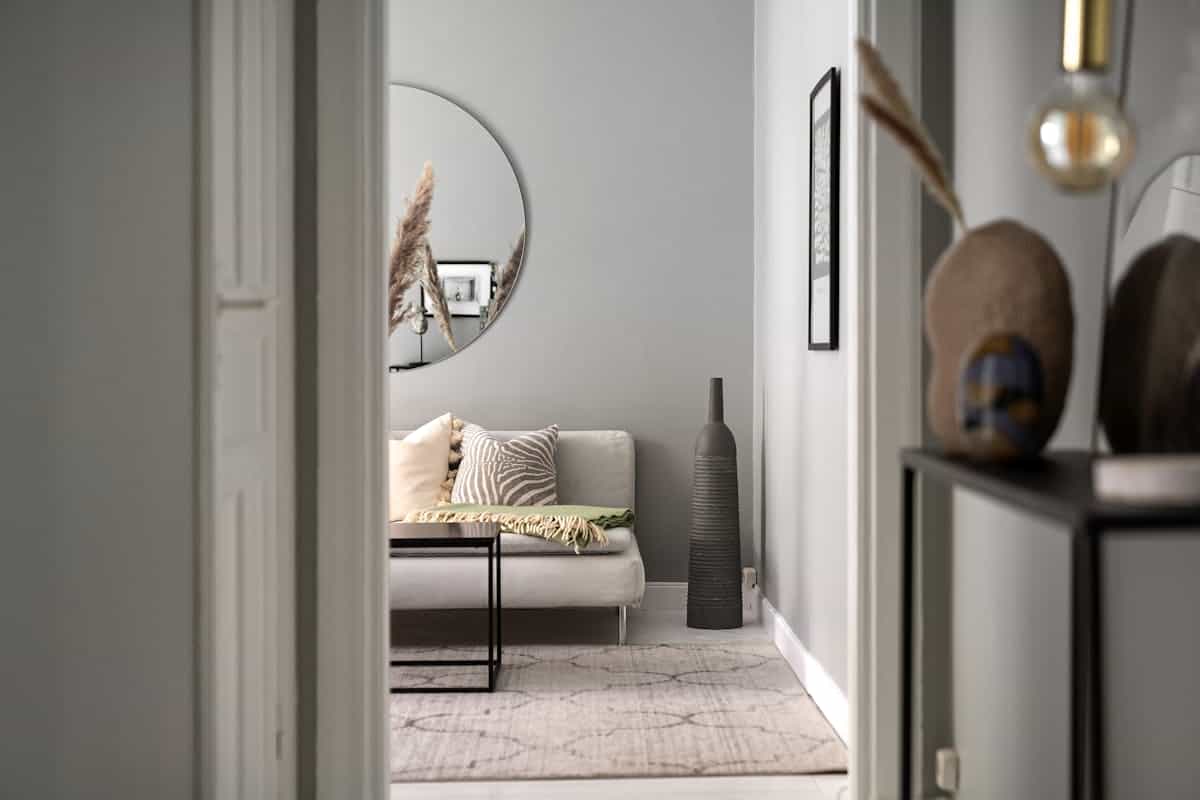
This is where the round-versus-rectangle contrast pays off most. A sofa, a console, and a fireplace mantel are all strong horizontal lines, and a round mirror centered above them breaks up that line beautifully.
Center the mirror on the furniture, size it to about two-thirds the width, and leave 4 to 8 inches between the bottom of the mirror and the top of the piece. Over a sofa, a single large round mirror — a 36 or 48 inch — reads as intentional art; a too-small circle just looks lost above all that upholstery. For the full set of sizing and height rules above a couch, the mirror over sofa guide goes deeper. And as always, check what the mirror reflects from where you sit — aim it at a window or a light, not the back of the TV.
In an Entryway or Hallway
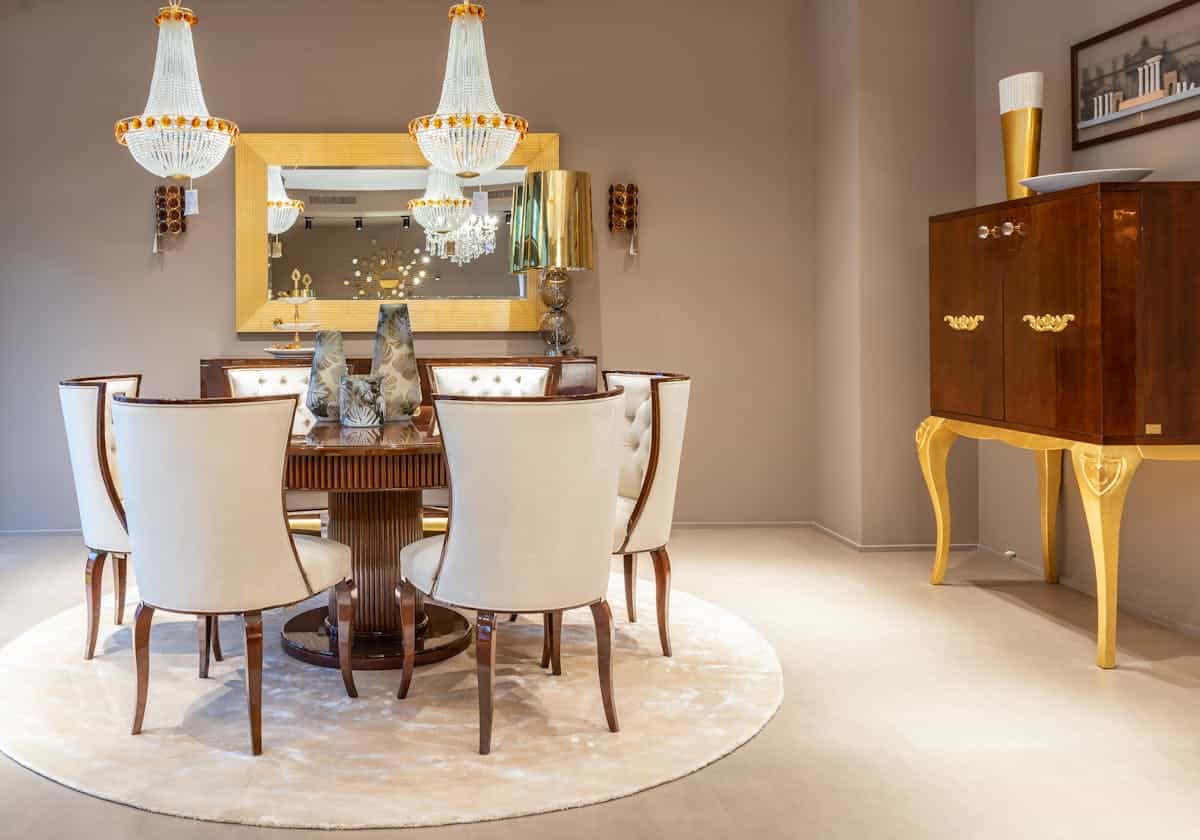
An entryway is the round mirror's natural home. It gives you a last-look-before-you-leave check, bounces daylight into what is often a dark, narrow space, and the soft shape is welcoming in a spot that sets the tone for the whole house.
Hang a round mirror over a console or slim entry table, centered, with the center of the glass around 57 to 60 inches from the floor (standard eye level). In a tight hallway, a round mirror is also more forgiving than a rectangle, because it does not visually narrow the passage the way a tall vertical mirror can. For the broader playbook on what works near a front door, see these entryway mirror ideas.
In a Bathroom or Over a Vanity
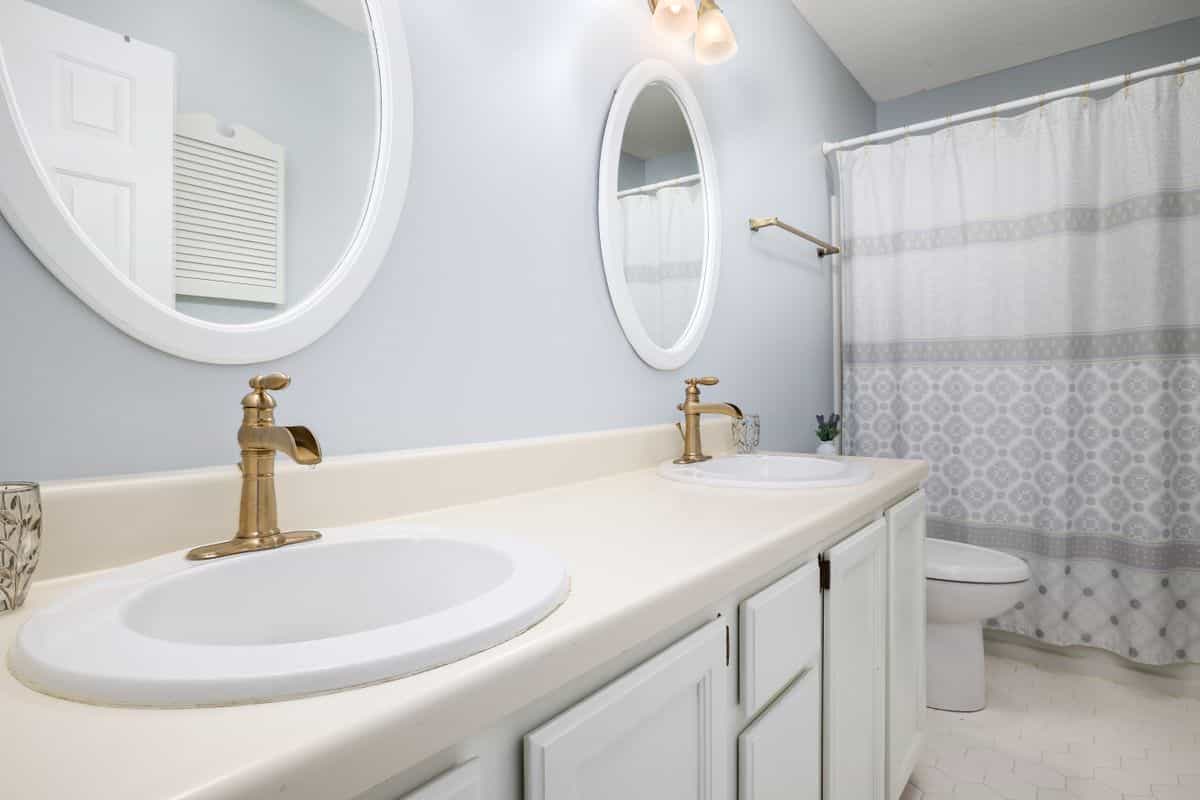
Round mirrors have quietly taken over the bathroom, and for good reason — they soften all the hard tile, square cabinetry, and rectangular fixtures that bathrooms are full of. A round mirror over a vanity reads softer and more designed than the standard builder rectangle.
For a single-sink vanity, a 24 to 28 inch round mirror is usually right; for a double vanity, two matching round mirrors — one centered over each sink — is a clean, symmetrical look that has become a modern staple. A gold or black frame around the circle is the most popular choice here, picking up the faucet and hardware finish. Keep the bottom of the mirror a few inches above the backsplash so it reads as a deliberate fixture, not an afterthought.
Grouping Round Mirrors and Other Placements
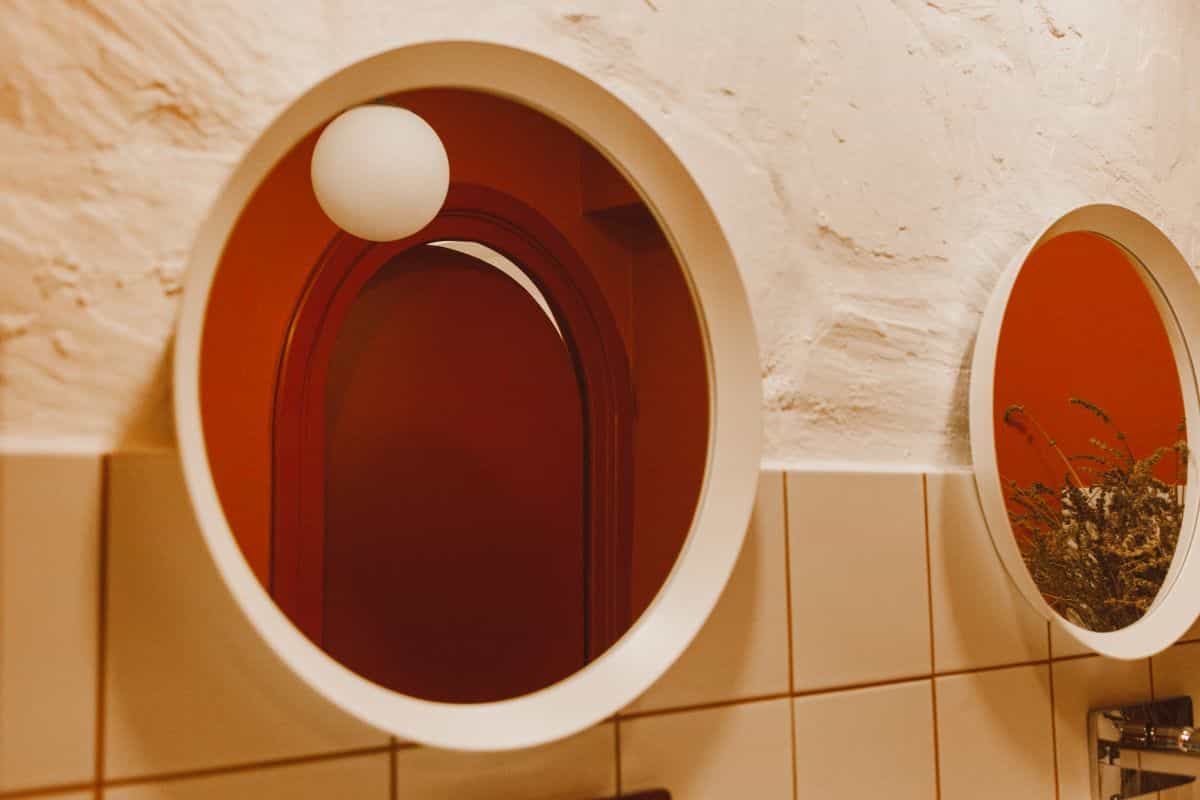
When one round mirror is not enough, a cluster is the next move. A group of round mirrors in varied sizes — say a 36, a 24, and a couple of smaller circles — arranged like a gallery wall makes a soft, light-catching feature without the rigid grid of framed prints.
A few other placements worth knowing:
- Above a bed — a single large round mirror, or a small cluster, softens the rectangle of the headboard. (If a mirror facing the bed unsettles you, angle it away — that is also a common feng shui concern, covered in the feng shui mirror placement rules.)
- Between two windows — a round mirror fills the gap and bounces light from both sides.
- In a small room — a round mirror opposite a window via specular reflection throws daylight deep into the space and makes it feel larger.
If you want the full-height version of the same light-and-space trick, a full length mirror does it standing up.
The One Thing to Carry Away
A round mirror is the simplest correction to the most common problem in a room — too many straight lines. Size it to two-thirds of the furniture below, frame it to match what is already in the room, and point it at light. Do that, and the circle does the rest: it softens the grid, catches the daylight, and gives the wall a single, quiet focal point.
The shape has been earning its place on walls since 1434. It is still one of the easiest decorating wins there is.
Recommended Products
These are the categories worth browsing for round mirror decor, across the main frame styles and sizes. (Links go to Amazon search results so you can compare current options.)
- Gold circle mirror — warm, glam, and traditional.
- Black round mirror — modern and graphic against a pale wall.
- Round wood mirror — natural warmth for boho and coastal rooms.
- 36 inch round mirror — the all-rounder for a console or vanity.
- 48 inch round mirror — statement-scale for over a sofa or empty wall.
- Round mirror set for gallery wall — varied sizes for a grouped display.
Mirror FAQ
What size round mirror should I buy?
Match the mirror to what it hangs over: it should be roughly two-thirds the width of the furniture below it. Over a console or sideboard, a 24 inch or 28 inch round mirror suits a narrow piece, while a 36 inch round mirror fits a standard console or vanity. Above a sofa or as a statement on an empty wall, go large — a 48 inch round mirror reads as a focal point rather than an accent. For a small powder room or beside a door, a 24 inch round mirror is usually right.
Where should you place a round mirror?
The best spots are over a console or sideboard in an entryway, above a sofa or fireplace, over a bathroom vanity, or grouped in a cluster on a larger wall. The rule that matters most: a mirror reflects whatever faces it, so position a round mirror to bounce a window, a light, or something worth doubling — not clutter. Round mirrors also work well where you want to soften a space full of rectangles, like above a square-edged dresser or between two tall windows.
Are round mirrors still in style?
Yes. Round mirrors have been a consistent favorite for years because the shape is versatile and forgiving — it breaks up the boxiness of furniture, doorways, and cabinetry. Current looks lean toward slim black or warm-metal frames, natural wood and rattan for organic rooms, and oversized frameless circles for a clean, modern statement. The round shape itself is close to timeless; it appears in interiors going back centuries, including the famous convex mirror in a 1434 painting.
What color frame is best for a round mirror?
Match the frame to the metals and woods already in the room. A gold or brass circle mirror reads warm, glamorous, and traditional; a black round mirror reads modern and graphic and grounds a light wall; a round wood or rattan mirror adds warmth and suits boho, coastal, and Scandinavian rooms; and a round silver or frameless mirror disappears into minimalist and contemporary spaces. Pick the finish that echoes something already in the room rather than introducing a new metal.
Can you put a round mirror above a rectangular console or sofa?
Yes, and the contrast is exactly why it works. A round mirror over a rectangular console, sideboard, or sofa breaks up the straight lines and keeps the arrangement from feeling like a row of boxes. Center the mirror on the furniture, size it to about two-thirds the width of the piece, and hang it so the center sits around 57 to 60 inches from the floor, or with roughly 4 to 8 inches of space between the bottom of the mirror and the top of the furniture.
How do you hang a heavy round mirror?
Find the wall stud and anchor into it, or use a wall anchor rated above the mirror's weight if no stud lines up. A large round mirror can be heavy, so use a D-ring or wire rated for the load and, for the biggest pieces, two fixing points to stop it tilting or rotating. Check the level carefully — a round mirror has no straight edge to judge against, so a small tilt is harder to spot and easier to get wrong than with a rectangular frame.