Bathroom Mirror Superstitions: Night Rules, Feng Shui, and Bloody Mary Lore
Bathroom mirrors are not “more supernatural” than other mirrors—but the room pairs your reflection with waste, water, and privacy, so folklore, feng shui, and sleepover games have latched onto that exact surface. Most warnings are about placement (especially mirror-versus-toilet layouts), condition (cracks), and what you do with a dark room at night—not about hating hygiene.
Modern bathrooms also put mirrors where children try dares after lights-out. The same tile echo and side lighting that flatter a morning shave can feel theatrical at midnight. Treat the list below as anthropology: what people report believing, where those threads come from, and where perception research offers a grounded parallel.
Why Does the Bathroom Mirror Attract So Many Layered Beliefs?
Water sites—rivers, wells, baths—have long sat at the edge of taboo and cleansing across cultures. A bathroom folds that symbolism into a small chamber where you also inspect your face for signs of age, fatigue, or illness. That mix makes the mirror a natural stage for anxiety: you are alone, often undressed, sometimes half awake.
Feng shui treats the bathroom as a place where energy is thought to exit with water. Western superstition treats the mirror as a soul fragment or omen surface once glass breaks. Sleepover culture treats the restroom as a private booth for a chant. None of these stories contradict each other on purpose; they answer different worries in different vocabulary.
For historical contrast, remember how rare a clear full-face reflection was for most people until mass-produced glass spread—when mirrors were luxury goods, touching one carried more charge than it does in a budget rental today.
What Is Bloody Mary Folklore—And Why the Bathroom?
The figure called Bloody Mary in contemporary folklore is usually summoned by repeating a name at a mirror in low light. Older mirror divination focused on seeing a future spouse; the harsher modern variants—blood, screams, scratches—crystallized late in the twentieth century alongside slumber-party storytelling. Wikipedia summarises both the older divination frame and the newer chant-from-a-restroom pattern; historians disagree about which “Mary” was ever meant, and that ambiguity is part of how legends travel.
The Library of Congress folklife symposium notes on playground games document Bloody Mary as a peer-to-peer dare: children testing courage with just enough ritual steps to feel real. Bathrooms appear because they are private, tiled for resonance, and already mirror-heavy—not because porcelain has mystical voltage.
If you hear a parallel to Japan’s Hanako-san or other school-restroom ghosts, that overlap is real; cramped stalls and collective storytelling cross borders fast once media repeats them.
Why Does Feng Shui Warn About a Mirror Facing the Toilet?
Classical-derived feng shui language describes qi flow, the bagua map, and whether a feature “supports” the people living in a home. Bathrooms are often read as places where qi is harder to hold because water runs out and the room is not a social anchor. Mirrors, in that same symbolic grammar, are amplifiers or duplicators.
A mirror facing the toilet is therefore interpreted as doubling imagery you would not want at center stage: waste lines, drainage, or a sense of fortune washing away. Practical decorators sometimes echo the same advice in secular terms—closing the lid, keeping doors shut, or using medicine-cabinet doors—because the sight line feels blunt.
This is symbolic architecture, not a claim that your toilet beam harms your soul. If you want line-by-line taboos and placement fixes, the site guide on feng shui mirror placement rules walks through doors, beds, and stairs—not only baths.
What About a Mirror That Faces the Bathroom Door?
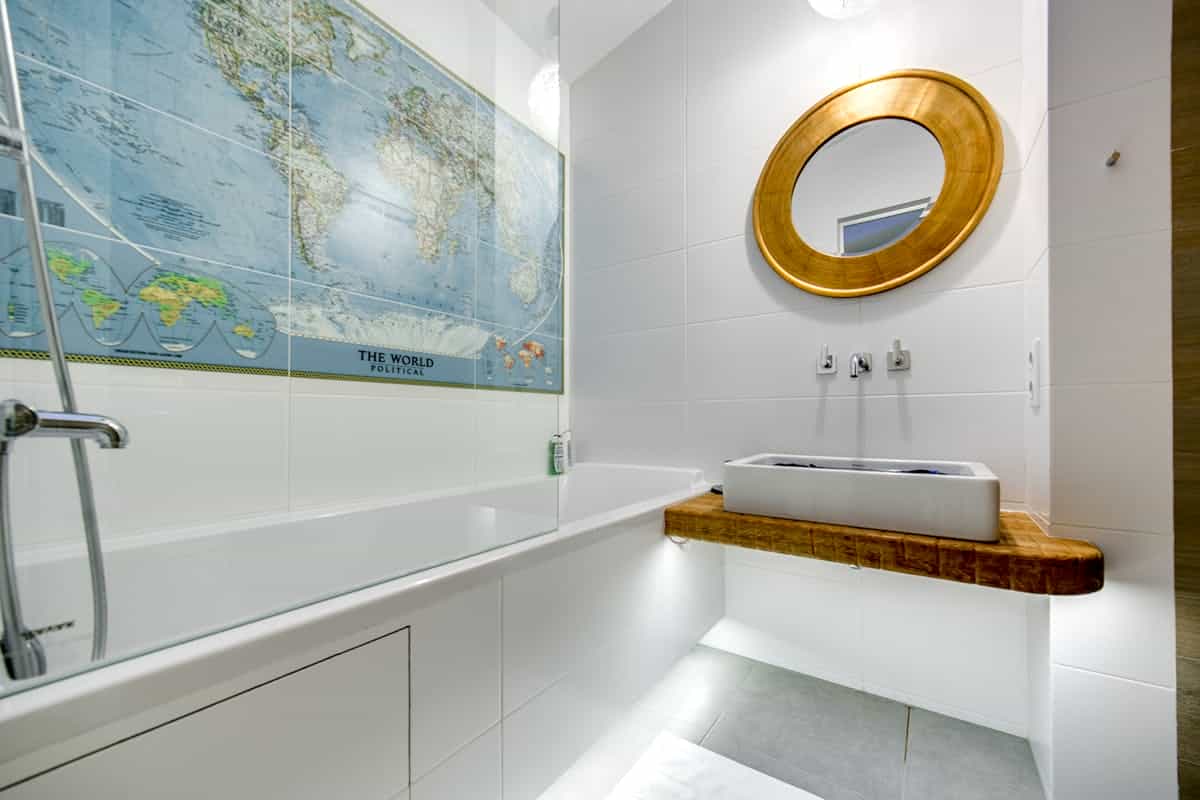
A separate but related rule shows up in household feng shui explainers: the bathroom door already “leaks” symbolic energy in some readings, so a mirror that directly reflects that opening is treated as broadcasting bathroom imagery back into a hallway or bedroom. Again, the grammar is symbolic—mirrors as repeaters—rather than a comment on your housekeeping.
Design-wise, it can also be startling to walk toward your own surprised face at 2 AM. Frosted panels, angled mounts, or sliding doors are the practical cousins of the spiritual advice. The deeper placement map sits in the same internal guide linked above if you are remodeling.
What Do Cracked or Broken Bathroom Mirrors Symbolize?
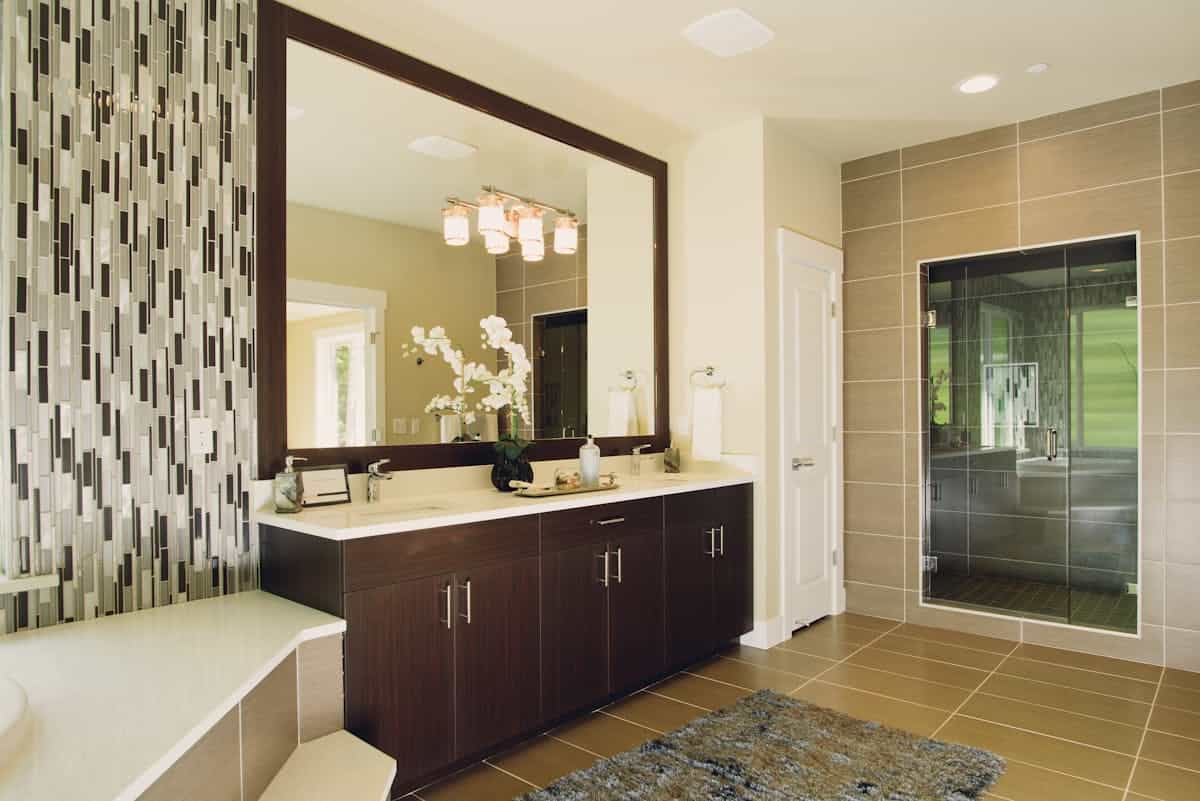
Across much of European-influenced superstition, a fractured mirror inherited the drama of expensive, soul-fraught glass. A Roman-era notion that mirrors held something of the self helped later writers link breakage to a long stretch of misfortune; seven years mapped neatly onto a folkloric “life cycle” cadence, even though your contractor thinks in minutes, not omens.
Optional detail you may still hear in living rooms: ancient Roman mirror lore is often credited when people mention the seven-year formula today—same symbol, new apartment.
Not every culture agrees. In some Indian contexts a broken mirror is read as a sudden release of stored heaviness rather than a sentence of doom. The lesson is not “pick the true superstition.” It is that one object supports opposite moral readings depending on what community is speaking.
Physically, a crack in a steamy bathroom is also a safety issue; humidity sneaks into silvering edges. Spiritual or not, replacement is sometimes kindness to your face and your lease deposit.
What Are “Night Rules” for Mirrors—And Is 3 AM Special?

Cross-cultural night etiquette around mirrors is less unified than TikTok montages suggest. Some Jewish mourning customs historically involved covering reflective surfaces temporarily—not to insult the mirror but to pause vanity while grief is raw. Some Hindu observances discourage certain nighttime practices tied to liminal hours, though details vary by family and region. Rural European tales often warned about midnight or solstice boundaries rather than a clock reading of 3:00.
The “3 AM” hook in modern horror is largely a contemporary meme layered onto older unease. It sells tension because it feels lonely, not because every temple agreed on that minute.
If you want a calmer inventory of insomnia-age beliefs folded together with sleep science, see mirrors at night: superstition, rules, and science. The honest pattern: night narrows attention; bathrooms concentrate sound; LED vanity bulbs cast shadows under your eyes. The room becomes a stage without importing a demon.
What Does Perception Research Say About Dim Mirror Gazing?
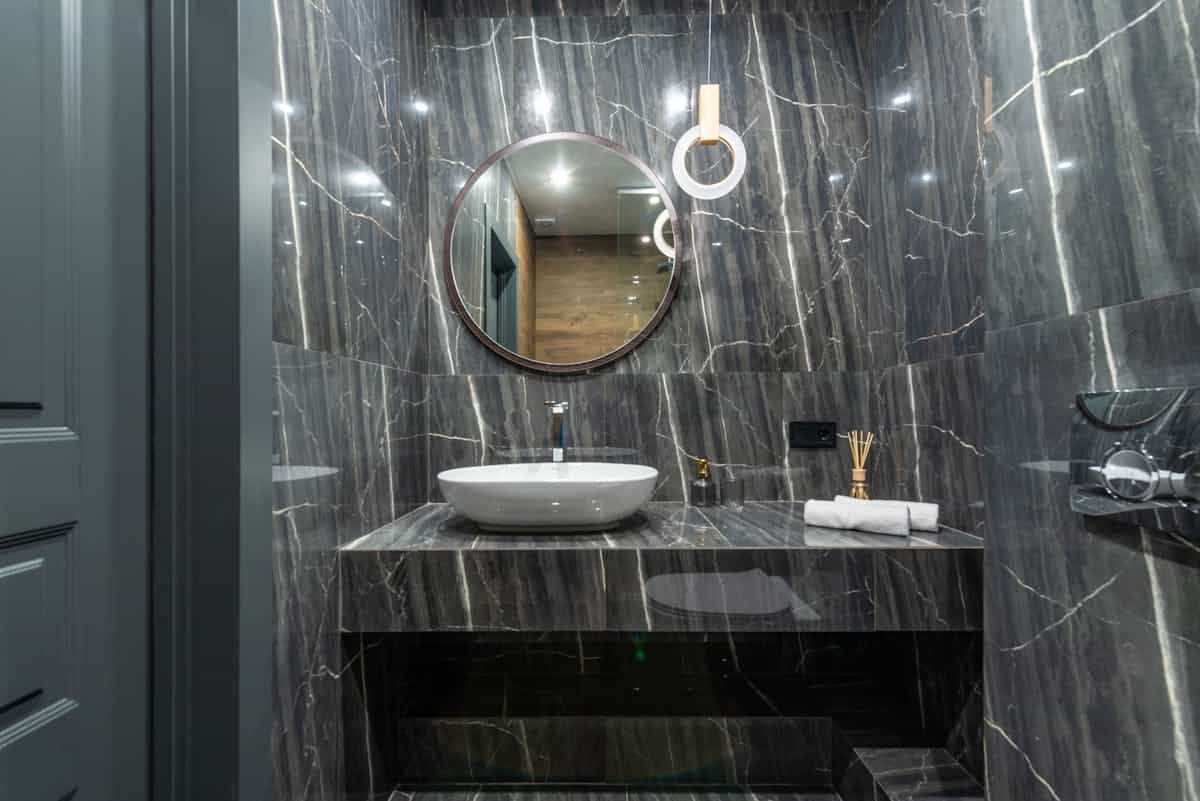
Before you classify every shaky reflection as paranormal, consider controlled experiments. Caputo’s laboratory report on the “strange-face-in-the-mirror” illusion—indexed on PubMed as perception research, not ghost hunting—shows that staring at your own face under subdued lighting can yield illusory distortions and even uncanny “other” faces in healthy volunteers. The effect is tied to how visual adaptation and face processing behave during prolonged fixation.
That finding does not disprove anyone’s spiritual framework wholesale; it does explain why a dare plus anxiety plus tired eyes is a recipe for a story the next morning. It is the difference between “something absolute entered the room” and “human perception mischief under known parameters.”
How Can You Work With Bathroom Mirrors Respectfully?
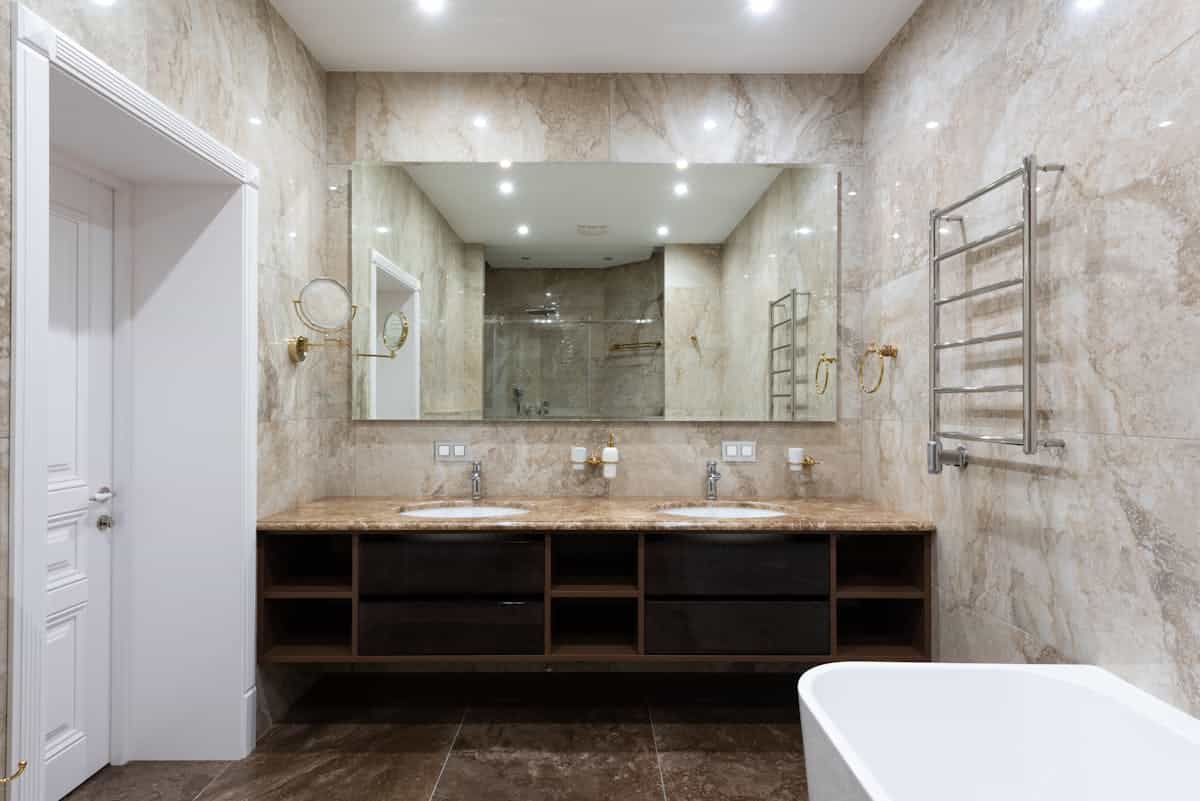
If symbolism matters to you, small habits often matter more than buying another talisman: close doors, soften glare at night, keep glass clean, fix wobble mounts. If symbolism does not matter, those habits still improve sleep hygiene and morning mood.
When a mirror feels “heavy” after arguments, illness, or compulsive checking, practical steps overlap with spiritual ones—cover it briefly, shift angle, or follow a cleansing sequence you trust. For smoke-free or secular-friendly ideas bundled with traditional ones, the guide on how to cleanse a mirror of negative energy collects methods readers actually use.
The single opinion worth carrying from this corner of the internet: a mirror shows a reversed optical image, not moral truth. Cultural stories pile onto the glass anyway because faces are intimate data. Naming those stories clearly usually calms them down.
Where Does This Leave the Bathroom Mirror Culturally?

Bathroom mirror superstitions survive because they are portable: parents repeat them, films amplify them, and renovators bump into feng shui checklists online. They are not a verdict on your character—more like a map of what humans fear when water, waste, and identity share one square meter.
If tonight your own reflection looks strange, you can honor the shiver without surrendering your judgment. Sometimes the bravest thing in front of a bathroom mirror is not chanting a ghost forward; it is deciding the face you see still deserves a gentle morning light.
Industry trackers put the global mirror market at about $145.51 billion in 2025 because homes and buildings keep demanding dependable glass—but the emotional weather in front of bathroom mirrors still follows older stories. Carry whichever rules help you live kindly in your space, and leave the rest as folklore you understand rather than fear you inherit.
Mirror FAQ
Is it bad luck to have a mirror in the bathroom?
Most traditions do not ban bathroom mirrors as a category. Concerns usually focus on placement—especially a mirror facing the toilet in feng shui, a cracked mirror in Western superstition, or night-gazing rituals—not on the mere fact that a reflective surface exists above a sink.
Why should a mirror not face the toilet in feng shui?
In many feng shui interpretations, bathrooms are treated as low-energy or “draining” spaces because of water movement and waste plumbing, and mirrors are said to amplify or repeat whatever they reflect. A mirror facing a toilet is read as doubling an exit of vitality or spreading that symbolism outward. It is symbolic advice, not a physics claim.
What is the Bloody Mary mirror game?
Bloody Mary is a modern folk ritual in which participants chant a name into a mirror in dim light, often in a bathroom, and expect an apparition. Versions vary by region and decade; scholars treat it as folklore and psychology, not a verified summoning.
Why is 3 AM linked to mirrors and ghosts?
3 AM became an internet-age “witching hour” motif in some Western horror stories; it is not a single ancient mirror rule shared by all cultures. Older mirror lore more often focuses on midnight, solstices, or mourning customs, depending on the place and period.
Does a cracked bathroom mirror mean seven years of bad luck?
The “seven years” line is a Western folk formula tied to an old Roman idea that life renewed in seven-year cycles and that a broken mirror could disturb that rhythm. It is optional language in modern practice; some communities read a crack as release rather than curse.
Can staring in a dim mirror make you see a face that is not there?
Laboratory work on the “strange-face-in-the-mirror illusion” shows that prolonged gazing under low light can produce distortion and illusory faces in healthy observers. That does not validate ghost claims, but it explains why quiet bathrooms at night feel uncanny.