
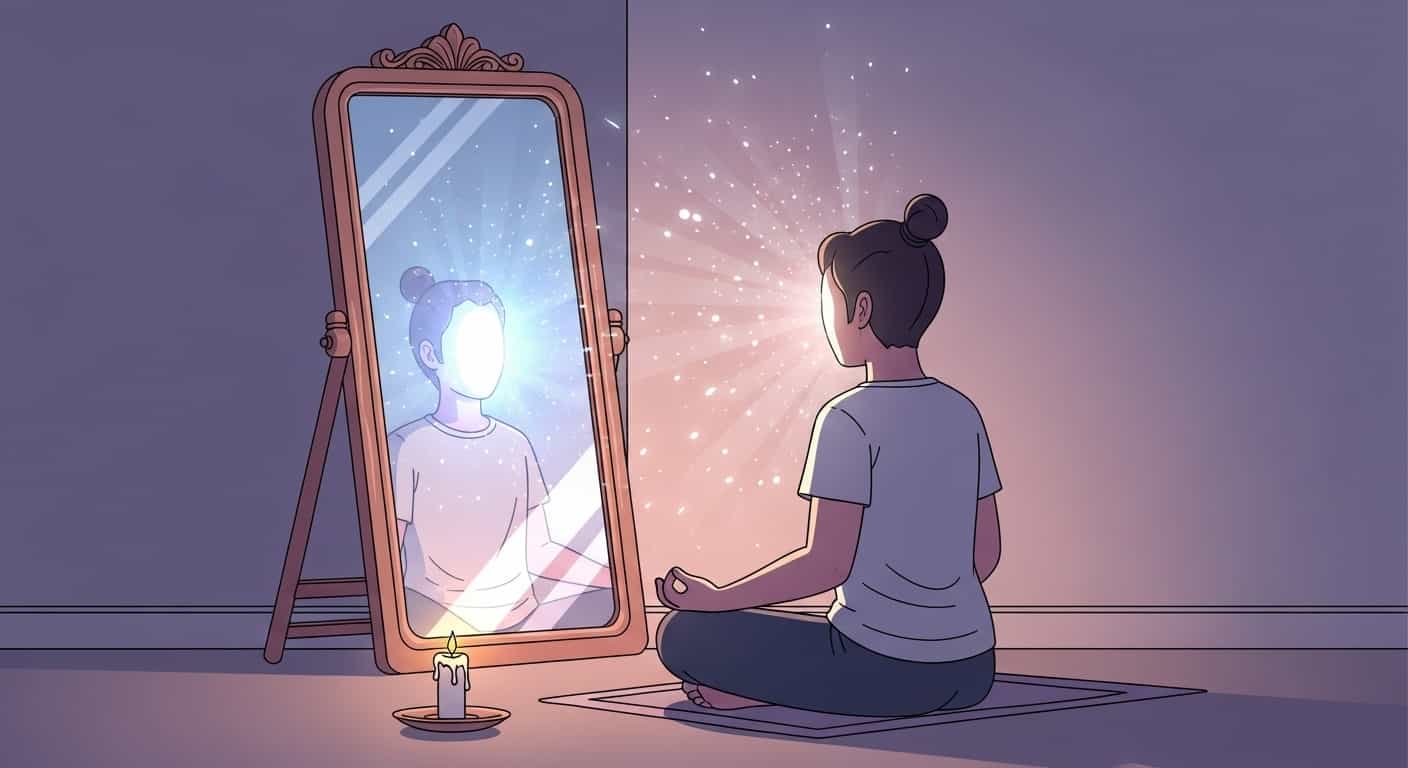
When you gaze into a mirror, what do you truly see? On the surface, the answer seems simple: you see your own physical reflection—the face you present to the world. But throughout human history, the act of looking into a reflective surface has been considered far more profound than mere vanity. From ancient shamans to modern mystics, the mirror spiritual meaning has been associated with truth, illusion, portals to other realms, and the very nature of the soul.
In this complete guide, we will journey through thousands of years of history, exploring how different cultures, religions, and spiritual traditions have interpreted the mirror. We will uncover why this seemingly simple object is considered one of the most powerful spiritual tools, what energetic properties it holds, and how understanding your relationship with mirrors can lead to profound self-discovery.
Whether you are a spiritual seeker, a student of symbolism, or simply curious about why you feel a certain way when you look in the mirror, this guide will illuminate the reflective path.
What Do Mirrors Represent Spiritually? (Overview)
Before diving into specific cultural beliefs, it is essential to establish a foundational understanding of the mirror spiritual meaning. At its core, a mirror represents duality—the self and the reflection, the seen and the unseen, the material and the spiritual.
The Mirror as a Symbol of Truth & Authenticity
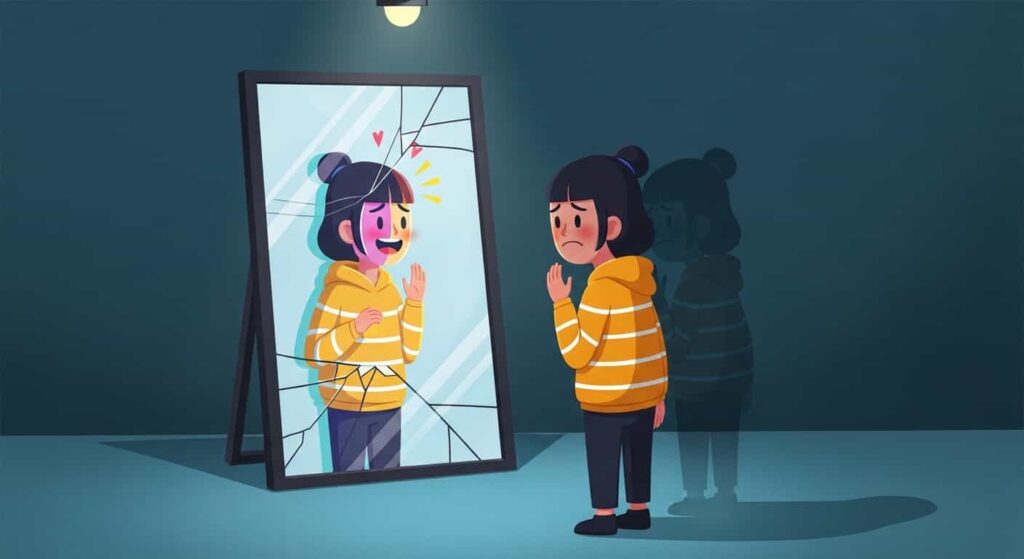
Perhaps the most universal spiritual symbolism of the mirror is its association with truth. Unlike a painting or a photograph, which can be manipulated by the artist’s intent, a mirror is often perceived as an impartial witness. It does not flatter or judge; it merely reflects what is placed before it.
In a spiritual context, this translates to the concept of self-honesty. The mirror is believed to show not just your physical appearance, but the state of your soul. When you look into a mirror with spiritual intent, you are called to confront your authentic self—your fears, your joys, your hidden truths, and your insecurities. It strips away the personas we wear in social settings, forcing a moment of raw, unfiltered self-confrontation. This is why spiritual practices like mirror gazing (which we will explore later) can be so psychologically potent; they push us to reconcile with who we truly are, not who we pretend to be.
Mirrors as Portals Between Two Worlds
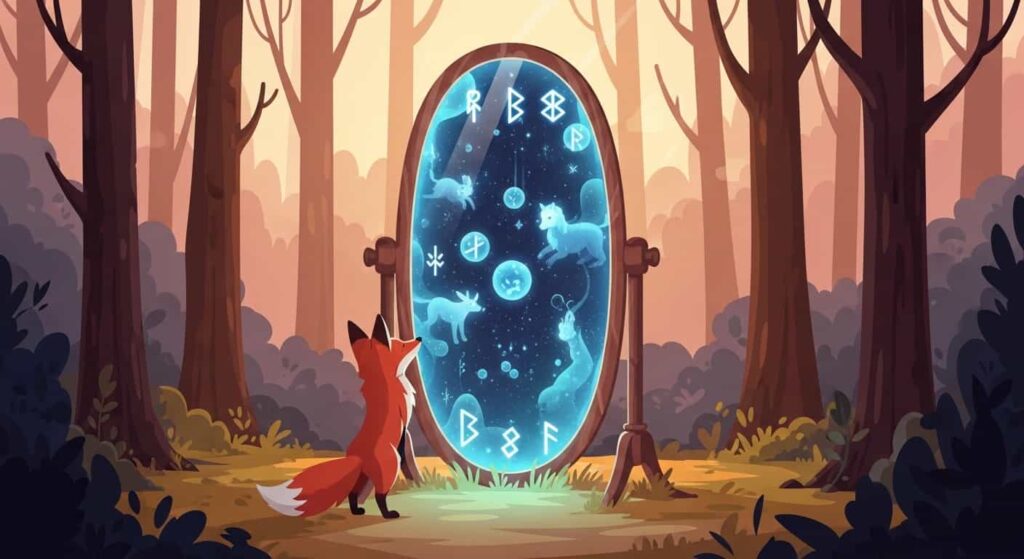
Across countless traditions, mirrors are not seen as solid surfaces but as thin veils separating the physical world from the spiritual realm. Because a mirror creates a space that looks identical to our own but is inherently unreachable, it is viewed as a natural gateway.
In this context, the mirror acts as a liminal space—a threshold. For practitioners of divination, it is a window into the spirit world, the past, or the future. For those who follow folk traditions, it is a potential entry point for spirits, both benevolent and malevolent. This dual nature—as both a tool for vision and a potential danger—is why mirrors feature so prominently in folklore and superstition. The idea is that if the barrier between worlds is thin, a mirror can be manipulated to see beyond, but it can also be used by entities to cross over.
Why Mirrors Have Always Been Considered Sacred Objects
The sacredness of mirrors predates modern glass-making. The earliest mirrors were not made of glass but of polished obsidian, bronze, copper, or even calm, dark water. These materials were often sourced from the earth and required significant skill to create, making them rare and valuable objects.
Because they were rare and possessed the uncanny ability to duplicate reality, they were naturally attributed to the divine. Ancient civilizations often associated mirrors with deities of wisdom, prophecy, and beauty. To own a mirror was to possess a tool of power—a sacred object that could reveal the will of the gods or the truth of one’s own heart. This historical reverence has trickled down into modern spirituality, where mirrors are still used in altars, meditation spaces, and rituals, respected as objects that hold immense energetic weight.
Mirror Symbolism Across Major World Cultures
The mirror spiritual meaning is not monolithic; it shifts and deepens depending on cultural context. By examining how different societies have viewed mirrors, we gain a richer understanding of their spiritual complexity.
Ancient Greek Symbolism — Narcissus & Self-Knowledge
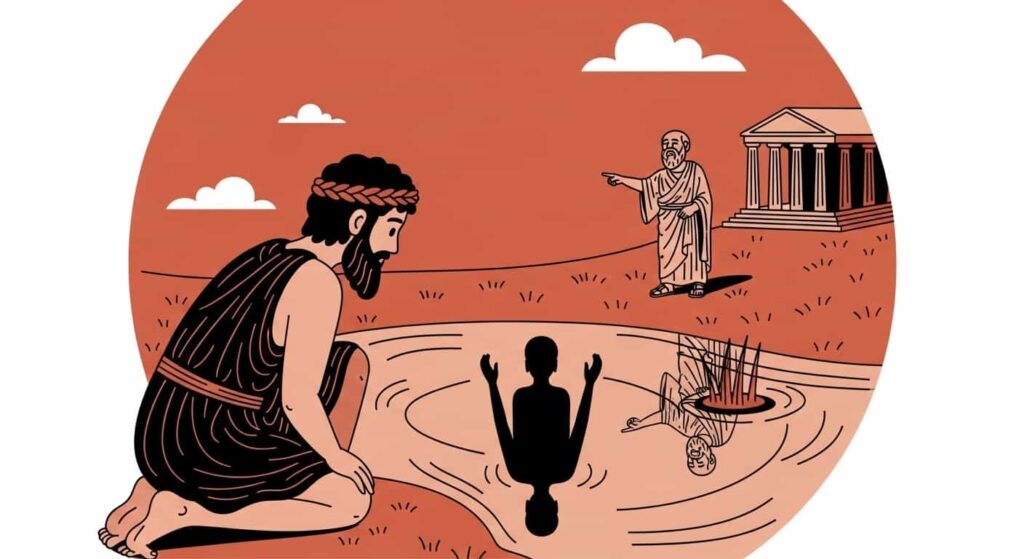
The most famous Greek myth involving a reflective surface is that of Narcissus. However, the Greek understanding of mirrors goes far beyond vanity. The word “mirror” itself comes from the Latin mirari, meaning “to wonder at” or “to admire,” but the Greeks had a more complex relationship with reflection.
For the Greeks, mirrors were associated with the god Dionysus and the concept of gnothi seauton—know thyself. A mirror was a tool for philosophical inquiry. The philosopher Socrates encouraged his students to use mirrors: if they were beautiful, they should ensure their soul matched their appearance; if they were ugly, they should cultivate a beautiful soul to compensate.
The story of Narcissus is often misinterpreted as a warning against self-love. In a spiritual sense, it is a cautionary tale about mistaking the reflection for the real. Narcissus fell in love with his own image, unaware that it was not a separate entity. Spiritually, this symbolizes the danger of becoming so attached to the ego—the reflection of the self—that we lose touch with the true Self. The Greeks thus used the mirror as a reminder to look beyond the surface reflection to cultivate inner substance.
Chinese Culture — Mirrors as Protection Against Evil
In traditional Chinese culture, the mirror (particularly the bronze bagua mirror) is one of the most potent symbols of protection. The spiritual meaning here is one of deflection. Just as a mirror reflects light, it is believed to reflect negative energy (sha chi) and evil spirits.
Bagua mirrors are often placed above doorways or on gates to protect a home. The belief is that malevolent forces, upon seeing their own reflection, will be frightened away or their negative energy will be sent back to them. This concept is deeply rooted in Feng Shui, where mirrors are used strategically to redirect energy flow. However, caution is advised; a mirror placed incorrectly in Feng Shui (such as facing a bed or a door) is said to bounce positive energy out of the home, turning a protective tool into a liability.
Beyond protection, Chinese emperors used mirrors as symbols of righteous governance. A “perfect mirror” was a metaphor for a ruler’s clear, unbiased judgment, reflecting the true state of the kingdom without distortion.
Japanese Tradition — The Mirror as One of Three Sacred Treasures

In Japan, the mirror reaches one of its highest spiritual statuses as one of the Sanshu no Jingi (Three Sacred Treasures) of the Imperial House. Along with the sword (symbolizing valor) and the jewel (symbolizing benevolence), the mirror (yata no kagami) represents wisdom.
According to Shinto mythology, the sun goddess Amaterasu retreated into a cave, plunging the world into darkness. To lure her out, the other gods created a mirror. When she emerged, she saw her own reflection and was captivated, allowing light to return to the world.
This myth establishes the mirror as a symbol of divine presence and self-realization. In Shinto practice, mirrors are placed on altars (kamidana) as the physical representation of the kami (spirits or gods). To bow before a mirror is to honor the divine spirit within oneself. This tradition elevates the mirror beyond a mere tool; it is a sacred object that embodies the idea that the human soul is a reflection of the divine.
African & Indigenous Beliefs About Reflective Surfaces
Across various African traditions and Indigenous cultures worldwide, reflective surfaces are treated with immense respect and caution. Before the introduction of glass, many African cultures used polished stone, water, or clay for reflective purposes.
In many West African spiritual systems like Vodun and Ifá, mirrors are used in divination and as vessels for ancestors. A mirror is not just a surface but a home—a space where spirits can reside and communicate with the living. They are often placed on altars (pots or tables) with offerings to invite ancestral presence.
Similarly, many Indigenous tribes of the Americas viewed water as the first mirror. Reflective surfaces were used in rites of passage. A shaman or healer might use a mirror to “catch” a patient’s wandering soul or to look into the spirit world for diagnosis. There is a common belief across these cultures that a mirror can capture a part of your essence. This is why, in many traditions, it was considered dangerous to let a child look into a mirror too early, as their soul was still considered vulnerable and could be trapped or confused by the reflection.
The Material of the Mirror: How Substance Shapes Spiritual Meaning
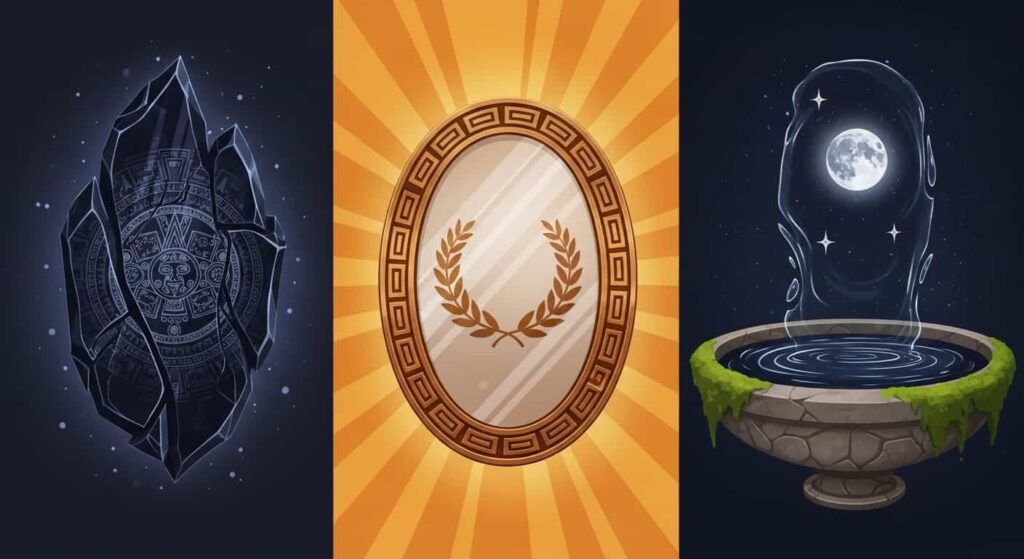
Throughout history, the material from which a mirror was made has been just as important as the reflection itself. Different substances were believed to connect to different spiritual realms and energies. Understanding these distinctions deepens one’s appreciation for how our ancestors interacted with reflective surfaces.
| Mirror Material | Spiritual Association | Cultural Context |
|---|---|---|
| Obsidian | The underworld, shadow work, deep scrying, truth-telling | Aztec (Tezcatlipoca), ancient Mesopotamian, modern scrying traditions |
| Polished Metal (Bronze, Copper, Brass) | The sun, divine truth, righteous judgment, the heavens | Ancient Greece, Ancient Egypt, Imperial China, Rome |
| Water | Emotion, the subconscious, intuition, fluidity of time | Indigenous cultures worldwide, Celtic traditions, African divination |
| Glass with Silver Backing | Neutral portal, general-purpose reflection, modern spiritual tool | Widespread use from Renaissance onward |
Obsidian mirrors in particular held a fearsome reputation. The Aztecs associated obsidian with Tezcatlipoca, the god of night, sorcery, and fate, whose name translates to “Smoking Mirror.” These mirrors were used for prophecy and were believed to reveal hidden truths—often uncomfortable ones—about the observer.
Polished metal mirrors carried a more solar, authoritative energy. In ancient Egypt, bronze mirrors were associated with the sun and were often buried with the dead to help the soul navigate the afterlife. In China, bronze mirrors were inscribed with cosmic diagrams and used in rituals to harmonize the energies of heaven and earth.
Water as a mirror requires no human craftsmanship, which made it the most accessible and ancient reflective surface. Druids in Celtic tradition practiced scrying using bowls of water or dark pools. The ever-changing nature of water was seen as a reflection of the fluid, mutable quality of the subconscious mind.
Mirror Spiritual Meaning in World Religions
Organized religions have grappled with the symbolism of the mirror for millennia, often using it as a metaphor for the relationship between humanity, the self, and the divine.
Christianity — Seeing Through a Glass Darkly
The most famous Christian reference to mirrors comes from the Apostle Paul in 1 Corinthians 13:12: “For now we see through a glass, darkly; but then face to face: now I know in part; but then shall I know even as also I am known.”
In this context, the mirror spiritual meaning is one of imperfect perception. During earthly life, our understanding of God and the ultimate truth is as unclear as a reflection in a poorly made ancient bronze mirror. We see only a dim, distorted version of reality. The mirror here symbolizes the limitations of human knowledge and the promise of clarity in the afterlife.
Medieval Christian theologians also used the mirror as a symbol for the soul. A clean, polished mirror was a soul free from sin, perfectly reflecting God’s love. A tarnished or broken mirror was a soul corrupted by sin. This metaphor served as a call for spiritual purification—to polish the “mirror” of the heart through confession and good works so that it might better reflect divine light.
Islam — The Heart as a Mirror of God
In Islamic mysticism, or Sufism, the mirror is a profound symbol of spiritual purification. The goal of the Sufi path is to polish the heart (the qalb) until it becomes a clear mirror that reflects the attributes of God.
The famous Sufi poet Rumi often used mirror imagery. He taught that just as you polish a mirror to remove rust, you must polish your heart to remove the rust of ego, selfishness, and worldly attachment. When the heart-mirror is perfectly clear, it reflects the divine reality. There is a concept that the Prophet Muhammad’s heart was the most polished mirror, perfectly reflecting God’s will.
Unlike in Christianity, where the mirror emphasizes the separation between human and divine understanding, in Sufism, the mirror is the potential vehicle for union. To see the reflection of God in one’s own purified heart is the ultimate spiritual goal. This tradition also emphasizes that seeing the self clearly is the prerequisite for seeing God.
Hinduism — Maya, Illusion & the Reflective Soul
In Hindu philosophy, the mirror is often used to explain the complex relationship between the individual soul (Atman) and the ultimate reality (Brahman). The world we perceive is often described as Maya—a cosmic illusion, like a reflection in a mirror.
The Atman is not the reflection; it is the source. When we identify ourselves with our reflection—our body, our thoughts, our ego—we are trapped in illusion, mistaking the image for the reality. The goal of spiritual practice is to turn away from the mirror of Maya and recognize the true Self.
However, mirrors also play a role in puja (worship). In many Hindu rituals, a mirror is used to reflect the murti (statue of a deity). This symbolizes that the deity is present in the reflection, and by seeing the deity, one is reminded that the divine also resides within oneself. The mirror thus serves a dual purpose: it warns against the illusion of the material world while also serving as a tool to connect with the inner divine.
The Mirror as a Metaphysical & Energetic Object
Beyond symbolism and religion, many spiritual practitioners believe that mirrors possess distinct metaphysical properties. They are not inert objects; they are energetic actors in a space.
How Mirrors Are Believed to Absorb & Store Energy
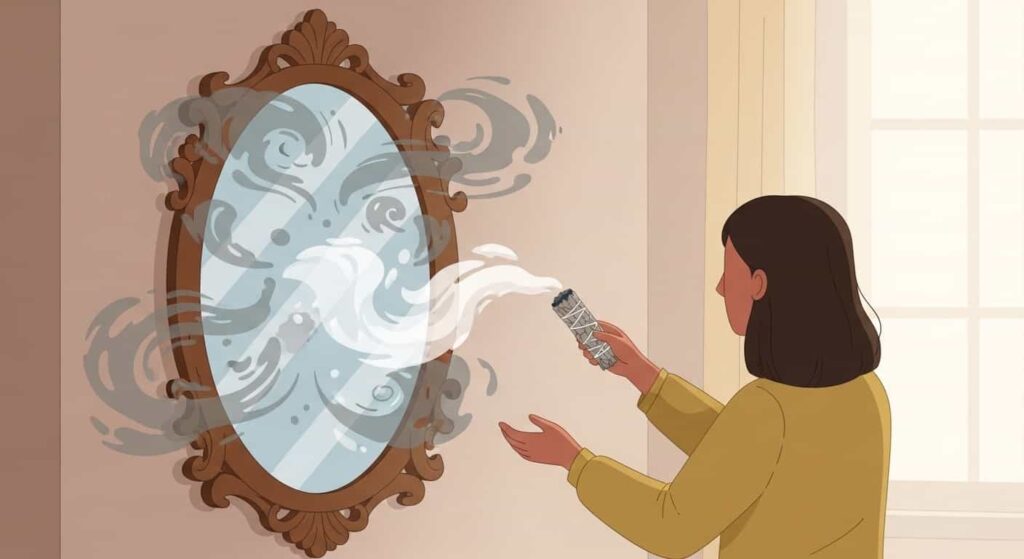
One of the most persistent beliefs in metaphysical circles is that mirrors are energetic sponges. Because they are portals and reflectors, they are thought to absorb the energy of everything they “witness.” Think of a mirror that has hung in a home for decades. It has “seen” countless arguments, joyful celebrations, moments of grief, and mundane days.
Practitioners of energy work and Feng Shui often recommend cleansing mirrors energetically, much like you would cleanse a crystal. They believe that a mirror can hold onto the residual energy of past events. If a mirror has been in a location where trauma occurred, it is thought to emanate that heavy energy, subtly affecting the mood of the current inhabitants. This is why old mirrors, especially antique ones, are often approached with caution. They come with a history—an energetic memory—that can be difficult to predict.
How to Cleanse a Mirror Energetically
| Method | Instructions |
|---|---|
| Smudging | Pass the mirror through the smoke of sage, palo santo, cedar, or sweetgrass. Move slowly so the smoke contacts the entire surface, including the back and frame. |
| Sunlight | Place the mirror in direct sunlight for several hours. The sun’s rays are believed to burn away stagnant or negative energy. |
| Moonlight | Place the mirror under the light of a full moon overnight to cleanse and charge it with lunar, reflective energy. |
| Salt Water | Wipe the mirror’s surface with a cloth dampened with salt water. (Avoid this method for antique mirrors where moisture could damage the backing.) |
| Intent | Hold the mirror in your hands, close your eyes, and state aloud: “I cleanse this mirror of all previous energy. It now reflects only truth and light.” |
Mirrors and the Aura: What Spiritual Practitioners Believe
There is a strong belief that mirrors can interact with the human aura—the energetic field that surrounds the body. Some spiritual practitioners claim that prolonged staring into a mirror can cause a “bleeding” of the aura, where the energy field becomes distorted by the reflection.
This is often cited as a reason why people feel drained after staring at themselves for a long time, or why they feel uneasy in rooms with many mirrors. The theory is that each mirror creates a copy of your energetic field, and if there are too many reflections, your energy becomes fragmented or scattered. Conversely, a single, clean mirror used intentionally can help a person “see” their aura. By softening their gaze while looking in a mirror, some people report seeing a subtle glow or light around their silhouette, which they interpret as the visible manifestation of their energy field.
Why Old Mirrors Feel Different Energetically
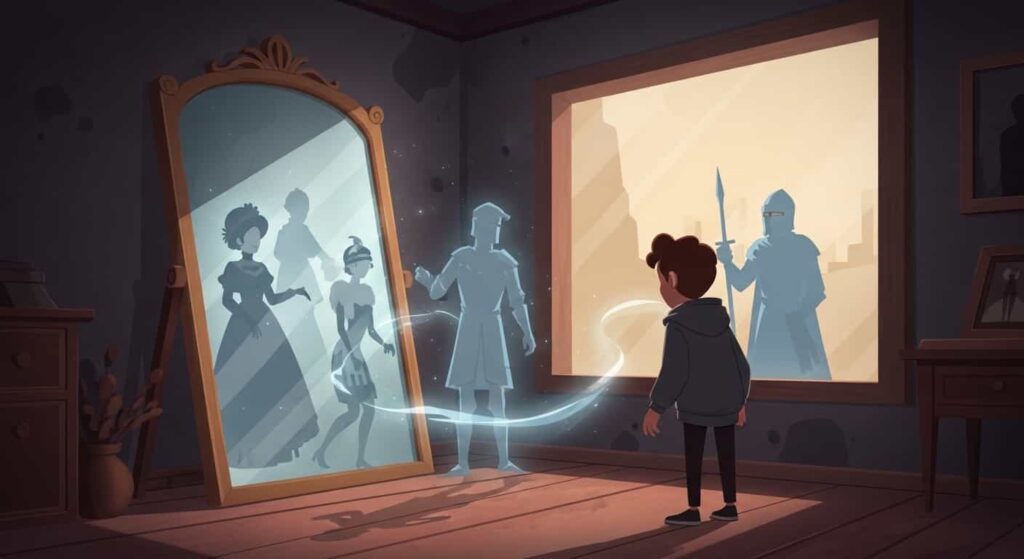
If you have ever stood in front of a very old mirror in an antique shop or a historic home, you may have felt a distinct sensation—a heaviness, a curiosity, or even an unsettling chill. According to spiritual belief, this is due to the energetic buildup discussed earlier.
Old mirrors are considered “seasoned” objects. They have been witnesses to history. Because of the belief that mirrors can trap souls or fragments of consciousness (stemming from the ancient fear that the reflection is a second self), old mirrors are treated with a blend of reverence and fear. Some practitioners advise against bringing antique mirrors into your home unless you know their history or are capable of performing a thorough energetic cleansing. The mirror spiritual meaning here evolves from a simple reflection to a historical artifact carrying the emotional and spiritual residue of countless past gazes.
Mirrors as Spiritual Tools Throughout History
Throughout history, humanity has not only revered mirrors but actively used them to interact with the spiritual realm. These practices transform the mirror from a passive object into an active spiritual technology.
Scrying — Using Mirrors to See Beyond the Physical
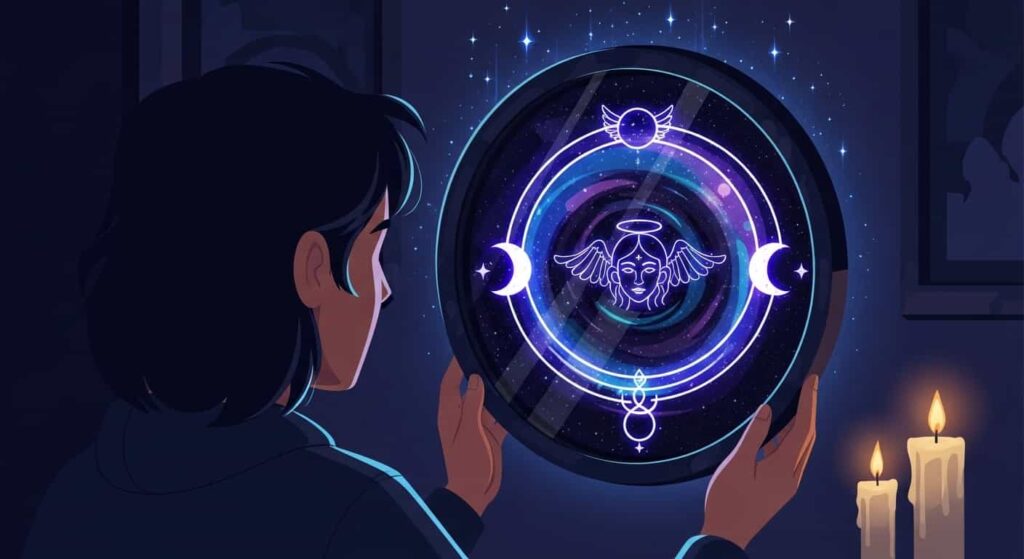
Scrying is the ancient art of divination using a reflective surface to access visions, insights, or information beyond the physical senses. While crystal balls are the most famous scrying tool, black mirrors (often made of obsidian) have been used for millennia.
The practice involves entering a meditative or trance state and softening one’s gaze on the mirror’s surface. Instead of looking at the reflection, the practitioner looks into the depth of the mirror. The goal is to allow the conscious mind to quiet down so that the subconscious—or the spirit world—can project images, symbols, or messages onto the “screen” of the mirror.
Famous figures like Dr. John Dee, the court astrologer to Queen Elizabeth I, used a scrying mirror (a piece of polished obsidian) to communicate with angels. This practice is rooted in the belief that the mirror acts as a direct line to other realms, bypassing the filters of the rational mind.
Mirror Gazing for Self-Discovery & Spiritual Insight
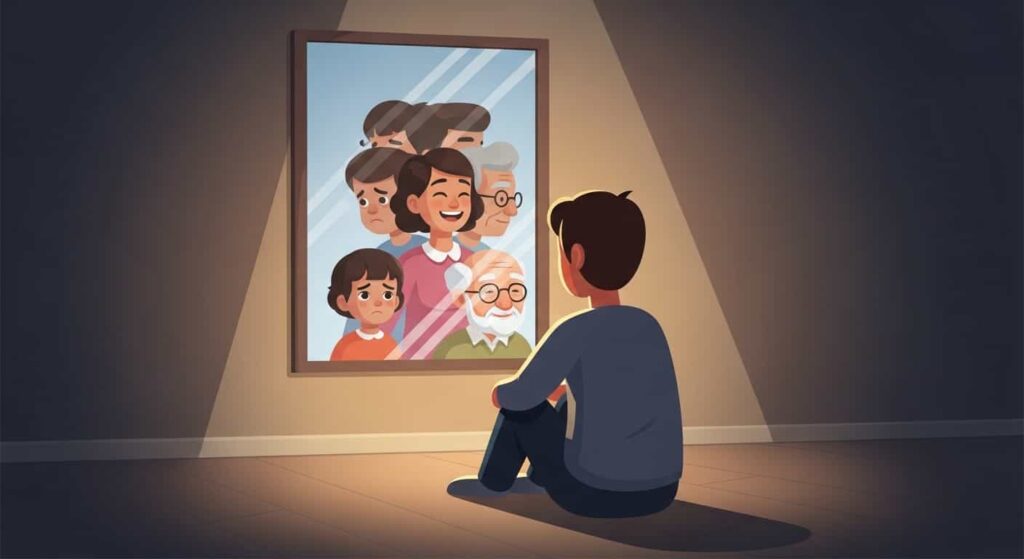
While scrying is about seeing external spirits or information, mirror gazing (sometimes called “mirror meditation”) is a practice of inner exploration. This modern spiritual practice draws from ancient roots and is used for healing trauma, confronting the shadow self, and cultivating self-love.
This practice is a direct confrontation with what psychologist Carl Jung called the Shadow—the repressed parts of the self that we often project onto others. The mirror acts as a non-judgmental space to integrate these hidden aspects, transforming self-rejection into self-acceptance.
The practice is simple but can be intensely emotional. You sit or stand before a mirror in a dimly lit room, often with a candle, and simply gaze into your own eyes for an extended period, typically 10 to 30 minutes. As you stare, the face in the mirror may begin to distort, shift, or appear unfamiliar. Practitioners believe that this is the ego dissolving, allowing the deeper self to emerge.
This practice forces you to sit with discomfort. You cannot hide from your own gaze. For many, this leads to breakthroughs—crying, laughter, or profound realizations about self-worth. It is a spiritual tool for radical honesty, forcing you to confront the parts of yourself you usually look away from.
Mirrors in Ritual, Ceremony & Sacred Spaces
Mirrors are common fixtures in modern pagan, Wiccan, and occult rituals. They are used to:
- Cast circles: A mirror can be used to define sacred space.
- Amplify intention: Placing a mirror behind a candle or spell jar is believed to double or amplify the energy of the spell.
- Honor deities: Mirrors are placed on altars for goddesses like Aphrodite (beauty), Hekate (witchcraft and crossroads), and Venus.
- Ancestor work: As in African traditions, mirrors are used as focal points for connecting with ancestors. A mirror on an ancestor altar is considered an open line of communication.
In sacred spaces, mirrors are often placed to “double” the spiritual energy of the space. A temple or meditation room might use mirrors to create a feeling of expansion, reflecting the sacred images and making the space feel infinite.
Common Spiritual Warnings Around Mirrors
Given the power attributed to mirrors, it is no surprise that they come with a long list of superstitions and spiritual warnings. These cautionary tales are not merely old wives’ tales; they are rooted in a deep, intuitive understanding of the mirror’s power as a portal and energetic object.
Why Mirrors Are Covered During Mourning
One of the most widespread mirror traditions is the act of covering mirrors after a death in the house. This practice is found in Jewish traditions (shiva), Victorian European customs, and various other cultures.
Spiritually, the reasons are layered:
- To prevent the spirit of the deceased from being trapped: It was believed that the soul of the recently departed might become disoriented and enter the mirror, unable to move on to the afterlife.
- To prevent the living from seeing the deceased: Mourners were often grief-stricken, and in a state of heightened emotion, it was feared they might see the reflection of the deceased in a mirror, causing further distress or preventing the spirit from leaving.
- To focus on inward grief: By covering mirrors, the external focus on physical appearance is removed, forcing the mourner to turn inward and process their grief without the distraction of vanity.
Sleeping in Front of a Mirror — Spiritual Concerns
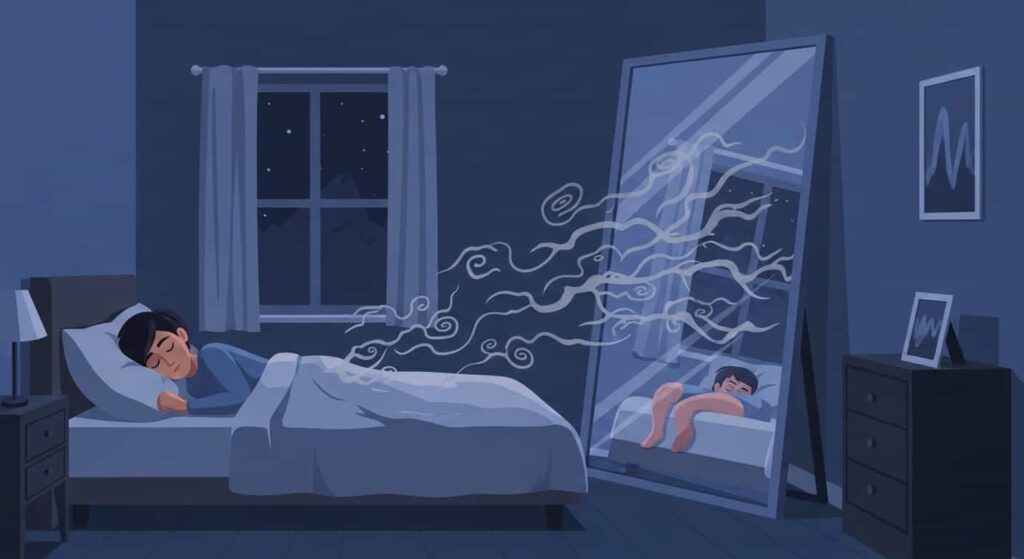
Many spiritual traditions strongly advise against having a mirror facing your bed. This is a cardinal rule in Feng Shui, but it also appears in folk magic.
The concerns are:
- Energy Drain: It is believed that when you sleep, your soul or consciousness partially leaves your body. A mirror facing the bed can startle your soul upon return, causing restlessness, nightmares, or a feeling of being energetically depleted in the morning.
- Opening Portals: Sleep is a vulnerable state. A mirror facing the bed is seen as an open portal for negative spirits or entities to watch or influence you while you are unconscious.
- Creating “Third-Party” Energy: In Feng Shui, a mirror facing the bed is said to introduce a “third party” into the relationship. The mirror creates a symbolic duplicate of the bedroom, which energetically invites the energy of another person into the intimate space of the couple, potentially leading to infidelity or discord.
If you cannot remove a mirror that faces your bed, the spiritual remedy is to cover it with a cloth at night.
Two Mirrors Facing Each Other — What It Opens
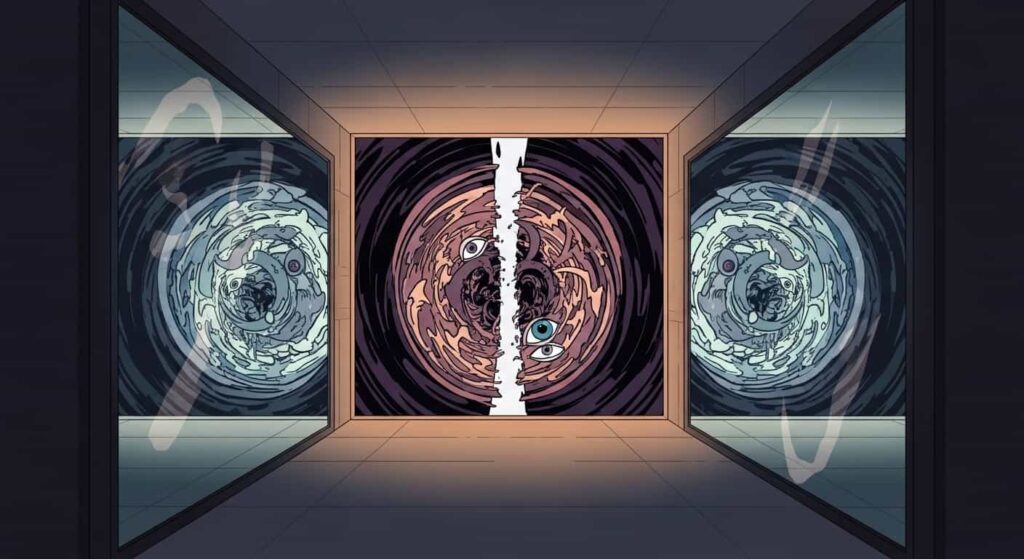
Perhaps the most unsettling mirror configuration is placing two mirrors directly opposite each other, creating an infinite regression—a seemingly endless tunnel of reflections. Spiritually, this is considered highly dangerous.
This configuration is believed to create a powerful, uncontrolled portal. It is seen as an invitation for any entity or energy to enter, as it creates an “endless hallway” between worlds. Practitioners of magic often avoid this unless they are intentionally creating a very powerful portal for a specific, well-protected ritual. In a home, it is generally considered destabilizing, creating chaotic and confused energy that can lead to mental fog, anxiety, and a feeling of being watched. If you have such a configuration, it is advised to move one of the mirrors or break the line of sight between them.
Mirror Placement in Feng Shui: A Quick Reference
| Placement | Effect | Recommendation |
|---|---|---|
| Facing the front door | Bounces qi (energy) right back out, preventing it from entering the home | Avoid; place mirror on a perpendicular wall instead |
| Facing the bed | Introduces “third-party” energy; can disrupt sleep and relationships | Remove or cover at night |
| In the dining room | Doubles abundance and food, symbolizing prosperity | Encouraged; reflects the dining table |
| Facing another mirror | Creates an uncontrolled portal; chaotic energy | Avoid or break the line of sight |
| In the hallway | Expands narrow spaces; keeps energy moving | Beneficial when placed on a perpendicular wall |
Conclusion — The Mirror as Your Spiritual Teacher
As we have journeyed from the myths of ancient Greece to the altars of modern spirituality, one thing becomes clear: the mirror spiritual meaning is one of profound, and often challenging, teaching. The mirror is not just a tool for checking your appearance; it is a relentless spiritual teacher.
It teaches truth, showing you your authentic self without flattery or judgment. It teaches accountability, forcing you to see the energy you project into the world. It teaches respect for the unseen, reminding you that there are forces and realms beyond our physical perception. And perhaps most importantly, it teaches self-reflection—the literal and metaphorical act of turning inward to examine one’s thoughts, actions, and soul.
What Your Relationship With Mirrors Says About You Spiritually
How you interact with mirrors can be a revealing gauge of your spiritual state.
- Do you avoid mirrors? This might indicate a disconnection from your true self or an unwillingness to confront a part of your life or personality.
- Are you obsessed with checking your reflection? This could point to an over-identification with the ego and the external, physical self.
- Can you look into your own eyes in a mirror with compassion and honesty? Can you gaze without judgment? This suggests a healthy, integrated spiritual life. A peaceful relationship with your reflection often mirrors (literally) a peaceful relationship with your own soul.
The next time you stand before a mirror, take a moment to move beyond the surface. Look deeper. Consider the history, the symbolism, and the spiritual energy contained within that sheet of glass. See it not as a tool for vanity, but as a sacred object—a silent teacher, a portal to truth, and a reflection of the divine light that dwells within you.
In learning to see yourself truly, you may just find that you are seeing the universe.